In summary:
- Forest bathing isn’t just a walk; it’s a practice of “nature dosing” to measurably lower stress.
- Spending just 20-30 minutes in a green space like Ottawa’s Greenbelt can significantly reduce cortisol levels.
- You can find quiet “urban sanctuaries” for a quick mental reset even in busy downtown parks during your lunch break.
- Practical planning, from avoiding ragweed in August to pairing a walk with a healthy meal, maximizes the benefits.
- Ottawa offers a unique variety of options, from self-guided walks to structured retreats, accessible to everyone.
The constant hum of city life in Ottawa, from the traffic on the 417 to the endless notifications on your phone, can leave you feeling drained and perpetually on edge. For stressed urbanites, the common advice is often to escape for a weekend or head to the vast expanse of Gatineau Park. But what if real, immediate relief could be found within the city limits, woven into the fabric of your daily routine? What if the key to managing stress wasn’t about grand escapes, but about small, intentional interactions with nature?
This is the core of forest bathing, or *Shinrin-yoku*. It’s not about hiking or exercise; it’s a therapeutic practice of immersing your senses in a natural environment. The idea goes far beyond simply “getting some fresh air.” It’s about a conscious and mindful practice of what we can call nature dosing—using green spaces as an accessible tool for immediate decompression. Many people believe you need pristine, silent wilderness for it to work, but the truth is more encouraging, especially for those of us with busy lives.
This guide reframes the concept for the Ottawa resident. We will move beyond the platitudes and explore a practical, science-backed framework for integrating these moments of calm into your life. We will look at why even a short break in the Greenbelt is so effective, how to find quiet in the most surprising urban spots, and how to navigate practical challenges like seasonal allergies. This is your therapeutic roadmap to transforming Ottawa’s parks from simple scenery into powerful allies for your mental well-being.
To help you navigate these restorative practices, this article explores the specific, actionable ways you can integrate forest bathing into your Ottawa life. The following sections provide a structured approach to finding your calm, right where you are.
Contents: A Guide to Urban Forest Bathing in Ottawa
- Why 20 Minutes in the Greenbelt Lowers Your Cortisol Levels?
- How to Find a Quiet Spot in Major’s Hill Park During Lunch Hour?
- Confederation Park vs Strathcona Park: Which Is Better for Reading?
- The Ragweed Mistake That Ruins Your Nature Walk in August
- In What Order Should You Walk and Eat to Maximize Digestion?
- Why Ottawa’s Greenbelt Shape Is Unlike Any Other North American City?
- How to Choose a Meditation Class If You Are a Skeptic?
- Where to Find Silent Retreats Within an Hour of Ottawa?
Why 20 Minutes in the Greenbelt Lowers Your Cortisol Levels?
The calming effect of nature is not just a feeling; it’s a measurable physiological response. When you step into a green space like Ottawa’s Greenbelt, your body begins a process of down-regulation. The primary mechanism behind this is the reduction of cortisol, the body’s main stress hormone. A high level of cortisol, driven by the constant pressures of urban life, is linked to anxiety, fatigue, and other health issues. Forest bathing offers a direct and natural antidote.
The key is finding the right “dose” of nature. Groundbreaking research has quantified this effect, showing that the most efficient drop in cortisol occurs within the first 20 to 30 minutes of nature immersion. A study from the University of Michigan confirmed that a nature experience provides a 21.3% per hour cortisol drop beyond the natural decline that occurs through the day. This demonstrates that even a short, purposeful break can have a significant impact on your stress levels. It’s not about spending all day in the woods; it’s about making a small, consistent investment in your well-being.
This concept of nature dosing empowers you to take control of your stress. Instead of waiting for a vacation, you can prescribe yourself a 20-minute walk on a Greenbelt trail. To maximize the effect, focus on sensory anchoring: listen to the wind moving through the pines at Mer Bleue Bog, feel the texture of bark on a tree, or watch the light filter through the leaves. This intentional focus helps quiet the mind and deepen the body’s relaxation response, transforming a simple walk into a potent therapeutic session.
How to Find a Quiet Spot in Major’s Hill Park During Lunch Hour?
Major’s Hill Park, with its proximity to the ByWard Market and downtown offices, might seem like an unlikely place for a peaceful escape, especially during a busy lunch hour. However, the key to finding an urban sanctuary here lies in strategic exploration and timing. Most visitors stick to the main pathways and the open areas with direct views of the Parliament Buildings. The secret is to look for the spaces in between.
To find your quiet spot, avoid the main entrance near the Château Laurier. Instead, enter from the Mackenzie Avenue side or walk towards the back of the park, closer to the National Gallery of Canada. Here, the terrain becomes more varied, with mature trees and gentle slopes that create natural sound buffers and visual screens. Look for benches tucked away behind large trees or in small alcoves overlooking the Ottawa River. These spots are often just a few meters off the main path but feel worlds away from the city’s hustle.
The image below captures the essence of such a hidden gem: a secluded bench offering a moment of perfect solitude, shielded by lush greenery, with the river providing a calming backdrop.
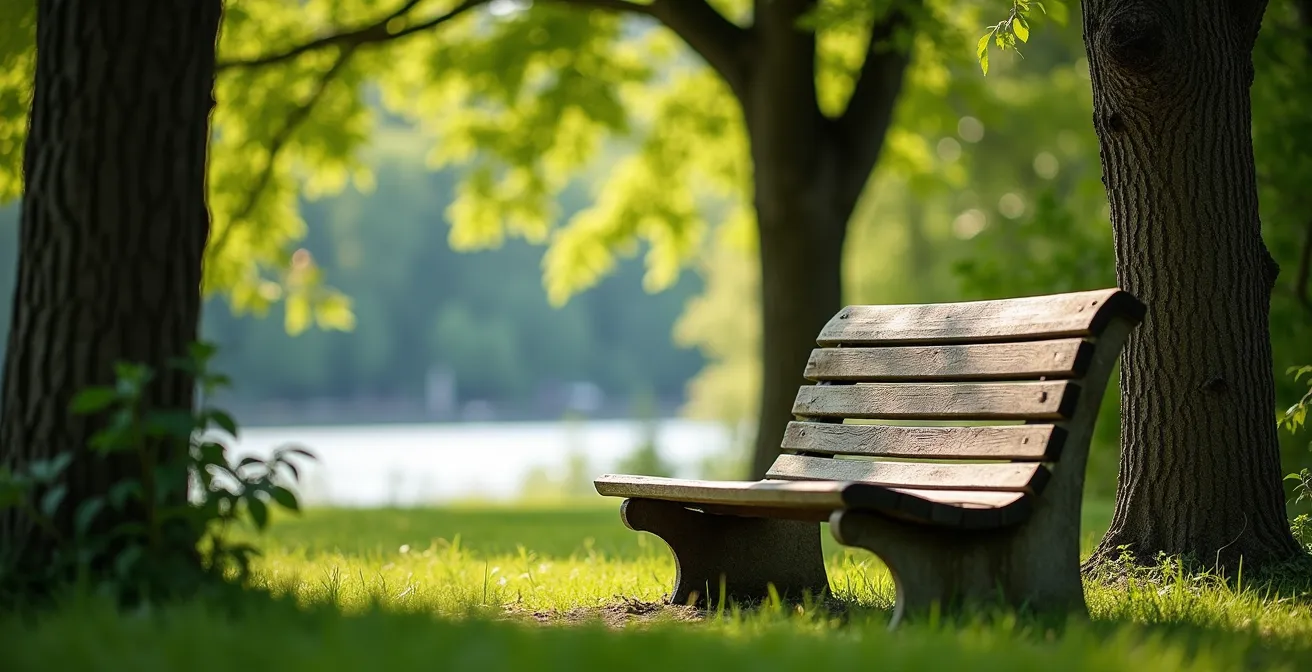
As this image illustrates, privacy can be found even in a popular urban park. Your lunch break can be transformed from a rushed meal at your desk into a restorative session of intentional disconnection. By deliberately seeking out these quiet corners, you’re not just finding a place to sit; you are actively creating a pocket of tranquility in your day, proving that peace doesn’t require a long journey.
Confederation Park vs Strathcona Park: Which Is Better for Reading?
Choosing a park for a quiet activity like reading involves more than just finding a bench. It’s about the park’s overall atmosphere, its soundscape, and the type of environment it offers. For Ottawa residents, Confederation Park and Strathcona Park present two very different options for a literary escape.
Confederation Park, located at the heart of downtown, is a park of formal design and frequent events. Its central fountain and proximity to Elgin Street mean there’s a constant, low-level urban hum. While it has many benches, they are often in open, high-traffic areas. This park is better for people-watching while you read, as complete silence is rare. However, its convenience is unmatched for a quick break if you work nearby. A great tip is to create a “pre-read ritual” by grabbing a coffee from a nearby cafe and finding a spot on the park’s edges, away from the central fountain.
Strathcona Park, nestled along the Rideau River in Sandy Hill, offers a more tranquil, pastoral experience. Its sprawling lawns, mature trees, and the gentle flow of the river create a much calmer soundscape. It’s larger and more spread out, making it easier to find a secluded spot under a tree or on a bench overlooking the water. This is the superior choice if your primary goal is deep, uninterrupted reading. The research is reassuring on this point: studies on nature and stress show that the specific setting is less important than the act of being in nature itself. The most crucial factor is committing to a 20-to-30-minute session, as this is the timeframe for the greatest stress-reduction benefits.
Ultimately, the “better” park depends on your needs. For a quick, convenient chapter during a busy day, Confederation Park works. For a longer, more immersive reading session where you can truly lose yourself in a book, Strathcona Park is the clear winner.
The Ragweed Mistake That Ruins Your Nature Walk in August
August in Ottawa can be a beautiful time for a nature walk, but for many, it’s also the peak of ragweed season. A peaceful forest bathing session can quickly turn miserable with itchy eyes and a runny nose. The common mistake is assuming all green spaces are equal when it comes to pollen. Understanding where ragweed thrives is the key to enjoying late-summer nature walks without suffering from allergies.
Ragweed is an opportunistic plant that flourishes in sunny, open, and disturbed areas. This means that the edges of trails, open fields within the Greenbelt, and un-mowed areas are often hotspots. Simply heading to “the park” without considering its specific ecosystem can be a recipe for discomfort. The trick is to choose environments that are less hospitable to ragweed.
The boardwalk at Mer Bleue Bog, for instance, is an excellent choice. The unique acidic and wet conditions of the bog ecosystem naturally suppress ragweed growth. This allows you to immerse yourself in nature while breathing easier.
To help you plan, here are some practical strategies to minimize pollen exposure during your Ottawa nature walks:
- Check daily pollen forecasts for Ottawa before you head out.
- Choose paved paths, like those along the Ottawa River Parkway, where surrounding vegetation is regularly managed.
- Opt for walks in densely forested areas rather than open meadows, as the tree canopy can reduce airborne pollen.
- Schedule your forest bathing for the late afternoon or right after a rain shower, when pollen counts are naturally lower.
- Walk the boardwalks at Mer Bleue Bog or visit areas with different ecosystems, like the pet-friendly Bruce Pit, which has more sand and pine.
Your Pre-Walk Pollen Audit: A 5-Step Checklist
- Location Check: Identify your planned route. Does it include open, sunny fields or trail edges known for weeds?
- Ecosystem Review: Is it a wetland (like Mer Bleue), a dense forest, or a managed parkway? Prioritize ecosystems less friendly to ragweed.
- Timing a Forecast: Check the daily pollen count for Ottawa. Plan your walk for the late afternoon or after it has rained.
- Path Selection: Prioritize paved paths or well-established boardwalks over rough trails through open, disturbed land.
- Backup Plan: Have an alternative, low-pollen location in mind (e.g., a riverside path instead of a meadow trail) in case the forecast is high.
In What Order Should You Walk and Eat to Maximize Digestion?
Pairing a meal with a walk is a classic way to enjoy Ottawa’s scenery, but the order and intensity matter significantly for both digestive comfort and stress reduction. Many people grab a heavy lunch and immediately set off on a brisk walk, which can lead to digestive distress. A more mindful, therapeutic approach involves timing your walk and choosing your food to work with your body’s natural processes.
The physiological rule of thumb is to walk after you eat, not before. A gentle post-meal (or postprandial) walk helps stimulate digestion and regulate blood sugar levels. However, “gentle” is the operative word. A strenuous, fast-paced walk diverts blood flow away from your digestive system to your muscles, hindering digestion. The ideal is a slow, mindful stroll lasting around 15 to 20 minutes. This duration aligns perfectly with the “nature dose” required to lower cortisol, giving you both a digestive and a mental health benefit in one activity.
The type of meal is also critical. A light, carb-friendly meal allows for an almost immediate gentle walk. A heavy, rich meal, like a classic poutine from a ByWard Market stand, requires a rest period of at least 30-60 minutes before you start moving. Hydrating before your walk, rather than drinking large amounts of water with your meal, also supports better digestion. Here are some ideal Ottawa “Eat & Walk” pairings:
- Light Meal: A salad from Mad Radish on Elgin Street, followed by a 15-minute gentle stroll around the grounds of the Canadian Museum of Nature.
- Snack: A pastry from a ByWard Market bakery, enjoyed on a bench, followed by a slow, digestive walk through Major’s Hill Park.
- Post-Work: A light dinner at home, followed by a 20-minute walk along the Rideau Canal to aid digestion and de-stress from the day.
Why Ottawa’s Greenbelt Shape Is Unlike Any Other North American City?
Ottawa’s Greenbelt is more than just a large park; it’s a defining feature of the city’s identity and a monumental achievement in urban planning. Unlike the fragmented green spaces or radial park systems of many other North American cities, Ottawa’s Greenbelt is a contiguous, crescent-shaped swath of protected land that encircles the urban core. This unique design is not an accident but the result of deliberate, forward-thinking planning from the mid-20th century.
The vision for the Greenbelt was formally established in the 1950 General Report on the Plan for the National Capital, famously known as the Gréber Plan. It was designed to prevent urban sprawl, protect rural landscapes, and provide a vast natural resource for the capital’s residents. The National Capital Commission’s historical documents reveal a strategic, almost philosophical, purpose behind it. As the planners envisioned it:
The Greenbelt was conceived in the 1950s Gréber Plan, partly as a strategic tool to decentralize the capital.
– National Capital Commission, Historical Planning Documents
This circular design is what makes forest bathing so accessible to Ottawa residents. No matter where you are in the urban or suburban core, you are never more than a short drive or bus ride from a part of this massive natural reserve. The shape ensures that nature isn’t a distant destination but an integrated part of the city’s fabric. It provides a variety of ecosystems—from the wetlands of Mer Bleue Bog to the forests of Stony Swamp—all held within this protective embrace. This intentional design legacy is why Ottawa is uniquely positioned to offer such profound and accessible nature experiences to its citizens.
How to Choose a Meditation Class If You Are a Skeptic?
The idea of meditation can be off-putting for a skeptical or “busy” mind. If you find the concept of sitting in silence elusive or intimidating, you are not alone. A Forest Therapy practitioner from a local Ottawa organization perfectly captures this feeling:
A Forest Therapy walk is perfect to calm you, centre you, re-calibrate how you live life. It is a joyful and easy approach to mindfulness, which has always eluded me because my mind is always too busy to be mindful.
– Forest Therapy Ottawa, practitioner perspective
This sentiment highlights the need for accessible entry points into mindfulness. For the skeptic, choosing the right class or activity is crucial. The key is to look for structure, scientific backing, and a focus on practical outcomes over abstract spirituality. Instead of a generic “meditation” class, seek out programs with a clear, evidence-based methodology.
Here is a skeptic’s guide to finding a suitable mindfulness or meditation practice in Ottawa:
- Look for MBSR Programs: Seek out Mindfulness-Based Stress Reduction (MBSR) classes. This is a secular, eight-week program with a strong scientific foundation, often offered through wellness centers at Carleton University or the University of Ottawa.
- Verify Credentials: Choose instructors with certified credentials in relevant fields like psychology, social work, or official MBSR certification. This ensures a professional, evidence-based approach.
- Attend an Intro Session: Many studios and centers in Ottawa offer free introductory sessions. This is a no-commitment way to see if the style and teacher resonate with you.
- Try “Meditation-Adjacent” Activities: If sitting still is a barrier, try an activity that induces a mindful state through focus. A pottery class at the Ottawa Guild of Potters or a life-drawing session requires deep concentration that quiets the mind.
- Consider Float Tanks: For a purely sensory approach, a session in a float tank (sensory deprivation tank) can be an effective entry point. It removes external stimuli, making it easier to access a state of deep relaxation without active “effort.”
The goal is not to force yourself into a practice that feels unnatural but to find a structured activity that helps you achieve a state of mental quiet and calm.
Key Takeaways
- Nature is Medicine: Just 20 minutes in a green space can measurably lower your stress hormones. Treat it like a prescription.
- Accessibility is Key: You don’t need a long trip. Ottawa’s unique Greenbelt and urban parks offer powerful opportunities for a quick mental reset.
- Be Practical and Intentional: Success lies in the details—avoiding pollen, timing walks after meals, and finding quiet corners in busy parks.
Where to Find Silent Retreats Within an Hour of Ottawa?
While daily “nature dosing” is a powerful tool, there are times when a deeper, more extended period of quiet is needed to truly reset the nervous system. A silent retreat offers an opportunity for profound rest and introspection, free from the demands of conversation and digital distractions. Fortunately, residents of Ottawa have several excellent options for silent retreats available within a short drive, ranging from gentle day-long experiences to more intensive, multi-day immersions.
For those seeking a structured and profound experience, there are dedicated centers designed for this purpose. A prime example is the Québec Vipassana Centre, located near Montebello, which is easily accessible from Ottawa. It offers 10-day silent meditation courses based on the Vipassana tradition, providing a rigorous and deeply transformative experience on a secluded 600-acre property. This is an excellent option for someone ready to commit to a deep dive into mindfulness.
However, a silent retreat doesn’t have to be a 10-day commitment. There are many ways to embrace silence, and the best choice depends on your comfort level and what you hope to achieve. This table, based on a comparative analysis of retreat options, breaks down the possibilities near Ottawa by intensity.
| Intensity Level | Location | Duration | Style |
|---|---|---|---|
| Level 1 – Beginner | Nordik Spa-Nature | Day visit | Quiet relaxation |
| Level 2 – Intermediate | Wakefield Quebec Hills | Weekend | Guided silent retreat |
| Level 3 – Advanced | DIY cabin rental Chelsea/Wakefield | Multi-day | Self-guided solitary |
| Urban Option | National Gallery + Canal walk | One day | Self-guided urban silence |
Whether you choose a dedicated center, a self-guided weekend in a cabin, or even a day of intentional silence exploring the National Gallery, the goal is the same: to give your mind the rare gift of stillness.
Your journey into forest bathing doesn’t need to be complex. The next logical step is to start small. Choose one accessible tip from this guide—a 20-minute walk in a nearby park, a quiet lunch on a secluded bench—and integrate it into your week. Notice how it feels. This small, consistent practice is the most powerful step you can take toward finding more calm in your urban life.