Discover Ottawa
Ottawa stands as Canada’s capital and a remarkably multifaceted destination that rewards those who take time to understand its structure. Far from being a simple city to navigate, this urban landscape spans two provinces, showcases distinct architectural styles, and offers access to surprising natural escapes within short distances. Whether you’re planning a weekend visit, considering relocation, or mapping out an extended exploration, grasping Ottawa’s fundamental organization transforms a generic trip into a purposeful journey.
The difference between visitors who feel frustrated by distances and those who maximize their time often comes down to foundational knowledge. Understanding how the National Capital Region functions, where architectural treasures concentrate, which neighborhoods align with your preferences, and how to venture beyond city limits creates confidence in decision-making. This comprehensive resource connects these essential themes, providing the framework you need to approach Ottawa with clarity rather than confusion.
Understanding Ottawa’s Geographic Layout and Zones
Ottawa’s geography presents a unique challenge that catches many first-time visitors off guard. The city doesn’t exist in isolation but forms part of the National Capital Region, a metropolitan area straddling the Ontario-Quebec border along the Ottawa River. This binational reality means that significant attractions, neighborhoods, and experiences exist on both sides of the provincial boundary, requiring travelers to think beyond traditional city limits.
The National Capital Region: A Binational Capital
The Ottawa River serves as both a natural feature and an administrative divide. On the Ontario side, you’ll find Parliament Hill, the ByWard Market, and most federal institutions. Cross any of the five bridges, and you enter Gatineau, Quebec, where the Canadian Museum of History, Gatineau Park, and French-language culture dominate. This isn’t merely a technical detail—it affects everything from parking regulations to restaurant menus to which provincial holidays businesses observe.
Many visitors underestimate crossing times or assume attractions are clustered together. In reality, Ottawa sprawls considerably. The distance from Kanata in the west to Orleans in the east spans roughly 30 kilometers, and rush-hour traffic can add significant time to journeys that appear short on maps.
Key Districts and Their Distinct Character
Ottawa’s urban fabric divides into recognizable zones, each with characteristic architecture, demographics, and purposes. The downtown core concentrates government buildings and tourist infrastructure. The Glebe offers tree-lined streets and independent shops. Westboro attracts young professionals with its café culture. ByWard Market blends historic buildings with nightlife. Understanding these distinctions helps you select accommodation that matches your priorities rather than booking based solely on price or proximity to a single landmark.
Suburban areas like Barrhaven, Kanata, and Orleans provide family-oriented environments but require vehicle access for practical daily life. The contrast between walkable urban neighborhoods and car-dependent suburbs is stark, making this choice particularly important for anyone considering temporary or permanent residence.
Discovering Ottawa’s Architectural Treasures
Ottawa’s architectural identity centers on Gothic Revival style, exemplified most dramatically by the Parliament Buildings on Parliament Hill. This Victorian-era aesthetic wasn’t chosen randomly—it deliberately evoked British parliamentary traditions and conveyed permanence and gravitas for a young nation establishing its capital. Understanding this historical context enriches what might otherwise seem like merely photogenic buildings.
The Gothic Revival Legacy and Its Significance
The Parliament Buildings, constructed primarily in the mid-to-late 19th century, feature pointed arches, ornate stone carving, copper roofing that has weathered to distinctive green, and the iconic Peace Tower rising 92 meters above the Hill. Beyond Parliament, this architectural language extends to landmarks like the Château Laurier hotel and various heritage buildings throughout the downtown core, creating visual continuity.
Modern Ottawa has added contemporary structures that either complement or contrast with this heritage. The National Gallery of Canada, with its dramatic glass and granite design, demonstrates how architectural dialogue between old and new can succeed. Recognizing these layers—Victorian Gothic, mid-century modern, contemporary glass-and-steel—helps you appreciate the city’s evolving identity rather than expecting uniform aesthetic.
Capturing Architecture Through Photography
Photography enthusiasts face specific technical challenges when documenting Ottawa’s landmarks. The Parliament Buildings benefit from golden hour lighting—the hour after sunrise or before sunset—when warm light enhances the Nepean sandstone’s honey tones. Midday harsh light flattens details and creates unflattering shadows.
Viewpoint selection matters enormously. The most common angle shoots from the front lawn, but alternative perspectives include:
- Across the Ottawa River from the Canadian Museum of History for skyline context
- From Nepean Point for elevated angles incorporating the river
- Inside the parliamentary precinct courtyards for architectural details without crowds
- From Major’s Hill Park during seasonal festivals for cultural context
Manage your expectations regarding renovations. Parliament Hill has undergone extensive rehabilitation work in recent years, with portions often surrounded by scaffolding or construction barriers. Checking current conditions before planning photography-focused visits prevents disappointment.
Choosing the Right Neighborhood to Explore or Settle
Ottawa’s neighborhoods vary dramatically in character, affordability, and practical considerations. Whether you’re selecting temporary accommodation or evaluating residential areas, understanding these dynamics prevents costly mismatches between expectations and reality.
Understanding Neighborhood Dynamics and Gentrification
Several Ottawa neighborhoods have experienced significant gentrification, transforming their demographic profiles and affordability. Hintonburg evolved from working-class enclave to trendy destination with craft breweries and renovated homes. Wellington West Village underwent similar transformation. The Glebe has long maintained upscale status, while areas like Vanier show early gentrification signs with rising property values and new developments.
These shifts create opportunity and displacement simultaneously. For visitors, gentrifying neighborhoods often offer vibrant local culture and excellent restaurants at somewhat lower accommodation costs than established premium areas. For those considering residence, they present appreciation potential but also uncertainty about future character and affordability.
Family-Friendly Considerations and Practical Matters
Families prioritize different factors than solo travelers or couples. School catchment areas significantly impact property values and rental markets in Ottawa. Neighborhoods served by well-regarded schools command premium prices. The Ottawa-Carleton District School Board and Ottawa Catholic School Board maintain online tools showing catchment boundaries, essential research for anyone relocating with children.
Family-friendly amenities concentrate in specific areas:
- Proximity to parks and recreational facilities (Westboro and the Glebe excel here)
- Walkability to reduce car dependency for older children
- Community centers offering programs and activities
- Access to libraries, which serve as crucial community hubs in Ottawa
Commute logistics deserve serious consideration. Ottawa’s public transit system, OC Transpo, functions adequately but doesn’t match the frequency or coverage of larger metropolitan systems. The LRT (Light Rail Transit) Confederation Line serves the east-west corridor but has experienced reliability challenges. If your work or frequent destinations lie outside LRT reach, vehicle ownership becomes nearly essential, adding parking costs to your budget calculations.
Rental market timing matters significantly. Ottawa experiences pronounced seasonal patterns, with peak activity from May through August when students, government workers, and families prefer to relocate. Starting searches during winter months often yields better availability and negotiating leverage, though selection narrows.
Planning Regional Getaways and Day Trips
Ottawa’s location provides access to diverse regional experiences within comfortable day-trip distances. These excursions add dimension to an Ottawa-based visit, offering natural landscapes, cultural experiences, and recreational opportunities that contrast with urban exploration.
Regional Micro-Destinations Worth Exploring
Gatineau Park, located just minutes from downtown across the Quebec border, encompasses 361 square kilometers of forests, lakes, and trails. It serves as Ottawa residents’ primary natural escape, offering hiking, cycling, cross-country skiing, and scenic drives depending on season. The park requires minimal planning for spontaneous visits but rewards research into specific destinations like Pink Lake or Luskville Falls.
Beyond Gatineau Park, several towns and villages offer distinct character:
- Wakefield, Quebec (30 minutes north) provides riverside charm and access to additional outdoor recreation
- Perth, Ontario (85 kilometers southwest) showcases preserved 19th-century architecture and artisan culture
- Merrickville (70 kilometers south) combines canal heritage with antique shopping and dining
- The Thousand Islands region (approximately 2 hours) extends trip possibilities for those with extra time
Each destination suits different interests—outdoor enthusiasts versus heritage buffs versus culinary explorers—making preliminary research valuable for matching getaways to preferences.
Logistics: Traffic, Sequencing, and Packing
Regional excursions from Ottawa face predictable traffic patterns. Weekend exodus begins Friday afternoon, particularly during summer months, with Highway 5 toward Gatineau Park and Highway 7 west experiencing congestion. Timing departures for mid-morning rather than dawn often avoids bottlenecks without significantly reducing daylight hours.
Sequencing matters when planning multi-stop itineraries. Circular routes prove more efficient than backtracking. For example, combining Merrickville and Perth works logically, while pairing Gatineau Park with Wakefield creates natural flow. Weather variability in the region demands adaptable packing—even summer days can turn cool near water or in forests, while shoulder seasons bring unpredictable precipitation.
Guided Tours vs. Independent Exploration
Ottawa offers numerous guided tour options alongside excellent infrastructure for self-directed discovery. Neither approach is universally superior; the right choice depends on your learning style, time constraints, and specific interests.
Popular Tour Options in Ottawa
Bus tours provide structured overviews, typically covering Parliament Hill, major museums, the Rideau Canal, and selected neighborhoods in 2-3 hour circuits. These excel for first-time visitors seeking orientation and historical context without research burden. Commentary quality varies significantly by operator and individual guide, making recent reviews valuable for selection.
Amphibious tours offer unique perspective by combining road travel with Ottawa River cruising. The novelty appeals particularly to families with children, though the actual informational content often prioritizes entertainment over depth. These tours operate seasonally and sell out during peak periods, requiring advance booking.
Specialized tours focusing on architecture, food, history, or ghost stories serve niche interests more effectively than general overviews. Walking tours of ByWard Market or cycling tours along the Ottawa River Pathway demonstrate how format can enhance subject matter.
Making the Most of Self-Guided Visits
Independent exploration leverages Ottawa’s excellent public information infrastructure. Parks Canada operates the Parliament Visitor Welcome Centre, offering free exhibits and orientation materials. Museums provide detailed interpretation that often exceeds tour guide commentary in depth. The city maintains extensive pathway networks with clear signage, supporting self-directed walking and cycling.
Digital resources enhance independent travel significantly. Official apps provide audio tours, maps, and real-time information about attractions and transit. This approach offers flexibility to adjust pace, linger at personally interesting sites, and skip elements that don’t resonate—advantages that scheduled tours cannot match.
The trade-off involves preparation time and potential knowledge gaps. Tours curate information and handle logistics, while independent exploration requires you to research, plan routes, and potentially miss context that guides would provide. Many visitors find hybrid approaches most satisfying—taking one orientation tour initially, then exploring independently with better foundational understanding.
Ottawa rewards preparation without demanding it. The city’s manageable size, bilingual signage, and welcoming atmosphere create forgiving conditions for exploration. Whether you navigate districts strategically, time architectural photography for optimal light, select neighborhoods matching your lifestyle, venture into the surrounding region, or choose your preferred balance between guided and independent discovery, understanding these foundational elements transforms uncertainty into confidence. Each theme connects to others—geographic knowledge improves neighborhood selection, architectural appreciation enriches walking tours, and regional context deepens your sense of place. Approach Ottawa as an interconnected destination rather than a checklist of isolated attractions, and you’ll discover layers that superficial visits never reveal.

Is the Haunted Walk of Ottawa Worth the Ticket Price for Locals?
For Ottawa locals, the Haunted Walk’s value lies not in sightseeing, but in its power to add a rich narrative layer to familiar streets, transforming the city into a re-seeing experience. It prioritizes atmospheric immersion and curated storytelling over simply…
Read more
How to Plan a 48-Hour Adventure Weekend Without Leaving the Ottawa Region?
The secret to a restorative 48-hour getaway from Ottawa isn’t choosing the perfect destination; it’s mastering the logistics of disconnection. Strategic planning for packing and travel times eliminates the most common sources of weekend stress. Sequencing your activities, from wineries…
Read more
Which Ottawa Neighborhood Best Fits a Young Family’s Lifestyle?
Contrary to popular belief, finding the right Ottawa neighbourhood for your family isn’t about chasing the highest-ranked schools or lowest crime rates. The real key is decoding a neighbourhood’s unique “lifestyle DNA”—its daily rhythm, unspoken trade-offs, and community feel. This…
Read more
Which Architectural Landmarks Offer the Best Photos During Golden Hour?
The most compelling photographs of Ottawa’s Parliament are created by treating the sun as an artistic collaborator, not just a light source. Master key moments like the morning sun turning copper roofs to gold and the dramatic sunset silhouettes seen…
Read more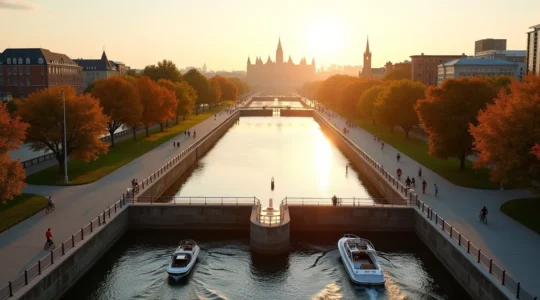
How to Map Out Your Ottawa Visit Between the River and the Canal?
Choosing the right hotel in Ottawa is less about the neighbourhood name and more about understanding the city’s two main geographical corridors: the Ottawa River and the Rideau Canal. Central hotels (Downtown/ByWard) offer walkability to major sites but are pricier…
Read more