In summary:
- Feeling disconnected is common, but Ottawa is rich with “third places”—social hubs outside of home and work—that foster community.
- Success isn’t about knowing *where* to go, but *how* to engage. Use activities like board games or trivia as “social scaffolding” to make conversation easy.
- Strategic timing is key. Arriving 10-15 minutes after a casual meetup starts is often better than being first.
- Embrace Ottawa’s unique culture, from its bilingual nature to its diverse neighborhood hubs, to find a niche where you truly belong.
- Start small. The goal is to become a “regular” somewhere, turning a third place into *your* place through consistency.
Moving to a new city like Ottawa is thrilling. There are new neighborhoods to explore, new restaurants to try, and the promise of a new life. But after the initial excitement wears off, a quiet feeling can creep in: loneliness. You’re surrounded by people, yet you feel completely on your own. You’ve heard the usual advice—”just put yourself out there,” “go to ByWard Market,” “join a club”—but it feels vague and unhelpful. How do you go from being an anonymous newcomer to a connected local?
The secret isn’t just about finding places; it’s about understanding the social fabric that holds them together. The key lies in discovering and embracing “third places.” Sociologist Ray Oldenburg defined these as the crucial anchors of community life that foster creative interaction. As he noted in a discussion with Jane’s Walk Ottawa, they are the spaces that get us out of our homes and connect us with each other.
Third spaces are largely public sites of recreation that nourish and inspire sociability.
– Ray Oldenburg, sociologist, Jane’s Walk Ottawa discussion on third places
But if recent YMCA research reveals that 36% of Canadians report not having a third place, how do you find one? This guide moves beyond lists. It’s a community organizer’s playbook for turning Ottawa’s spaces into your spaces. We’ll explore the unspoken social cues, the strategies for genuine connection, and the mindset shift from simply being *in* a place to *belonging* to it.
In this article, you will find a structured approach to building your community in Ottawa. We will cover everything from the social power of independent cafes to the specific strategies for joining groups and navigating the city’s unique cultural landscape.
Summary: Finding Your Community: A Guide to Ottawa’s Third Places
- Why Ottawa’s Independent Cafes Are the New Community Centers?
- How to Join a Board Game Group Without Knowing Anyone?
- Pub Trivia vs Book Clubs: Which Is Easier for Making Friends?
- The “Locals Only” Mistake When Walking Into Certain Pubs
- What Time Should You Arrive at a Meetup to Actually Talk to People?
- Why Locals Switch Languages Mid-Sentence and What It Means?
- How to Spot a “Stroller-Friendly” Neighborhood Before Moving In?
- How to Plan the Perfect After-Work Picnic Before the Sun Sets?
Why Ottawa’s Independent Cafes Are the New Community Centers?
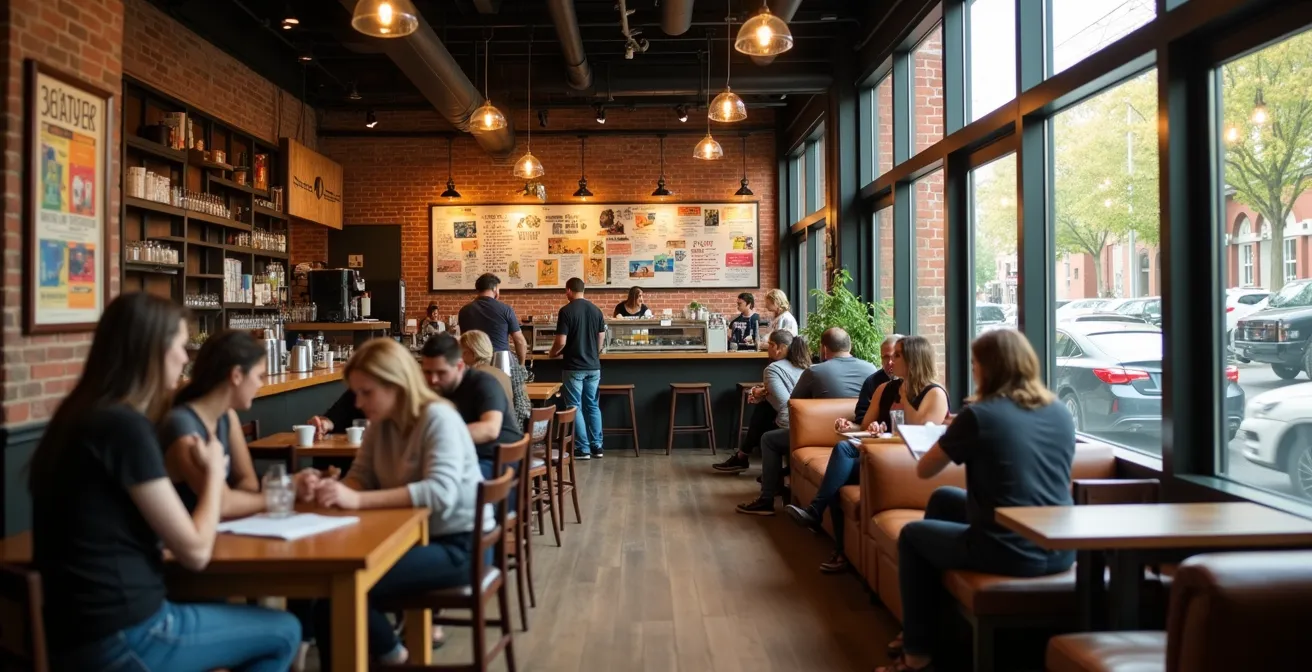
In the search for connection, the humble independent coffee shop has become a powerful hub. Unlike sterile chain cafes designed for quick turnover, Ottawa’s local spots are built for lingering. They are the perfect training ground for what we can call “intentional loitering”—the art of being present in a space without a pressing agenda. This is where serendipity happens. You’re not just grabbing a latte; you’re creating an opportunity for a spontaneous conversation, for observing the neighborhood’s rhythm, for becoming a familiar face.
These cafes act as low-stakes community entry points. The simple act of ordering coffee provides a shared context, but the real magic happens when you stay. Bring a book, your laptop, or a journal. Your sustained presence signals that you’re part of the fabric of the place, not just a customer passing through. Over time, a nod from the barista becomes a “hello,” and shared smiles with other regulars can blossom into conversations. The cost of entry is a cup of coffee, but the potential return is a sense of belonging.
The city itself is recognizing and amplifying this need for public gathering spots. Initiatives like Ottawa’s Street Seats are transforming urban spaces into vibrant community plazas. As one resident, Melanie Falardeau, noted in a Capital Current report on these new third spaces, “It felt like the city was finally giving us a place to just sit, talk and be part of the community.” These initiatives, often located near cafes and local businesses, extend the coffee shop’s “living room” vibe out into the street, creating even more opportunities to connect.
How to Join a Board Game Group Without Knowing Anyone?
Walking into a new social situation can be intimidating. The fear of awkward silences or not knowing what to say is real. This is where “social scaffolding” comes in—structured activities that provide a built-in reason to interact. And in Ottawa, there is no better social scaffolding than a board game. Board game cafes and groups eliminate the pressure of making small talk from scratch. The game itself is the conversation starter, the rulebook is the script, and the shared goal of playing creates an instant team bond.
You don’t need to be an expert. In fact, being a beginner is an advantage. It gives you a natural reason to ask questions and interact with more experienced players, who are often happy to teach. Places like The Loft Board Game Lounge or Level One Game Pub are designed for this. Their “Game Wizards” (staff) are trained to recommend games and teach the rules, acting as a bridge between you and other players. The focus shifts from “What do I say?” to “Whose turn is it?”—a much easier question to answer.

To get started, you don’t even need a group. Here’s how to dive in:
- Visit on a strategic night: The Loft often has a no “Stay and Play” fee on Tuesdays, making it a popular and busy night to find others to play with.
- Go during off-peak hours: A less busy weekday afternoon means more time with staff, who can make introductions or help you find a group.
- Ask the staff directly: Simply tell a Game Wizard you’re looking to join a game. They know the regulars and can often point you to a welcoming table.
- Start with cooperative games: Games where players work together against the board (like *Pandemic* or *The Mind*) are excellent for building camaraderie without direct competition.
Using a game as your entry point is a low-pressure, high-reward strategy for building real connections in the city.
Pub Trivia vs Book Clubs: Which Is Easier for Making Friends?
Once you’re ready to join a group, you face a choice: which type of activity is the right “community entry point” for you? Pub trivia and book clubs are two of the most popular options in Ottawa, but they offer very different social dynamics. Choosing the right one depends on your personality and what you’re looking for. Neither is universally “better,” but one will likely be easier for *you*.
Pub trivia is a high-energy, team-based activity. The built-in structure of forming a team and competing together provides immediate social scaffolding. Conversation flows easily around the questions, and the shared moments of triumph (or failure) create a quick bond. It’s fantastic for people who thrive in bustling environments and enjoy a drop-in format. However, the noise and focus on competition can sometimes make deeper, one-on-one conversation difficult.
Book clubs, on the other hand, offer a more intimate and consistent setting. The monthly meeting schedule helps you cross the “regular’ threshold” more quickly, turning acquaintances into friends through repeated contact. The conversations are naturally deeper, as you’re sharing personal interpretations and ideas. This format requires more commitment (you have to read the book!), but it often leads to more meaningful connections. Ultimately, finding your community is a deep human need, and Canadian public health data shows that a high sense of community belonging is linked to better mental health.
This table breaks down the key differences to help you decide which social setting is the best fit for your friendship-making goals in Ottawa.
| Factor | Pub Trivia | Book Clubs | Language Exchange |
|---|---|---|---|
| Ease of Starting Conversation | High – team-based format | Medium – requires reading prep | Very High – structured practice |
| Cost per Session | $15-25 (food/drinks) | $0-10 (book cost) | $5-15 (venue cost) |
| Frequency of Meetings | Weekly | Monthly | Bi-weekly |
| Group Size | 4-6 per team | 8-12 people | 10-20 people |
| Commitment Level | Drop-in friendly | Ongoing commitment | Flexible attendance |
The “Locals Only” Mistake When Walking Into Certain Pubs
There’s a common fear among newcomers: walking into a pub and feeling like you’ve stumbled into a private party. The music stops, all heads turn—the dreaded “locals only” vibe. The mistake is thinking this is about exclusion. In reality, it’s about niche communities. A pub that feels “cliquey” isn’t trying to keep you out; it’s simply a third place that has successfully formed a strong identity around a shared interest. Your job isn’t to crash their party, but to find the pub that’s hosting *your* party.
Ottawa’s strength lies in its diverse neighborhoods, each with its own character. As a report from Ottawa’s Council of BIAs (OCOBIA) highlights, third places are “levelling places” where different communities gather. Instead of walking into a random pub, do a little research. Are you a sports fan? A pub in The Glebe on game night will be full of people who share your passion. Are you a role-playing gamer? A spot in Bells Corners might be your hub. A music lover? A venue on Sparks Street will feel like home. The goal is to match the pub’s identity to your own.
These welcoming, active spaces also contribute to the overall well-being of the city. As Somerset Councillor Ariel Troster explained to Capital Current, “It contributes to community safety, because the more active spaces and more eyes that are on the street, the less likely people are to get into trouble.” By finding your niche, you’re not just finding friends; you’re becoming part of the positive, active fabric of your new neighborhood. Don’t avoid “locals only” pubs—seek out the one where you are, or could become, one of the locals.
What Time Should You Arrive at a Meetup to Actually Talk to People?
You’ve found an event, you’ve picked a venue, and you’re ready to go. Now for a surprisingly crucial detail: what time should you arrive? It seems trivial, but your arrival time is a strategic choice that can dramatically change your experience. Arriving “on time” isn’t always the best strategy for meeting people. The ideal arrival window depends entirely on the type of event.
For highly structured events like a workshop or a class, arriving exactly on time or five minutes early is perfect. These events usually start with introductions, and being there from the beginning ensures you’re part of that initial icebreaker. However, for more casual, unstructured meetups—like a pub night or a social gathering—arriving 10 to 15 minutes after the official start time is often the sweet spot. Arriving first can lead to awkward silence while you wait for others. Arriving fashionably late allows you to walk into a room that already has some social energy. Small groups will have already formed, and it’s much easier to spot a friendly face or an open group to join than it is to start a conversation from a cold, empty room.
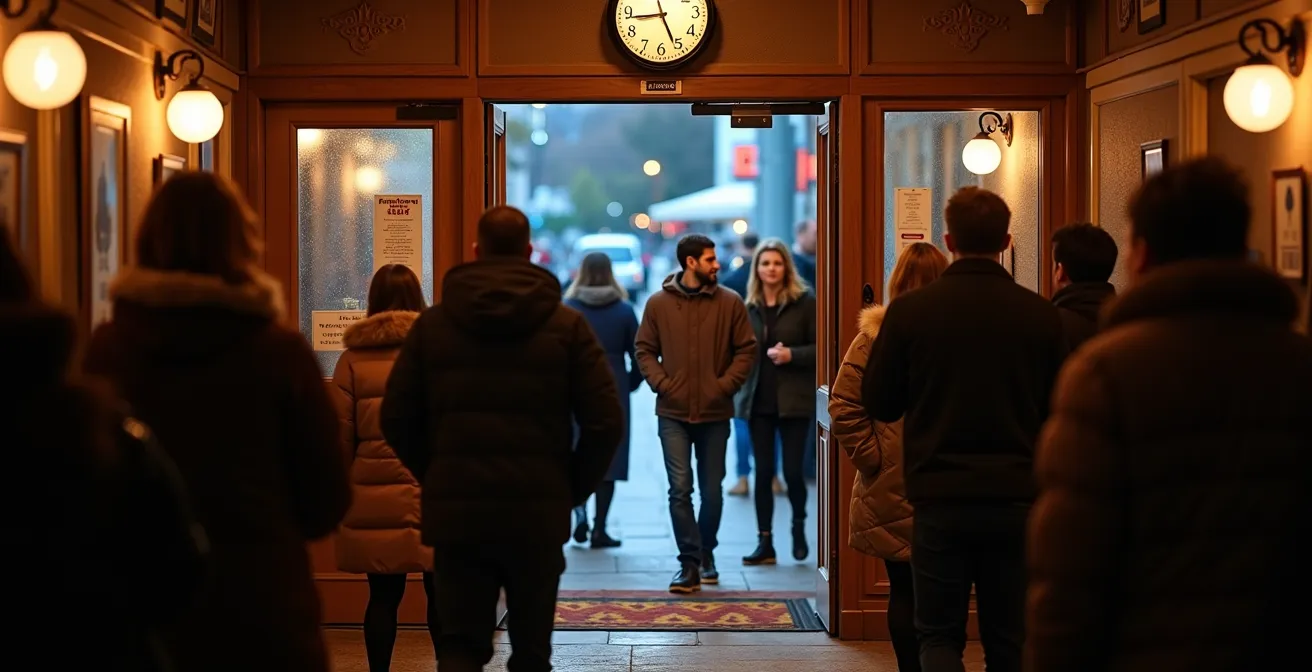
Think of your arrival as choosing your “community entry point.” Here’s a quick guide to timing your arrival for different Ottawa events:
- Casual Pub Meetups: Arrive 10-15 minutes after the start time. This avoids the “early bird” silence and lets you enter a room with existing buzz.
- Board Game Nights: Arrive within the first 30 minutes. This ensures you’re there as groups are forming and games are being chosen.
- Structured Workshops: Arrive exactly on time or 5 minutes early. You’ll want to be there for the official start and introductions.
- Language Exchanges: Arrive 5 minutes early. This gives you a chance to meet the organizer, who can be a key connector and introduce you to others.
- Outdoor Festivals/Events: Check the group’s specific instructions. Organizers often post a picture of the meeting spot on the event page to help latecomers find them.
Timing isn’t just about logistics; it’s a social tool. Using it wisely can make the difference between a night spent awkwardly on the sidelines and a night filled with new conversations.
Why Locals Switch Languages Mid-Sentence and What It Means?
If you spend enough time in Ottawa, especially in neighborhoods like Orléans or Vanier or among federal government workers, you’ll hear it: a sentence that starts in English and finishes in French, or vice-versa. For a newcomer, this code-switching can be confusing or even feel exclusionary. But in the context of the National Capital Region, it’s the exact opposite. This “bilingual fluidity” is not a barrier; it’s a sign of local identity and comfort.
This linguistic blend is the natural result of Ottawa’s unique position next to Gatineau, Québec, and its status as the bilingual heart of the federal government. For many locals who grew up navigating both languages, switching between them is as natural as breathing. It’s often done unconsciously, using the word from either language that comes to mind first or best expresses a specific idea. It’s a shorthand, a sign of belonging to a region where two cultures intertwine daily.
So, what should you do when it happens? The worst thing you can do is feel intimidated or shut down. Instead, see it as an invitation into the real, authentic culture of Ottawa. If you don’t understand, it’s perfectly acceptable to smile and say something like, “My French is a work-in-progress, but please continue!” This shows openness and a willingness to engage with the local culture. More often than not, the speaker will graciously switch back to English for you or explain. Embracing this bilingual fluidity, even as a listener, is a significant step in moving from an outsider to an integrated member of the Ottawa community.
How to Spot a “Stroller-Friendly” Neighborhood Before Moving In?
For newcomers with young children, finding a third place isn’t just about cafes and pubs; it’s about finding spaces where you and your family are genuinely welcome. The feeling of isolation can be particularly acute for new parents. Spotting a “stroller-friendly” neighborhood before you even move in can make all the difference in building your new support system. It’s about looking for the physical and social infrastructure that makes life with kids easier and more connected.
This goes beyond simply looking for parks. A truly parent-friendly area has a network of third places designed for families. These are the spots where you’ll meet other parents, where your kids can play, and where you won’t get side-eye for bringing a stroller inside. These are the places that will become your lifeline. Before you sign a lease, take a walk through the neighborhood and look for these tell-tale signs. Is the coffee shop filled with other parents and their kids? Are there community centers with “Parent and Tot” programs? Are the sidewalks wide and well-maintained?
Finding your village in Ottawa starts with identifying these hubs of family life. This practical audit can help you assess a neighborhood’s potential as a supportive place to raise your family.
Your Checklist for Finding Parent-Friendly Third Places in Ottawa
- Check Library Schedules: Look for branches like Nepean Centrepointe that offer regular “Storytime” sessions. Consistent, free activities are a goldmine for meeting other local parents.
- Scout Community Centres: Review the programs at local community centres. The presence of “Parent and Tot” swim classes or playgroups is a strong indicator of a family-oriented community.
- Visit Parks and Splash Pads: In the summer, city splash pads are free, informal gathering spots for families. Note their condition and the number of families using them.
- Join Hyperlocal Social Media Groups: Search Facebook for groups like ‘Hintonburg Parents’ or ‘Ottawa Moms.’ The activity level and tone of these online communities often reflect the on-the-ground reality.
- Do a “Cafe Scan”: Visit cafes during weekday mornings. Look for those with designated play areas, high chairs, and a welcoming attitude towards the joyful chaos of children, like many spots in Westboro.
Key takeaways
- Finding your community requires intention. Don’t just go to a place; engage with it through “intentional loitering” to become a familiar face.
- Use structured activities as “social scaffolding.” Board games, trivia, and book clubs provide a built-in reason to interact, removing the pressure of small talk.
- Consistency is the most important tool. Becoming a “regular” somewhere is how you cross the threshold from stranger to community member.
How to Plan the Perfect After-Work Picnic Before the Sun Sets?
As you start to build connections, some of the best third places aren’t buildings at all—they’re the beautiful public spaces Ottawa has to offer. An after-work picnic is a perfect, relaxed way to cement new friendships or simply enjoy your own company in your new city. It’s a way of claiming a piece of the city’s landscape as your own, even just for an evening. The National Capital Commission (NCC) has been instrumental in creating and maintaining these vital outdoor third places.
As the NCC’s Jennifer Halsall explained, while the Rideau Canal Skateway is a famous winter third space, summer spaces like Dow’s Lake Dock, River House, and Westboro Beach are just as vital. “Our mandate is to create a capital that’s a source of pride for all Canadians, and that means we try to make our spaces as inviting and accessible to as many diverse groups as possible,” Halsall says. Planning a picnic is your way of accepting that invitation. It’s a chance to decompress, enjoy the golden hour, and see the city’s landmarks from a new, more personal perspective.
The key to a perfect after-work picnic is logistical simplicity and a great view. You want a spot that’s easy to get to after a busy day and that offers a beautiful sunset. Proximity to takeout options is also a huge plus for a spontaneous gathering. Choosing the right location can turn a simple meal into a memorable experience and a new tradition.
To help you plan, here is a comparison of some of Ottawa’s best picnic spots, focusing on what matters for a post-work gathering, with data informed by city resources like the protocols for park usage.
| Location | Sunset View Quality | O-Train Access | Key Features |
|---|---|---|---|
| Major’s Hill Park | Excellent – Parliament views | 10 min walk from Rideau station | Close to ByWard Market for takeout |
| Dow’s Lake | Very Good – Western exposure | Direct access from Dow’s Lake station | Preston Street restaurants nearby |
| Remic Rapids | Excellent – Western views | 15 min walk from Tunney’s Pasture | Rock sculptures, quieter spot |
| Vincent Massey Park | Good – Open views | Not directly accessible | BBQ pits available, more space |
Finding your community is a journey of small, intentional steps. It starts with shifting your mindset from finding a place to creating a presence. Start by choosing one strategy from this guide—just one—and commit to it for a month. Become a regular at a cafe, join one trivia team, or plan one sunset picnic. That first step is the beginning of turning Ottawa from just a city into your home.
Frequently Asked Questions About Ottawa’s Social Culture
Is code-switching between French and English common in Ottawa?
Yes, especially in neighborhoods like Orléans, Vanier, and among federal employees. It’s a natural expression of Ottawa’s position next to Gatineau and its bilingual work environment.
Should I feel excluded when someone switches languages?
No, language switching is typically a sign of comfort and local identity, not exclusion. It reflects the natural bilingual reality of the National Capital Region.
How should newcomers respond to language switching?
A simple, friendly phrase like ‘My French is a work-in-progress, but please continue!’ shows openness and usually leads to accommodation.