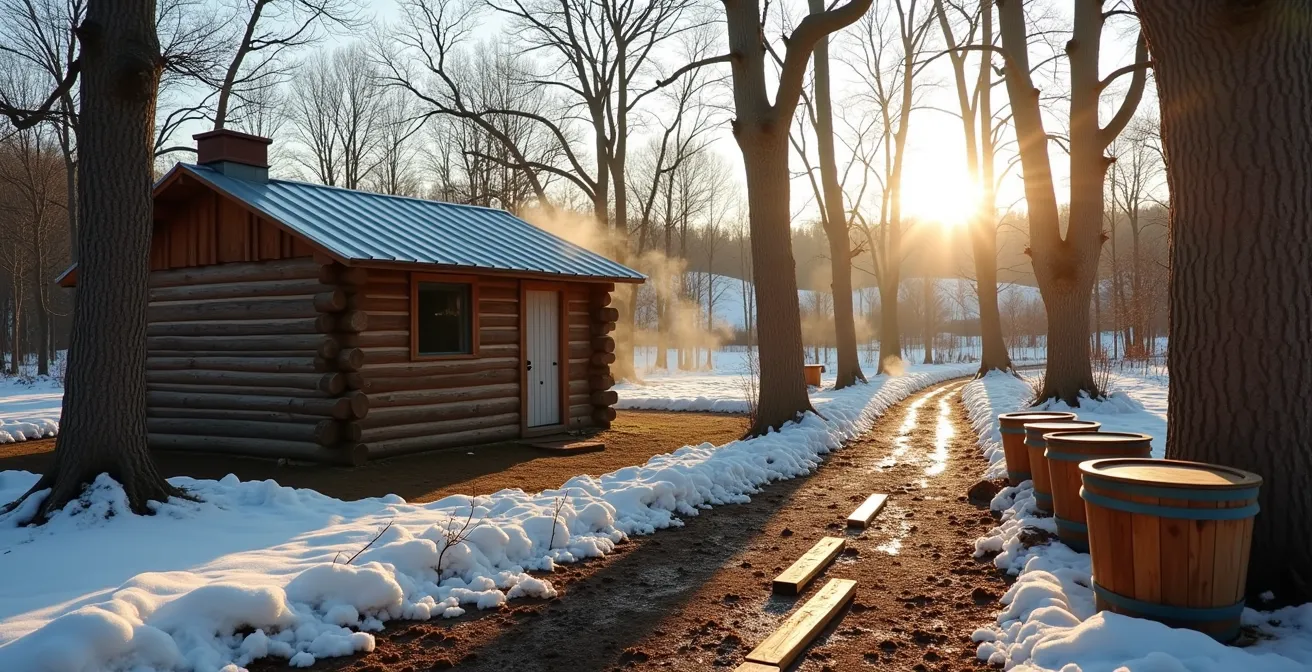
To avoid a generic tourist experience, the key to an authentic sugar shack visit is to embrace the traditional rhythms, from how you eat the meal to how you walk the grounds.
- Prioritize heritage dishes like tourtière and oreilles de crisse over generic fillers during the all-you-can-eat feast.
- Choose a farm based on your children’s age; rustic farms like Proulx are often better for little ones than larger, more polished operations.
- The right footwear (waterproof, insulated boots) is non-negotiable to truly enjoy the muddy, slushy reality of a March sugar bush.
Recommendation: Plan your visit during the week if you can, check the farm’s social media for conditions before you go, and prepare to follow the pace of the land, not the crowd.
Every spring, when the air still has a bite but the sun starts to feel warm on your back, the talk in the Ottawa Valley turns to the sugar shacks. For families, it’s a rite of passage. But there’s a world of difference between a real cabane à sucre experience and a theme-park version with pancakes. Many places will offer you a meal, but few will give you a true taste of the tradition, the very thing that makes this season magical.
You see, the real experience isn’t just about eating your weight in syrup. It’s about understanding the land and its timing. It’s in the smell of woodsmoke from the evaporator, the sound of boots sucking in the March mud, and the sharp, sweet taste of taffy pulled from clean snow. Most guides will give you a list of places, but they won’t tell you the secrets we’ve passed down for generations: how to pace yourself at the table, when to go for the best taffy, or why your choice of boots can make or break your day.
But if you look past the commercial shine, the real heart of the sugar bush is still there. The key isn’t finding the place with the shortest lines, but understanding the rhythm of the sap run itself. This guide is built on that old wisdom. We’ll walk through the rituals of the meal, the secrets of the timing, and the practicalities of a day in the bush, helping you find an experience that feels genuine, memorable, and deeply connected to the land around Ottawa.
Summary: Your Guide to a Real Ottawa Valley Sugar Shack Trip
- Why the Temperature Fluctuation in March Is Critical for Syrup?
- How to Pace Yourself During an All-You-Can-Eat Sugar Shack Meal?
- Fulton’s or Proulx Farm: Which Is Better for Young Children?
- The Footwear Mistake That Ruins Your Visit to the Maple Bush
- When Is the Best Time to Line Up for Maple Taffy on Snow?
- How to Locate a Strawberry Farm That Isn’t Picked Clean by 10 AM?
- Why Wakefield Feels Like a Different Country Just 30 Minutes Away?
- How to Identify High-Quality Maple Syrup Grades for Gifts?
Why the Temperature Fluctuation in March Is Critical for Syrup?
Before you even think about pancakes, you need to understand why March is the magic month. It’s not just a date on the calendar; it’s all about the freeze-thaw cycle. We wait all winter for those specific days where the temperature drops below freezing at night and climbs above freezing during the day. That fluctuation is everything. It creates a pressure difference inside the sugar maple trees, forcing the sap—which is mostly water with a little sugar—to flow from the roots up the trunk.
If it stays too cold, the sap is frozen solid. If it gets warm and stays warm, the trees will bud, and the sap turns bitter, ending the season overnight. We’re looking for that perfect in-between, a rhythm dictated entirely by nature. This is why the best time for a visit is usually mid-to-late March here in the Ottawa Valley, but a real sugar maker watches the forecast, not the calendar. This natural process is the heart of the whole operation.

That single drop of sap you see in the picture is the beginning of it all. It takes an incredible amount of work to turn that watery liquid into the thick syrup on your table. It’s the culmination of a process that requires boiling down 40 litres of sap for a single litre of syrup. When you visit a shack, you’re stepping into that brief, critical window where the forest gives up its treasure.
How to Pace Yourself During an All-You-Can-Eat Sugar Shack Meal?
The “all-you-can-eat” sign is the biggest trap for newcomers. You see it as a challenge, but a traditional sugar shack meal is a ritual, a sequence of flavours meant to be savoured. If you dive straight into the pancakes, you’ll miss the point entirely. The secret is to eat in courses, balancing the salty with the sweet. This isn’t just a meal; it’s a feast celebrating the end of a long winter, with preserved meats and hearty staples.
Start with the warm, savoury pea soup (soupe aux pois). It prepares your stomach. Then, move to the salty, crispy items. This is where the oreilles de crisse (crispy fried pork rinds) shine, along with salt-cured ham and eggs. After that, you can move on to the heartier dishes like baked beans (fèves au lard) and the rich, savoury meat pie, or tourtière. Only then, once you’ve had your fill of the savouries, should you turn your attention to the sweet finale: the pancakes, crêpes, or waffles, all drenched in fresh, warm maple syrup.
This approach isn’t just about taste; it’s about survival. You get a full, balanced meal and still have room for the grand finale out in the snow. To make the most of it, you need to know what to prioritize.
| Heritage Dishes | Description | Priority |
|---|---|---|
| Oreilles de crisse | Traditional fried pork rinds | High – Authentic specialty |
| Tourtière | Traditional meat pie | High – Regional classic |
| Cretons | Pork spread with spices | Medium – Traditional spread |
| Grands-pères | Dumplings in maple syrup | High – Unique dessert |
| Generic items | French fries, sausages | Low – Available anywhere |
Fulton’s or Proulx Farm: Which Is Better for Young Children?
Not all sugar shacks are created equal, especially when you have little ones in tow. Near Ottawa, you have a lot of choices, but two popular ones that illustrate the difference are Fulton’s in Lanark County and Proulx Farm in Cumberland. Choosing between them depends on what kind of experience you want for your family. One is a polished, maple-centric destination, while the other is a rustic, working farm.
For families with toddlers or very young children, a place like Proulx Farm often has the edge. It feels more like a genuine farm. They offer horse-drawn hay rides through the forest, which is an adventure in itself, and there are farm animals to see. The scale is smaller and less overwhelming. According to their site, Proulx Farm’s hay rides to the sugar bush last about 20 minutes, which is just the right length for short attention spans. It’s a hands-on, multi-faceted farm day, not just a maple tour.
Fulton’s, on the other hand, is a larger, more polished operation on over 400 acres. They have extensive, well-maintained trails and a maple museum. It’s a fantastic, educational experience, but might be better suited for slightly older children who can appreciate the longer walks and the history. To help you decide, here’s a scorecard based on what matters most to families, adapted from a helpful local comparison.
| Criteria | Fulton’s Pancake House | Proulx Farm |
|---|---|---|
| Location from Ottawa | 45 minutes (Lanark County) | 30 minutes (Cumberland) |
| Trail accessibility | 8km of maintained trails | Hay rides to sugar bush |
| Child activities | Maple museum, sleigh rides | Century-old shack tours, animals |
| Experience type | Polished, maple-focused | Rustic, multi-faceted farm |
| Size | 400+ acres | 4th generation family farm |
The Footwear Mistake That Ruins Your Visit to the Maple Bush
Let me tell you the single most important piece of advice that no one ever seems to take seriously enough: wear the right boots. I’m not talking about stylish fall boots or flimsy rain boots. I’m talking about proper, insulated, waterproof winter boots. The sugar bush in March is a battlefield of melting snow, deep slush, and thick, unforgiving mud. This is what we call “mud season” for a reason.
We’ve seen it a thousand times: families arrive in sneakers or city shoes, and within ten minutes, their feet are soaked and freezing. The kids are miserable, the parents are frustrated, and the entire day is ruined before it even begins. You can’t enjoy the walk through the woods, you can’t stand comfortably by the evaporator, and you certainly can’t have fun if your toes are numb. Proper bush-ready footwear is not a suggestion; it’s a requirement for an authentic experience.
As one local parent wisely noted after learning the hard way, the conditions are unpredictable:
If the snow is melting, that often means mud, lots of mud. So put your kids in their boots and proper gear to deal with either the snow or mud (I’ve learned this one the hard way).
– Local parent, Embracing Ottawa
Your visit should be about the sweet smell of maple and the joy of spring, not about cold, wet feet. Prepare for the worst conditions, and you’ll be able to enjoy the best of the day.
Your Action Plan: The Essential Footwear Guide for Ottawa Sugar Shacks
- Wear insulated, waterproof boots – non-negotiable for the Ottawa March slush.
- Avoid sneakers or uninsulated rain boots that lead to cold, wet feet.
- Bring a clean, dry pair of shoes for the car ride home.
- Pack a plastic bag to store muddy boots after your visit.
- Dress children in proper boots and gear for mud or snow conditions.
When Is the Best Time to Line Up for Maple Taffy on Snow?
The tire d’érable sur la neige, or maple taffy on snow, is the grand finale of any sugar shack visit. It’s a simple, perfect treat: boiling maple syrup poured onto fresh, clean snow and rolled onto a popsicle stick. But the lineup for it can be long, especially on a sunny weekend afternoon. If you want to avoid the biggest crowds, you need a bit of strategy.
Here’s a secret from an old-timer: don’t wait until after your meal. Everyone does that. The peak rush is right after the main lunch seating empties out. Instead, consider going for your taffy *before* you sit down to eat. While everyone else is inside, the taffy station is often quiet. Alternatively, wait for the mid-afternoon lull, around 2:30 or 3:00 PM, when the lunch crowd has cleared out and the next wave hasn’t fully arrived.
The weather also plays a role. Taffy sets best on very cold snow. A cold, sunny day is ideal. On a warmer, slushy day, it can be a bit of a messy, goopy affair (though still delicious). A pro tip is to get two sticks. Eat the first one right away while it’s warm and gooey. Let the second one sit for a few minutes; it will harden into a sweet, maple lollipop that you can savour on the walk back to your car.
How to Locate a Strawberry Farm That Isn’t Picked Clean by 10 AM?
Once the sap stops running and the evaporators go quiet, the rhythm of the land shifts. For many farms in the Ottawa area, the next big event is strawberry season in June. And just like with the sugar bush, a little insider knowledge goes a long way. There’s nothing more disappointing than arriving at a pick-your-own farm to find the fields have been picked clean by the weekend morning rush.
The number one rule is to avoid the 9-to-5 weekend crowds. If you can, visit on a weekday morning. The fields will be full, and the atmosphere will be much more peaceful. If a weekend is your only option, be there right when they open. The second rule is to do your homework. In this day and age, most farms like Shouldice or Proulx have a Facebook or Instagram page where they post real-time updates on field conditions. Check their feed the morning you plan to go.
Another trick is to think geographically. The farms closest to Ottawa’s core get hit the hardest. Consider driving a little further out. Farms in the Orleans or Manotick area can be quieter during the week. Or, make a day of it and cross the river into Quebec. The farms near Papineauville are often less crowded with Ottawa folks and offer a beautiful country drive.
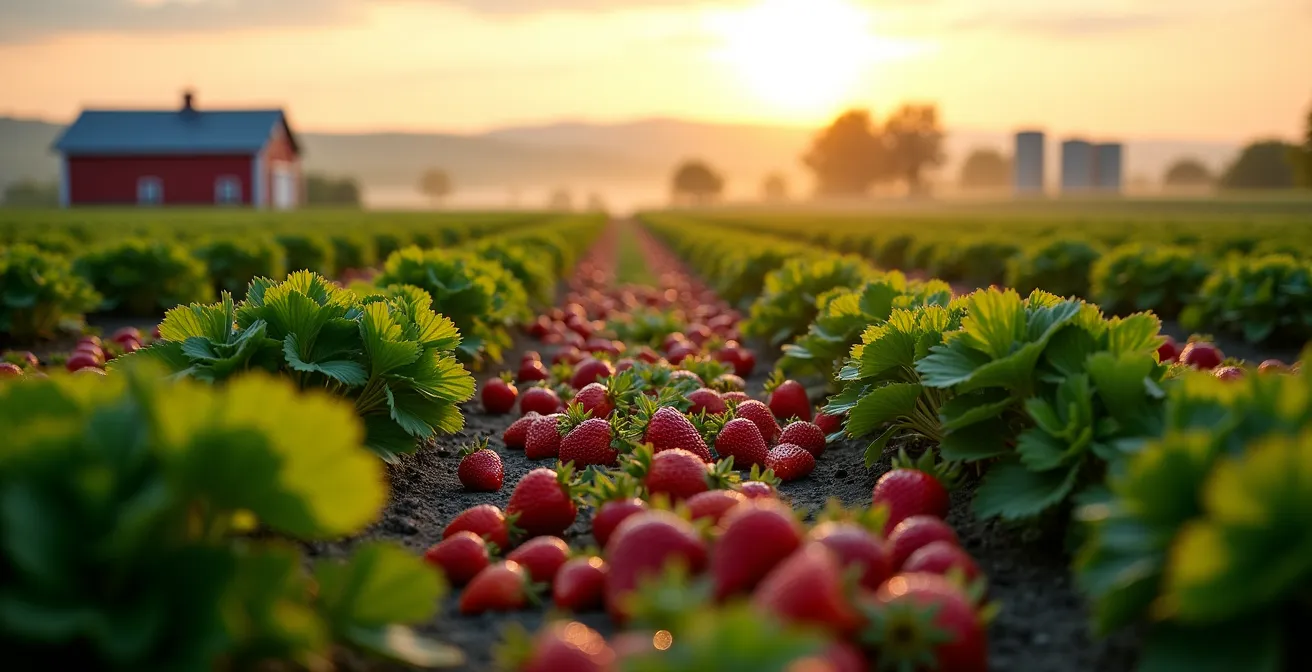
Just like the sugar bush, a successful strawberry harvest is about timing and strategy. It’s another way to connect with the local land and enjoy the fruits of its seasons, long after the maple flavour has faded.
Why Wakefield Feels Like a Different Country Just 30 Minutes Away?
A trip to a sugar shack on the Quebec side, like the traditional Sucrerie du Terroir in Val-des-Monts, offers a perfect opportunity for a double-header day trip. After you’ve had your fill of the rustic, traditional meal in its cozy log cabin, you’re only a short drive from one of the region’s true gems: the village of Wakefield.
Crossing the bridge into Wakefield feels like you’ve left the country and entered a small, bohemian enclave. The village, nestled along the Gatineau River, has a completely different energy than the rural farmland around it. It’s a vibrant hub of artists, musicians, and independent shops. You can find the famous Wakefield Covered Bridge, browse unique bakeries, and enjoy the waterfront. It’s the perfect contrast to the earthy, traditional feel of the sugar bush.
This pairing gives you a taste of two different sides of Quebec culture in a single afternoon. As one local guide puts it, the two experiences complement each other perfectly:
The sugar shack offers a taste of old, rural Quebec, while Wakefield showcases the bohemian, artistic, and modern Quebec.
– Local Tourism Guide, Ottawa Valley Cultural Tours
Combining a rustic morning at a cabane à sucre with a creative afternoon in Wakefield transforms a simple meal into a full-day cultural immersion, showing you the diverse character of the Outaouais region just a stone’s throw from Ottawa.
Key takeaways
- The best sugar shack experience is about understanding the “why” behind the traditions, not just checking boxes.
- Your choice of footwear is genuinely one of the most critical factors for an enjoyable day in the muddy, slushy conditions of a March sugar bush.
- For the most authentic meal, prioritize traditional, savoury dishes first and treat pancakes as the dessert they are meant to be.
How to Identify High-Quality Maple Syrup Grades for Gifts?
Bringing home a bottle of maple syrup is the perfect way to cap off your visit. But standing in the farm shop, faced with a wall of bottles, how do you choose a good one? Forget the generic plastic jugs from the grocery store. Here, you’re buying single-origin syrup, made right on the property. The key is to understand the grading system, which is all about colour and flavour, not quality.
All maple syrup made at a proper shack is high-quality. The grade simply tells you when in the season it was harvested. Syrup made at the beginning of the sap run is light and delicate (Golden). As the season progresses, the syrup gets darker and the flavour more robust (Amber, Dark, and finally Very Dark). A darker grade isn’t “better”; it’s just different. The right choice depends on what you want to use it for. Here’s a guide to help you choose the right one for a gift, based on standard Quebec grading.
| Grade | Color/Taste | Best Use | Gift For |
|---|---|---|---|
| Golden | Light, subtle sweetness | Yogurt, tea | Health-conscious friend |
| Amber | Classic maple taste | Pancakes, waffles | Traditional maple lover |
| Dark | Richer taste | Baking | Foodie who bakes |
| Very Dark | Strong, earthy | Glazes, marinades | Adventurous cook |
And don’t limit yourself to just syrup. Look for other maple treasures like maple butter (beurre d’érable), a creamy, spreadable delight, or hard maple sugar for baking. When you buy from the source, especially from a smaller producer, it’s always a good idea to have some cash on hand, though most accept cards these days. Choosing a thoughtful maple product is the final step in an authentic experience.
So go on, plan your visit. Step into the sugar bush not as a tourist, but as a guest. Experience the rhythm of the sap run for yourself, from the first drop of sap to the last taste of syrup, and you’ll come away with more than just a full stomach—you’ll have a real connection to this cherished Ottawa Valley tradition.