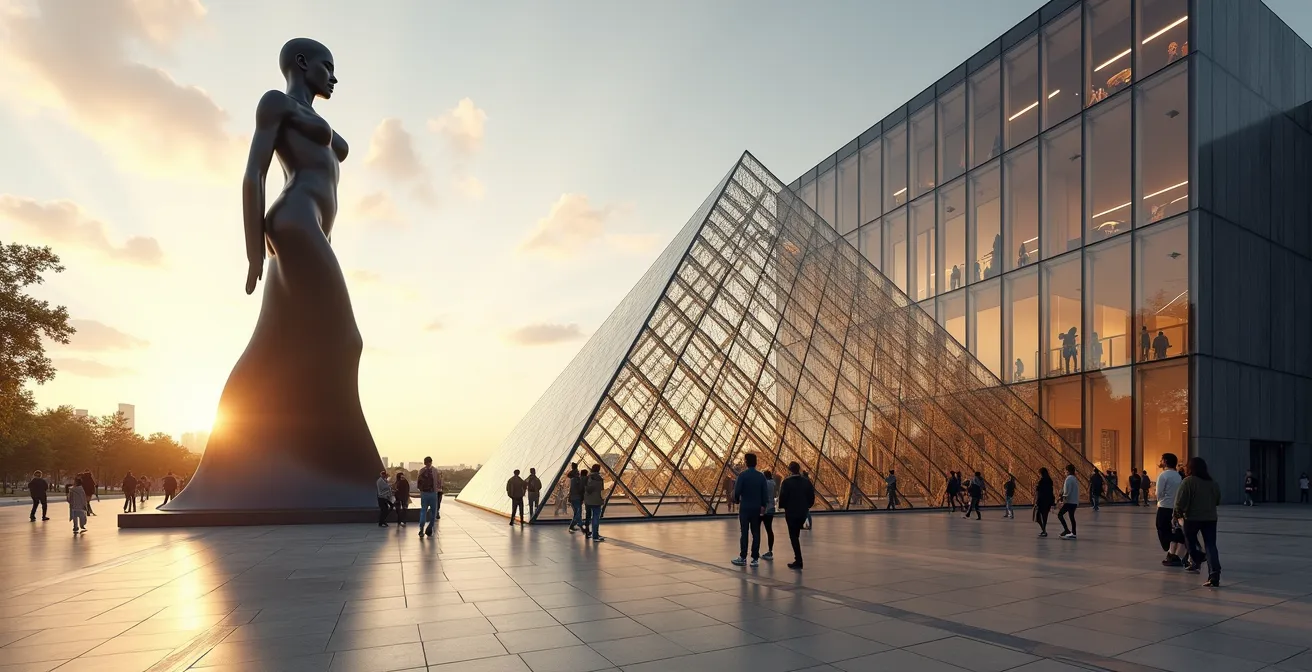
Facing the vast National Gallery of Canada on a tight schedule can feel more overwhelming than inspiring, but a strategic approach transforms the visit into a profound artistic journey.
- Focus on the chronological path through the Indigenous and Canadian galleries to understand the nation’s complex artistic dialogue.
- Leverage specific times, like Thursday evenings or the golden hour at the café, to enhance your experience and save on admission.
- Connect your visit to the broader Ottawa art scene by knowing which alternative local galleries will truly match your contemporary taste.
Recommendation: Treat your visit not as a checklist, but as a curated story you choose to follow, starting with the iconic Maman sculpture as your first chapter.
The scale of the National Gallery of Canada, a magnificent glass and granite structure on Sussex Drive, can be daunting for even the most dedicated art lover. The common advice is to “plan ahead” and rush to see the highlights, reducing a potential cultural immersion to a mere checklist of masterpieces. This approach often leaves one feeling fatigued rather than enriched, having seen much but understood little. You tick off the Group of Seven and maybe catch a glimpse of European masters, but miss the deeper narrative woven into the gallery’s very fabric.
But what if the goal wasn’t to see everything, but to experience the most meaningful parts with intention? The key to truly conquering the gallery in an afternoon lies not in speed, but in a curatorial strategy. It’s about understanding the artistic dialogues the gallery presents, making deliberate choices, and connecting the experience to the vibrant city of Ottawa that lies just beyond its glass walls. This changes the question from “What should I see?” to “What story do I want to uncover?”
This guide provides a focused itinerary, a curator’s blueprint for a rewarding afternoon. We will explore the strategic placement of its most famous outdoor work, navigate the crucial chronological journey of its core collection, and help you decide where to venture next in Ottawa’s dynamic art scene. We’ll also uncover insider tips on timing your visit for maximum impact, both artistically and financially.
Summary: A Curated Afternoon at the National Gallery of Canada
- Why the Spider Sculpture “Maman” Is Placed exactly There?
- How to Locate the Indigenous Art Wing for a Chronological Tour?
- Ottawa Art Gallery or Saw Gallery: Which Fits Your Contemporary Taste?
- The Thursday Night Tip That Saves You $20 on Art Entry
- When to Visit the Gallery Cafe for the Best View of Parliament?
- How to Get Invites to Pop-Up Art Shows in Industrial Warehouses?
- How to Photograph the Parliament Library Without Glare from the River?
- Which National Museum Should You Prioritize for a 3-Hour Visit?
Why the Spider Sculpture “Maman” Is Placed exactly There?
Your visit begins before you even enter. Louise Bourgeois’s monumental sculpture, Maman, is not merely decoration; it is a profound statement of intent. Its placement on the plaza acts as a deliberate threshold, a guardian and a provocation. Towering at over 30 feet, the spider, a tribute to the artist’s weaver mother, embodies themes of maternal strength, protection, and fragility. Its position forces a confrontation and a shift in scale, preparing you for the significant art within. This was a bold curatorial and financial commitment; a report from Faces Magazine notes that when the National Gallery acquired Maman in 2005, its $3.2 million cost was a substantial investment.
This strategic placement also creates a unique artistic dialogue with the city’s political heart. The sculpture frames and re-contextualizes Parliament Hill, creating a visual tension between the organic, primal form of the spider and the Gothic Revival architecture of Canadian governance. It suggests that art and culture are not separate from, but in conversation with, national identity and power. To fully appreciate this, consider how you visually engage with the piece. Don’t just walk past it; walk under it and around it. Notice how your perspective of the Peace Tower and the surrounding cityscape changes, mediated by the spider’s spindly legs.
To capture this dialogue, a few photographic techniques can be particularly effective:
- Frame the Peace Tower directly between the spider’s legs for a composition that is uniquely Ottawa.
- Shoot from a low angle to emphasize the sculpture’s intimidating height and power against the sky.
- During the late afternoon’s “golden hour,” capture the reflections in the bronze abdomen and use the stainless steel legs as leading lines pointing towards Parliament.
- Position yourself on the left side of the sculpture in the late afternoon to capture the best light on both the artwork and the buildings behind it.
How to Locate the Indigenous Art Wing for a Chronological Tour?
Once inside, the single most rewarding strategy for a time-limited visit is to follow the chronological narrative presented in the Canadian and Indigenous Art galleries. This is not just a collection of art; it is a carefully constructed story of this land. Resisting the urge to dash towards European masters will provide a foundational context that enriches everything else you see. The entrance to this vital journey is located to the left, just before you enter the soaring Great Hall.
This layout is the result of a landmark curatorial effort. The gallery’s 2017 transformation was a deliberate act to reshape the narrative of Canadian art history, moving away from a segregated presentation to an integrated one.
Case Study: The 2017 Reorganization and Its Impact
The ambitious 2017 project integrated almost 800 works, with some dating back 5,000 years, to present a new, unified timeline. As noted by the gallery, curators reached out to museums worldwide for temporary loans to enrich the collection. This created a groundbreaking chronological dialogue between Indigenous and non-Indigenous Canadian art, allowing visitors to see how different cultures responded to the land, politics, and social changes of the same era, side-by-side.
This integration allows you to witness a conversation across centuries. You see the evolution of ancient Indigenous traditions alongside the works of settler artists, creating a richer, more honest, and more complete picture of the nation’s artistic identity. The experience is both educational and deeply moving.
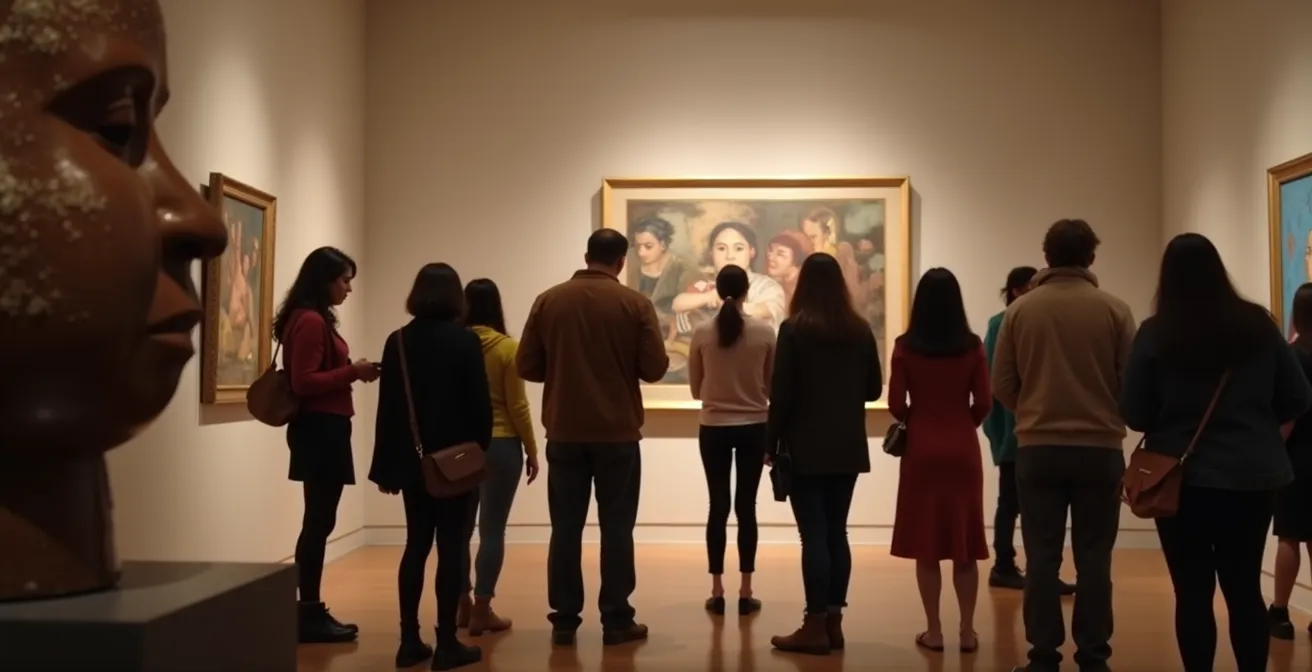
As seen in the re-imagined spaces, this curatorial choice fosters moments of quiet contemplation and connection. To make the most of this journey, a clear path is essential.
Your Action Plan: Navigating the Chronological Tour
- Entry and Ascent: Enter through the main entrance and proceed up the long, dramatic ramp toward the Great Hall.
- The Crucial Left Turn: Before entering the Great Hall’s glass pyramid, turn left to find the entrance to the Indigenous and Canadian Art galleries.
- Starting Point: Begin your chronological journey in room A101, which features the earliest works from 5,000 years ago.
- Follow the Narrative: Proceed sequentially through the numbered rooms (A101-A116) to follow the historical timeline of the art.
- Don’t Miss the “Boutique”: Pay special attention to the salon-style hanging section, which explicitly showcases the dialogue between Indigenous and settler artists.
Ottawa Art Gallery or Saw Gallery: Which Fits Your Contemporary Taste?
After immersing yourself in the national narrative at the NGC, you may crave a more focused contemporary art experience. Ottawa’s art scene extends far beyond the national institution, and conveniently, two of its most important contemporary venues, the Ottawa Art Gallery (OAG) and SAW Gallery, are housed in the same Arts Court building complex. Your choice between them depends entirely on your taste for the contemporary: do you prefer the established regional voice or the political avant-garde?
The Ottawa Art Gallery (OAG) acts as the city’s municipal gallery. Its focus is firmly on the artists of the Ottawa-Gatineau region. Here you’ll find a deep connection to the area’s artistic lineage, including pieces from the celebrated Firestone Collection of Canadian Art, which features works by the Group of Seven. The OAG, with its modern, airy architecture and always-free admission, is perfect for those who appreciate traditional mediums and want to understand the local art ecosystem. It’s a more institutional and family-friendly environment.
In contrast, SAW Gallery, located in the same building, is the city’s pulse for edgy, subversive, and politically charged contemporary art. As a renowned artist-run centre, it focuses on performance art, media installations, and works that challenge social norms. With a “pay-what-you-can” model, it attracts those seeking experimental and internationally-focused work. If your taste leans toward the provocative and the avant-garde, SAW is your destination. A guide to Ottawa’s galleries notes it serves over 30,000 visitors annually, cementing its role as a vital cultural hub.
To help you make a quick, informed decision, this comparison breaks down the essential differences.
| Feature | Ottawa Art Gallery (OAG) | SAW Gallery |
|---|---|---|
| Style | Institutional Local – Focus on Ottawa-Gatineau regional artists | Political Avant-Garde – Edgy, subversive, internationally-focused |
| Admission | Always FREE | Pay-what-you-can |
| Annual Visitors | Not specified | 30,000+ |
| Space | Modern KPMB-designed building, 3 floors | 15,000 square feet + Club SAW venue |
| Collection Focus | Firestone Collection, Group of Seven, regional contemporary | Performance art, media art, politically charged installations |
| Best For | Traditional art lovers, families, regional art enthusiasts | Experimental art seekers, performance art fans, social activists |
Because they are in the same building, you can efficiently experience both. A strategic approach would be to start on the OAG’s third floor to see the permanent collection, then descend to the street-level SAW for a dose of the experimental, all within 90 minutes.
The Thursday Night Tip That Saves You $20 on Art Entry
For the strategic art lover, timing is everything. One of Ottawa’s best-kept secrets for culture aficionados is the National Gallery’s free admission window. This simple piece of information can not only save you money but also transform the atmosphere of your visit. According to the gallery’s own information, the National Gallery offers free admission every Thursday evening from 5 PM to 8 PM, a significant saving from the regular adult admission of up to $25.
This isn’t just about saving money; it’s about experiencing the gallery in a different context. The evening hours often bring a more local, relaxed crowd, shifting the dynamic from a tourist destination to a community hub. The lighting changes, and the galleries can feel more intimate. However, to make the most of this opportunity, a little strategy is required to avoid the initial rush and navigate the space efficiently. A common mistake is arriving right at 5 PM, only to be met with a queue.
A smarter plan involves optimizing your time to see the most with the least friction. The goal is to use the money saved for a complete cultural evening in the nearby ByWard Market.
- Optimal Arrival Time: Arrive around 6:30 PM. The initial surge of visitors from 5 PM will have dissipated, allowing for a more pleasant entry.
- Work Top-Down: Start on the upper floors, where the European and American Art collections are housed. These galleries are typically quieter in the evening, allowing for more personal engagement with the works.
- Check for Exclusions: Before you go, always check the NGC’s website. Special ticketed exhibitions are often not included in the free Thursday admission, so it’s best to know in advance to avoid disappointment.
- Reinvest Your Savings: Use the $20 you saved on admission for a post-gallery experience. Consider drinks at the nearby Brothers Beer Bistro or rooftop cocktails at Copper Spirits & Sights, both a short walk away in the ByWard Market.
This approach turns a simple money-saving tip into a comprehensive plan for a sophisticated and affordable evening of art and local culture.
When to Visit the Gallery Cafe for the Best View of Parliament?
Within the National Gallery, some of the most compelling art isn’t on a canvas. The panoramic view of Parliament Hill from the gallery’s café, Tavern at the Gallery, is a masterpiece of urban composition, a living landscape painting that changes with the light. Visiting the café is not just a coffee break; it’s a curatorial choice to engage with the dialogue between art, architecture, and nature. The key is knowing exactly when to go for the most dramatic effect.
The most spectacular views occur during the “golden hour”—the period shortly before sunset when the sunlight is redder and softer. During this time, the copper roofs of the Parliament Buildings glow, the Gothic stonework is thrown into dramatic relief, and the sky over the Ottawa River puts on a daily show. Arriving about an hour before sunset positions you perfectly to witness this transformation. This turns a simple beverage into a front-row seat for one of the best views in the entire city.
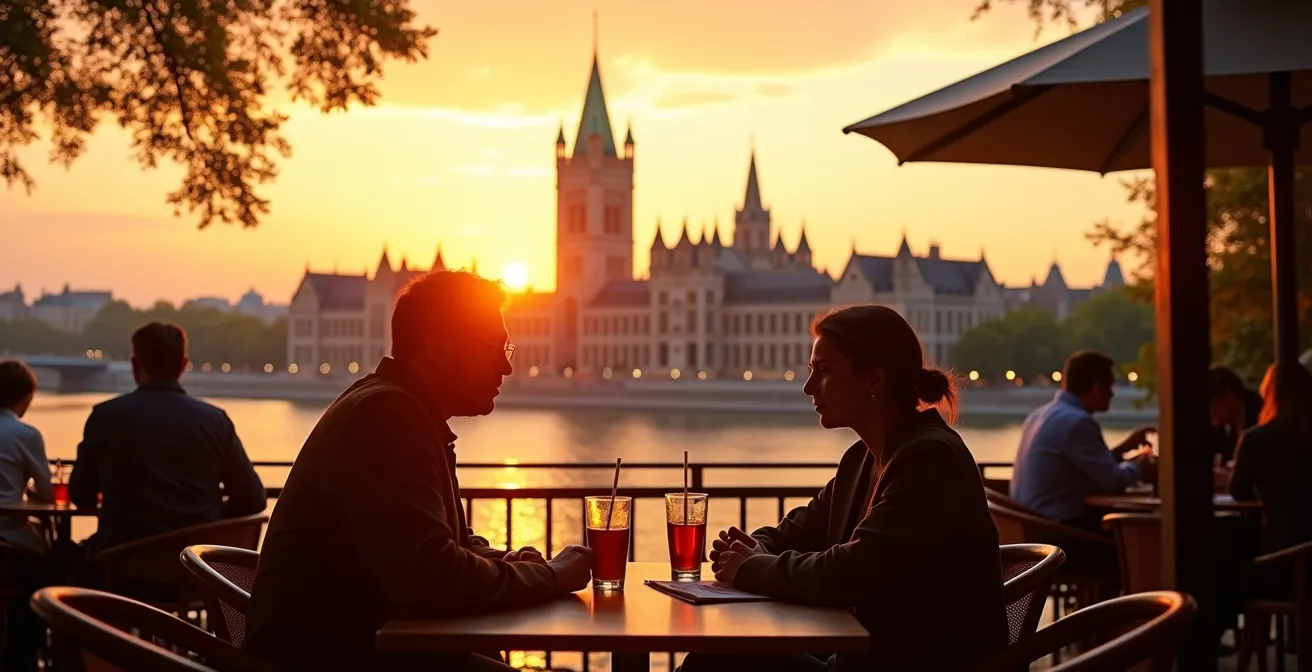
As the sun sets, the view becomes a powerful, contemplative experience. Securing the best vantage point is crucial. For those without a reservation, the public mezzanine level just outside the café entrance offers a nearly identical view for free, allowing you to enjoy the spectacle without needing to order.
To perfectly time this experience, follow this simple guide:
- Optimal Timing: Visit approximately one hour before the official sunset time to watch the light change dramatically during the golden hour.
- Table Selection: If dining, reserve a table at the far end of the restaurant, against the glass wall. The tables closest to the Alexandra Bridge offer the most encompassing view of the Parliament Buildings.
- Seasonal Pairings: Adapt your experience to the season. In winter, a hot chocolate while watching snow fall on Parliament is magical. In summer, the long twilight hours are perfect for enjoying a local Kichesippi beer.
How to Get Invites to Pop-Up Art Shows in Industrial Warehouses?
A truly deep dive into Ottawa’s art scene requires moving beyond established institutions and into its thriving underground network. The city’s most exciting, avant-garde work often appears in ephemeral pop-up shows, frequently held in unconventional spaces like industrial warehouses or artist-run studios. Gaining access to this world is less about formal invitations and more about knowing where to look and who to follow. It requires a blend of digital savvy and on-the-ground legwork.
The digital realm is your first port of call. Specific Instagram accounts act as informal bulletins for the city’s creative underground. Following accounts like @apt613 for general cultural news, @possibleworldsshop for the indie and print scene, and even the official @ottawaartgallery account can provide clues and announcements about upcoming events. These are often last-minute, so frequent monitoring is key.
However, the analog world remains equally important. Physical flyers, posters, and zines are still a primary method of promotion for artist-run initiatives. Visiting key hubs allows you to tap into this information stream directly.
Case Study: Locating Ottawa’s Underground Art Hubs
Certain locations have become nexuses for Ottawa’s emerging art scene. The City Centre complex and Enriched Bread Artists (EBA) are known for hosting annual open houses that are crucial for discovering new talent. Moreover, a short walk across the bridge into Gatineau’s Basse-Ville leads to the Recto-Verso building, a regular host for experimental shows. Even SAW Gallery’s origins trace back to a café, Le Hibou, showing how these informal spaces evolve into major cultural players like Club SAW, which now hosts thousands of artists annually.
To build your discovery network, a multi-pronged approach is most effective:
- Digital Monitoring: Regularly check the Instagram accounts of @apt613, @possibleworldsshop, and @ottawaartgallery for event announcements.
- Physical Reconnaissance: Visit physical locations like Possible Worlds in Chinatown and the OAG’s shop to check bulletin boards and counters for printed flyers and zines.
- Networking: Attend the “First Friday” gallery crawls in the ByWard Market. Engaging with artists and gallery staff in this informal setting is one of the best ways to hear about upcoming, unadvertised shows.
How to Photograph the Parliament Library Without Glare from the River?
While the National Gallery offers stunning interior views, one of the most iconic exterior shots in Ottawa is of the Parliament Library, taken from across the Ottawa River. However, many visitors are frustrated by a common enemy: glare. The reflection of the sun off the river’s surface can wash out your photos, obscuring the intricate detail of this Gothic Revival masterpiece. Capturing the perfect, glare-free shot requires a combination of technical solutions and strategic positioning.
The single most effective tool against glare is a Circular Polarizing Filter (CPL). Once reserved for professional DSLRs, CPLs are now widely available as inexpensive clip-on accessories for smartphones. By rotating the filter while looking at your screen, you can dramatically cut down or eliminate the polarized light reflecting off the water, revealing the true colors and contrast of the scene. It’s a small piece of gear that makes a massive difference.
If you don’t have a filter, timing and weather become your primary tools. An overcast day is a photographer’s friend in this situation, as the clouds act as a giant natural diffuser, scattering the sunlight and creating soft, even lighting with no harsh reflections. Alternatively, shooting in the early morning with the sun behind you will front-light Parliament, ensuring it is brightly illuminated while minimizing the angle of reflection from the water.
For a perfect, glare-free image, consider this technical checklist:
- Use a Polarizer: Invest in a Circular Polarizing Filter (CPL). Rotate it to visibly reduce the glare from the Ottawa River on your screen.
- Shoot on Overcast Days: Take advantage of cloudy weather, which provides diffused light and eliminates harsh reflections naturally.
- Mind the Sun’s Position: Position yourself in the early morning with the sun at your back for direct, even lighting on the Parliament buildings.
- Change Your Angle: Walk east along the river path toward the Royal Canadian Mint. This different angle can often provide a glare-free view of the Library.
- Get Creative: As a compelling alternative, use the reflective glass facade of the National Gallery itself to create layered, meta-photographs of Parliament.
Key Takeaways
- A meaningful visit to the NGC hinges on following the chronological tour of Canadian and Indigenous art to grasp the nation’s artistic dialogue.
- Strategic timing is paramount; leverage free Thursday evenings and the ‘golden hour’ at the café to elevate your experience both financially and aesthetically.
- View the National Gallery not as an isolated destination, but as a gateway to Ottawa’s wider, dynamic art scene, from the OAG to underground pop-ups.
Which National Museum Should You Prioritize for a 3-Hour Visit?
While the National Gallery is a must for art lovers, Ottawa is a city of national museums, and a limited schedule often forces a difficult choice. If you only have a 3-hour window, which institution offers the best return on your time? The answer depends on your primary interest: are you driven by visual art, human history, or the natural world? Each of Ottawa’s major museums offers a world-class, but distinctly different, experience.
The National Gallery of Canada is the undisputed priority for the art lover. Its collections span from European masters to the most contemporary Canadian artists, with its Indigenous galleries offering a particularly profound experience. For those whose passion is visual expression, this is the clear choice. In contrast, the Canadian Museum of History, located just across the river in Gatineau, is for the history buff. Its breathtaking Grand Hall, with the world’s largest indoor collection of totem poles, and the comprehensive Canadian History Hall, offer a deep and immersive dive into the nation’s story from its earliest peoples to the present day.
Finally, the Canadian Museum of Nature, housed in a stunning castle-like building, is the top choice for families and science enthusiasts. Its galleries of fossils, minerals, and mammal exhibits provide a fascinating journey through the natural world. Each museum is excellent, but they serve very different curatorial purposes.
This quick guide can help you make the most strategic choice for your limited time.
| Museum | Best For | Must-See | Time Needed |
|---|---|---|---|
| Canadian Museum of History | History Buffs – Understanding Canada’s story | Grand Hall with Pacific First Nations totems, Canadian History Hall | 3-4 hours |
| National Gallery of Canada | Art Lovers – Visual arts from European masters to contemporary | Group of Seven collection, Indigenous galleries, Maman sculpture | 2-3 hours |
| Canadian Museum of Nature | Science & Nature Enthusiasts, Families | Castle architecture, fossil/mineral galleries, mammal exhibits | 2-3 hours |
However, for the truly ambitious curator of their own time, there is a way to combine two of these experiences by leveraging the free Thursday hours at the NGC. This “Efficient Thursday Museum Hop” strategy maximizes your cultural intake while minimizing costs. Start at the Museum of Nature at 4 PM, paying for just one hour. Then, travel the short distance to the National Gallery by 5 PM to take advantage of its free evening admission until 8 PM. This allows you to experience two world-class institutions for a fraction of the price.
Ultimately, a successful visit to Ottawa’s cultural institutions is not about seeing everything, but about seeing with intention. By adopting a curatorial mindset, you can transform an overwhelming afternoon into a focused, insightful, and memorable artistic journey.