
In summary:
- Choose your flavour strategically: “dry” toppings like the classic Killaloe Sunrise (cinnamon and lemon) are far less messy than “wet” ones like chocolate hazelnut.
- Master the “one-glove-off” technique combined with a “napkin-sleeve” to keep your hands warm and clean.
- Avoid peak times, especially during Winterlude. Visit on a weekday or during a major show to skip the infamous 45-minute lines.
- Fold the pastry in half like a taco to contain the toppings and eat it from the ends inward.
You see it in every Ottawa travel guide: a picture of a smiling tourist, holding a wide, flat pastry covered in chocolate or cinnamon sugar. This is the BeaverTail, an undisputed icon of the nation’s capital. But there’s another, less-photographed reality: the sticky-fingered tourist, wrestling with dripping toppings in the freezing cold, their gloves a casualty of a sugar explosion. Let’s be honest, the fear of a messy disaster is real for any first-timer.
Most advice is painfully generic: “grab extra napkins.” While true, this doesn’t help you when chocolate hazelnut spread is rapidly freezing to your expensive winter gloves. Others will tell you about the long lines at the Rideau Canal or the history of the pastry. But no one tells you the real-world strategy, the small adjustments that separate a fumbling visitor from a confident local enjoying their winter ritual.
But what if the key wasn’t just managing the mess, but preventing it entirely through a series of smart, insider choices? This guide is your ticket to mastering the BeaverTail ritual. It’s not about just eating a pastry; it’s about conquering it with grace. We’ll move beyond the basics and give you the tactical knowledge to choose the right flavour, handle it like a pro, and even know the best time to buy one to avoid the crowds.
This guide will walk you through the entire experience, from understanding the classic flavours to the logistical challenges of navigating Ottawa’s festivals. By the end, you’ll be able to enjoy this delicious Canadian treat with the confidence and ease of someone who’s lived here for years.
Summary: The No-Mess BeaverTail Strategy
- Why Is the “Killaloe Sunrise” Flavor Called That?
- How to Buy a BeaverTail During Winterlude Without Waiting 45 Minutes?
- Chocolate Hazelnut or Cinnamon Sugar: Which Is the True Classic?
- The Glove Mistake While Eating Hot Pastry Outdoors
- What Hot Drink Pairs Best with a Garlic Butter BeaverTail?
- When is the Best Time to Buy a BeaverTail to Avoid the Line?
- How to Get Between the 3 Winterlude Sites via the Sno-Bus?
- Where to Find the Best International Fried Dough at Ottawa Festivals?
Why Is the “Killaloe Sunrise” Flavor Called That?
Before you can master the BeaverTail, you must understand its roots. The most authentic—and arguably most manageable—flavour you can order is the “Killaloe Sunrise.” The name isn’t just a catchy marketing term; it’s a direct nod to the pastry’s heritage. The entire BeaverTails story began in 1978 at a small community fair in Killaloe, a town west of Ottawa. It was there that Pam and Grant Hooker first started selling pastries based on a German family recipe. According to the official origin story, their daughter remarked that the hand-stretched dough looked like a beaver’s tail, and an icon was born.
The Killaloe Sunrise is a tribute to that origin. It’s the purist’s choice, combining a simple dusting of cinnamon sugar with a fresh squeeze of lemon juice. For the first-timer focused on a clean experience, this is your safest and most historically significant bet. The dry toppings adhere well to the hot pastry, and the zesty lemon cuts the sweetness without creating a liquid mess.
Ordering it shows you’re in the know. It’s less about a mountain of toppings and more about tasting the whole wheat dough itself, just as it was intended. To get the full experience, eat it immediately while it’s still hot. The contrast between the tart lemon and the warm, sweet cinnamon is the heart of this classic flavour, offering an authentic taste of Canadiana with minimal risk of a sticky situation.
How to Buy a BeaverTail During Winterlude Without Waiting 45 Minutes?
Winterlude is peak BeaverTail season. The festival, which celebrates Ottawa’s harsh but beautiful winter, draws massive crowds. In fact, Winterlude once set a record of an estimated 1.6 million visits to its sites in a single year. That’s a lot of people, and it often feels like every single one of them is in line for a hot pastry at the same time. The kiosks along the Rideau Canal Skateway are notoriously busy, with wait times easily stretching to 45 minutes or more. But a true aficionado never waits that long.
The key is strategic timing. Avoid the weekend afternoon rush at all costs. Instead, plan your visit with these pro tips:
- Go on a weekday. The time between the main festival weekends, from Monday to Thursday, sees very few scheduled events and far smaller crowds. You can enjoy the sights and your pastry in relative peace.
- Visit the permanent location. Head to the original BeaverTails stand in the ByWard Market. While still popular, it often has a shorter, faster-moving line than the temporary kiosks set up for the festival.
- Use shows as a diversion. When a major performance or event is happening on Sparks Street or at Jacques-Cartier Park, the crowds are concentrated there. This is your window of opportunity to sneak over for a BeaverTail.
Imagine the scene: a quiet morning at the ByWard Market stand, steam rising from the fryer, with only one or two people ahead of you. This isn’t a dream; it’s the result of smart planning.

By treating your pastry run as a tactical mission rather than a spontaneous craving, you can turn a potential 45-minute ordeal into a quick and pleasant five-minute stop, leaving you more time for skating and exploring.
Chocolate Hazelnut or Cinnamon Sugar: Which Is the True Classic?
You’ve navigated the crowds and arrived at the counter. Now comes the most critical decision, one that will determine the fate of your gloves and your dignity: which flavour to choose? The menu is long and tempting, but the core battle is almost always between the modern, photogenic Chocolate Hazelnut and the traditional, understated Cinnamon Sugar (the base of the Killaloe Sunrise).
Before we began our travels in North America, everyone recommended us to ‘try a beaver tail!’ We have tried both the chocolate brownie and the original cinnamon, they were both delicious. It’s also affordable and a quick bite to eat.
– Tourist Experience with Classic Flavors
For the visitor concerned with mess, the choice is clear. The primary factor to consider is what I call “pastry integrity.” A BeaverTail is at its best when it’s hot and crispy. Wet, heavy toppings can compromise this, making the dough soggy and more prone to tearing. This is where the “topping-to-temperature ratio” comes into play: in the Ottawa cold, a liquid topping like chocolate hazelnut spread doesn’t just drip; it can start to seize up, becoming thick and difficult to manage while the part touching the hot pastry remains molten. This creates a dual-texture disaster. As a direct comparison shows, the two classics offer very different experiences.
| Aspect | Cinnamon Sugar | Chocolate Hazelnut |
|---|---|---|
| Origin Year | 1978 (Original) | Later addition |
| Mess Factor | Low – dry topping stays in place | High – melts and drips in cold |
| Structural Integrity | Maintains crispness | Can compromise pastry texture |
| Authenticity | The purist’s ritual | Tourist favorite |
| Instagram Appeal | Classic simplicity | More photogenic |
While the gooey, glossy look of a chocolate-slathered BeaverTail is undeniably tempting for social media, the Cinnamon Sugar is the true classic for a reason. It delivers all the flavour without compromising the crisp texture of the pastry. For your first time, choosing the classic isn’t just the safer option; it’s the more authentic one.
The Glove Mistake While Eating Hot Pastry Outdoors
This is where the plan comes together—or falls apart. You’ve chosen your flavour wisely and secured your pastry. Now, you must eat it. Outdoors. In the cold. This is where amateurs fumble. The biggest error is underestimating the sticky potential and failing to prepare your hands. Taking off both gloves means frozen fingers, but leaving them on, especially if they are wool or knit, is a recipe for a permanent, sugary souvenir of your visit.
Eating them can be a bit messy and challenging but it is worth it!
– TripAdvisor Reviewer, BeaverTails Ottawa Review
The pro move involves a combination of gear and technique. First, fold the BeaverTail in half like a taco. This immediately contains the majority of the toppings. Second, you must master the art of handling the pastry without sacrificing warmth or cleanliness. It requires a specific, deliberate strategy.
Your Action Plan: The No-Mess Glove and Pastry Strategy
- Choose the right gear: Opt for leather or waterproof synthetic gloves that can be easily wiped clean. Avoid absorbent materials like wool at all costs. Fingerless gloves are a great compromise.
- Master the one-glove-off technique: Keep one hand warm in your pocket. Use your bare, dominant hand to handle the pastry. This gives you maximum dexterity and control.
- Create the “napkin-sleeve”: Before you grab the pastry, ask for extra napkins. Wrap them around the bottom half of your folded BeaverTail. This creates a clean, insulated handle for your bare hand.
- Execute the fold: Hold the napkin-wrapped base and fold the pastry lengthwise. This simple action keeps the toppings from dripping off the sides. Mittens make this impossible, so they must be removed.
- Eat from the ends inward: Start eating from one of the folded ends, working your way towards the middle. This keeps the structure intact for as long as possible.
This methodical approach turns a potentially chaotic experience into a controlled, enjoyable ritual. You stay warm, your gloves stay clean, and you get to savour every bite without a single drop of wasted topping.
What Hot Drink Pairs Best with a Garlic Butter BeaverTail?
While most visitors gravitate towards sweet toppings, the savoury BeaverTail is a hidden gem for the seasoned enthusiast. The most popular savoury option is generously brushed with garlic butter and sometimes a sprinkle of cheese. It transforms the pastry from a dessert into a warm, satisfying snack akin to garlic bread. But pairing it correctly is essential; the wrong drink can create a confusing clash of flavours.
The cardinal rule is to avoid sweetness. A hot chocolate, while a winter classic, will fight with the garlic and butter, pleasing neither palate. You need a beverage that complements or cleanses, rather than competes. The goal is to enhance the rich, umami flavour of the pastry.
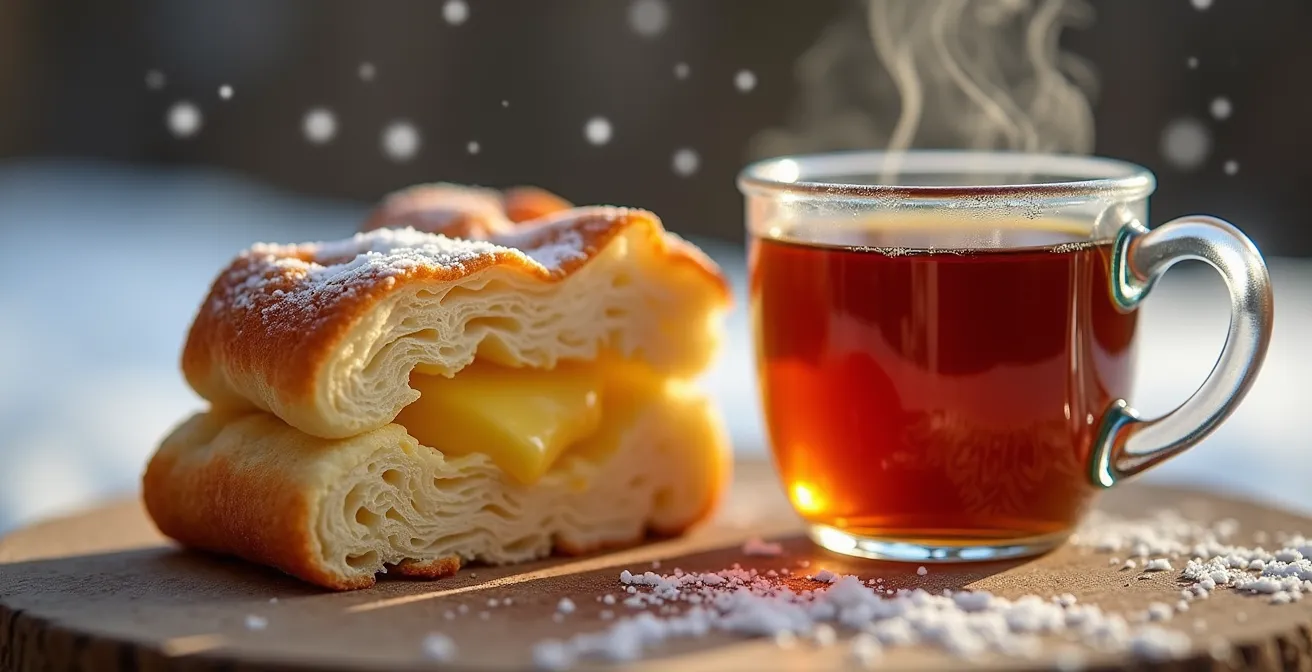
As the image suggests, the right pairing elevates the entire experience, turning a simple snack into a gourmet moment. Consider these expert pairings for your savoury adventure:
- Simple Consommé: A hot beef or vegetable broth in a thermos is the ultimate pro move. Its deep, savoury notes perfectly harmonize with the garlic butter.
- Non-Milky Hot Tea: An astringent tea like an Earl Grey or English Breakfast is an excellent choice. The tannins in the tea cut through the richness of the butter, cleansing your palate between bites.
- Plain Black Coffee: For a more neutral option, a simple black coffee works well. It acts as a bitter counterpoint to the rich pastry without introducing conflicting flavours.
Choosing to go savoury is a bold move that signals you’re no longer a BeaverTail rookie. Pairing it with the right hot drink is the final touch that proves you’ve truly mastered the art of this Ottawa ritual.
When is the Best Time to Buy a BeaverTail to Avoid the Line?
While Winterlude presents the biggest crowd challenge, the quest for a BeaverTail is a year-round activity in Ottawa, and lines can form even on a pleasant summer evening. The principles of strategic timing apply outside the festival season as well. The goal is always to zig when everyone else zags. Understanding the daily and weekly flow of crowds at the permanent ByWard Market location is key to a swift and painless purchase.
Think like a local, not a tourist. Tourists tend to flock to popular spots during predictable peak hours: lunchtime (12-2 PM) and post-dinner (7-9 PM), especially on weekends. A local knows the quiet pockets of time in between. Your strategy should be to target these lulls when the majority of people are either working, dining, or have already had their treat for the day. This is especially true if the weather is less than perfect.
Here is your general, year-round timing strategy for minimal waiting:
- Weekday Afternoons (2-4 PM): This is the golden window. The lunch rush is over, and the after-work crowd hasn’t arrived yet. The ByWard Market is generally quieter during this time.
- Right at Opening (11 AM): Be the first in line. Arriving just as they open on a weekend morning ensures you get a fresh pastry before the lunchtime crowds descend.
- The “Bad Weather, Good Opportunity” Rule: A little rain or an extra-cold day can be your best friend. These conditions deter many casual visitors, leaving the line short for dedicated pastry seekers like you.
- The Late-Night Lull (Post 9 PM): On Friday and Saturday nights, there’s often a dip in the line after the initial post-dinner rush, as people move on to bars or head home.
By avoiding the herd, you transform the experience from a frustrating wait into a quick, satisfying reward. It’s all about knowing the rhythm of the city.
How to Get Between the 3 Winterlude Sites via the Sno-Bus?
During Winterlude, enjoying a BeaverTail is part of a larger adventure that spans multiple locations. The festival’s main sites are typically spread out between Sparks Street, the Rideau Canal, and Jacques-Cartier Park in Gatineau. Getting between them, especially with kids in tow, can be a chilly and tiring trek. This is where the OLG Sno-Bus comes in as an essential piece of your logistical puzzle.
This free shuttle service is your best friend for navigating the festival efficiently. It connects the main hubs, allowing you to save your energy for skating and exploring. More importantly, it can be part of your strategic BeaverTail plan. For example, you can enjoy the ice sculptures at Jacques-Cartier Park, then hop on the Sno-Bus to the ByWard Market for a less-crowded pastry experience before heading to the canal. It’s a heated, mobile base of operations.
To use it like a pro, keep these tips in mind:
- Check the Schedule Online: Before you head out, always check the official National Capital Commission (NCC) or OC Transpo websites for the live schedule and route map. Times can vary.
- Know Your Stops: Familiarize yourself with the key stops. The one near the National Arts Centre is your gateway to the Rideau Canal Skateway, while others will drop you right by the ByWard Market or Sparks Street.
- Use It as a Warming Hut: The bus is a great place to warm up between outdoor activities. Don’t be afraid to use it for a quick, heated break to reset before your next stop.
- Take the Free Tour: If you have time, riding the full loop can be a fun and free sightseeing tour of the festival’s key areas, perfect for getting your bearings when you first arrive.
Mastering the Sno-Bus isn’t just about transportation; it’s about smart energy management. It ensures you arrive at the BeaverTail stand ready to enjoy your treat, not exhausted from a long, cold walk.
Key takeaways
- The secret to a mess-free BeaverTail lies in strategic choices: pick dry toppings, use the “napkin-sleeve,” and master the one-glove technique.
- Avoid peak-hour frustration by visiting on a weekday or during off-hours; never wait in the main weekend line at Winterlude.
- The most authentic and least messy flavour is the “Killaloe Sunrise,” a direct homage to the brand’s 1978 origins.
Where to Find the Best International Fried Dough at Ottawa Festivals?
While the BeaverTail is unequivocally Ottawa’s champion of fried dough, it’s part of a global tradition. Nearly every culture has its own version of a sweet, fried pastry, from the churros of Spain to the doughnuts of America. Understanding this context elevates your appreciation for what makes the BeaverTail unique. Its use of whole wheat flour and its signature hand-pulled shape, designed to mimic a real beaver’s tail, set it apart from its international cousins.
The BeaverTail’s success has even gone global, proving the universal appeal of hot, fried dough. By 2018, the brand had expanded significantly, with 140 locations across six countries, including the USA, Mexico, France, and Japan. This Canadian creation now stands shoulder-to-shoulder with other world-famous pastries.
While Ottawa’s many festivals—from the Tulip Festival to Bluesfest—often feature food trucks with international options like churros or mini doughnuts, none have the deep-rooted local identity of the BeaverTail. It remains the one pastry that is intrinsically linked to the city’s culture and, particularly, its winter identity. It’s more than just a snack; it’s an experience woven into the fabric of the capital. So while you can find other fried dough, the authentic Ottawa festival experience will always lead you back to that iconic, flat pastry.
Now that you’re armed with the strategies of a seasoned local, the final step is to put your knowledge to the test. Head to the ByWard Market or the Rideau Canal, confidently place your order, and enjoy your perfectly executed, mess-free BeaverTail ritual.
Frequently Asked Questions About BeaverTails
What makes BeaverTails unique compared to other fried dough?
BeaverTails are made with whole wheat flour and pulled by hand to resemble the long, flat tail of a beaver, creating a unique texture and shape that is both chewy and crispy.
What’s the American equivalent of BeaverTails?
The United States has a similar version called Elephant Ears, which are also large, flat pieces of fried dough covered in sugar. However, Elephant Ears have never achieved the same level of national fame or iconic status as their Canadian cousin.
Are BeaverTails related to Indigenous cooking methods?
Yes, there is a historical connection. Before European settlers arrived, Indigenous peoples in the region would cook actual beaver tails over an open flame as a source of nourishment. The shape and cooking method of the pastry were inspired by this traditional practice.