
In summary:
- True seasonal eating in Ottawa goes beyond a simple calendar; it’s about understanding the “why” behind the “when” for peak flavor.
- Early July “local” corn is often a myth; authentic Ottawa Valley sweet corn hits its sugar peak from late July into August.
- To get the best berries, you need a strategy: know which markets open early and understand that the best U-pick patches are often cleared by mid-morning.
- Preserving your harvest, from canning tomatoes to storing pumpkins, requires knowing specific local timings, like Ottawa’s first frost date around October 5th.
- The best deals and most authentic produce are found by developing “harvest intelligence”—talking to farmers and knowing which markets are producer-only.
There’s a moment every home cook in Ottawa knows. You bite into a strawberry that tastes like candy, or a cob of corn so sweet it needs no butter. That’s the taste of the Valley, the flavor of something picked at its absolute peak. Yet, we’ve all had the opposite experience: a bland, watery berry from a big-box store or a starchy cob that disappoints. Many people think the solution is simply to “buy local” or follow a generic harvest chart. They’ll tell you to shop at farmers’ markets and buy what looks fresh.
But that’s only half the story. Those charts don’t tell you the secrets that farmers and seasoned market-goers know. They don’t explain why corn picked at 7 AM tastes infinitely better than corn picked the day before, or why the first week of October is the perfect time to buy a pumpkin you want to last until Halloween. The real key isn’t just knowing *what’s* in season; it’s understanding the narrow peak flavor window for each crop and the strategy required to hit it.
This guide is your new map. It’s not just a list; it’s the insider’s playbook. We’re moving beyond the basics to give you real harvest intelligence. We’ll explore why our local corn has a unique sweetness, how to strategize your market trips for the best finds, and how to use the subtle cues of the season to bring the absolute best flavor from the farm to your table. You’ll learn the ‘why’ behind the ‘when’, transforming the way you shop for and cook with the bounty of the Ottawa Valley.
This article will guide you through the essential strategies for securing the best produce our region has to offer, from the sweetest corn to the perfect canning tomatoes. The following summary breaks down the key moments in the Ottawa Valley harvest season.
Summary: Mastering the Ottawa Valley’s Seasonal Bounty
- Why “Taber Corn” Has Nothing on Ottawa Valley Sweet Corn in August?
- How to Locate a Strawberry Farm That Isn’t Picked Clean by 10 AM?
- McIntosh or Cortland: Which Ottawa Apple Is Best for Pie?
- The Pumpkin Mistake That Rots Your Porch Decor Before Halloween
- When to Buy Bushels of Tomatoes for Canning Sauce?
- The “Local” Corn Mistake You Make in Early July
- Why the Temperature Fluctuation in March Is Critical for Syrup?
- Which Ottawa Farmers Market Has the Best Local Produce Deals?
Why “Taber Corn” Has Nothing on Ottawa Valley Sweet Corn in August?
In the world of corn, some names get thrown around with reverence, but here in the Valley, we know the truth: real flavor comes from freshness, not a brand name. The secret to our sweet corn’s incredible taste isn’t a special variety; it’s the combination of our rich soil and, most importantly, the minimal time from stalk to pot. The sugars in corn begin converting to starch the moment it’s picked. Corn shipped from hundreds of kilometers away, no matter how famous, has already lost its magic by the time it gets here.
Our local corn, especially the “peaches and cream” varieties that thrive here, is harvested in the cool of the morning and brought directly to the market. This preserves its maximum sugar content, giving you that signature pop of sweetness. This isn’t just local pride; it’s a matter of simple biology. The proof is in the soil; in fact, Ontario corn yields recently averaged 204 bushels per acre, a testament to our region’s agricultural strength. When you buy Ottawa Valley corn in its August peak, you are tasting the sun, soil, and season in its purest form—something that can’t be packed in a truck.
Your Action Plan: Identifying Peak-Quality Local Corn
- Harvest Timing: The peak flavor window for Ottawa Valley corn is late July through August. Be skeptical of “local” corn sold any earlier.
- Morning-Picked Freshness: Ask the farmer directly, “Was this picked this morning?” The answer is your single best indicator of sugar content.
- Check the Husks: Look for tight, bright green husks and silk that is moist and slightly sticky, not dry or brown. This signals freshness.
- Feel the Kernels: Gently squeeze the cob through the husk. The kernels should feel plump, firm, and tightly packed in even rows.
- Trust the Farmer: Build a relationship with a vendor at a producer-only market. They’ll often set aside the best cobs for their regulars.
How to Locate a Strawberry Farm That Isn’t Picked Clean by 10 AM?
The fleeting, three-week strawberry season in June is a frantic time for Ottawa food lovers. Showing up to a U-pick farm on a Saturday afternoon and finding only tiny, green nubs left is a classic disappointment. The key to a successful haul is strategy, not luck. You need to master the first-pick advantage, which involves timing and location intelligence.
First, U-pick farms are an early bird’s game. The best, most accessible berries are picked clean within the first two hours of opening, especially on weekends. Go on a weekday morning if you can. If it must be a weekend, be there when the gates open. Second, diversify your targets. Don’t just rely on U-pick. Farmers at markets often reserve their best pre-picked flats for early customers. As an analysis of local markets shows, timing is everything. The Beechwood Market on a Saturday morning will have a different crowd dynamic and supply level than the Lansdowne Market on a Sunday afternoon. Rural markets like those in Metcalfe or Manotick often start earlier, offering a golden opportunity for those willing to make the drive.
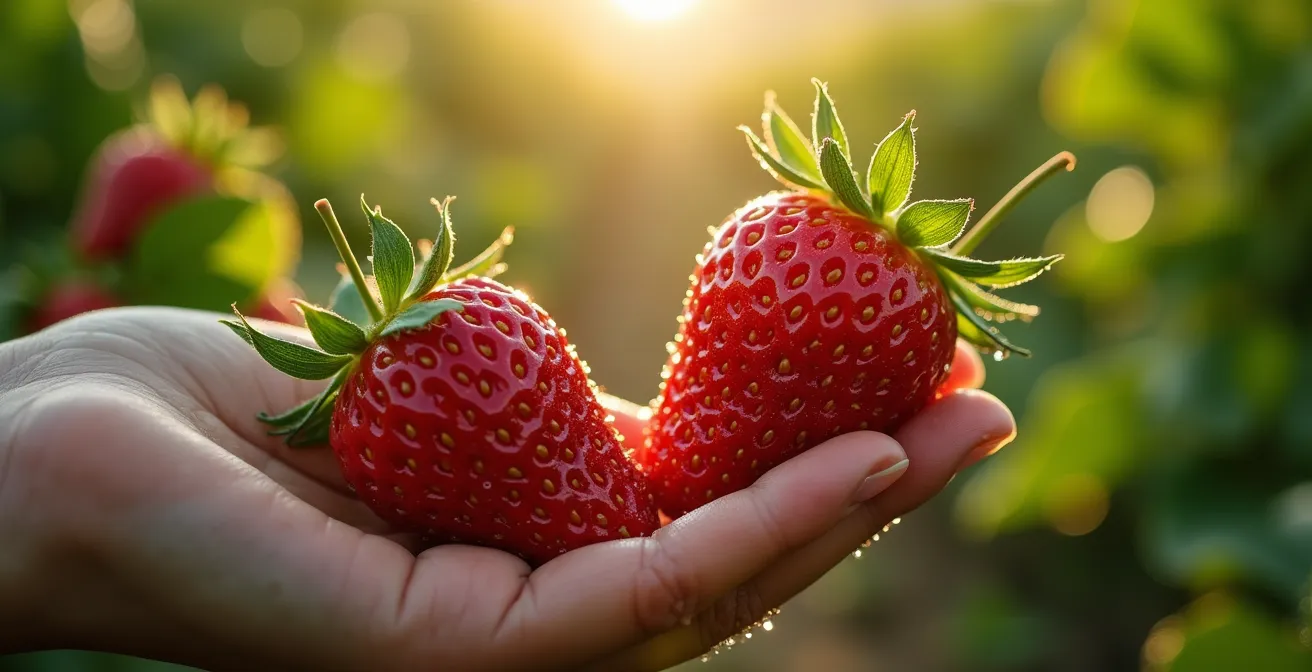
Ultimately, locating the best berries is an active pursuit. Check the farm’s social media pages or call their hotline before you leave home. Many farms post daily updates on picking conditions. This little bit of harvest intelligence can be the difference between a full basket and a wasted trip.
McIntosh or Cortland: Which Ottawa Apple Is Best for Pie?
When apple season arrives in September, the question isn’t just *where* to get them, but *which* ones to get for your intended purpose. For the perfect apple pie, you need an apple that holds its shape when cooked and delivers a balanced sweet-tart flavor. In the Ottawa Valley, this debate often comes down to two local heroes: the McIntosh and the Cortland.
The McIntosh, a Canadian icon discovered right here in Ontario, is beloved for its juicy texture and tangy flavor. It’s a fantastic eating apple and makes a wonderful, soft applesauce. However, for pie, it can be tricky. It tends to break down into a mushy consistency when baked. The secret, if you love that classic Mac flavor, is to mix it with a firmer apple.
This is where the Cortland shines. A descendant of the McIntosh, it inherits that wonderful sweet-tart profile but boasts a crisper, firmer flesh that holds its shape beautifully in a pie. Its bright white flesh also resists browning, making it a joy to work with. For a reliable, flavorful pie that isn’t soup, the Cortland is your best bet. For a more complex, textured pie, a 50/50 mix of Cortland and McIntosh is a winning combination used by many local bakers. As Haymow.ca reminds us in their Ottawa Valley Harvest Calendar Guide, understanding these nuances is key:
The harvest calendar shows when you will find local farm products. The Ottawa farmers have worked hard so you can have fresh vegetables and fruits from May to October.
– Haymow.ca, Ottawa Valley Harvest Calendar Guide
The Pumpkin Mistake That Rots Your Porch Decor Before Halloween
Every year, porches across Ottawa are adorned with pumpkins in early October, only to become a pile of sunken, moldy mush by Halloween. The common mistake is twofold: buying too early and choosing the wrong type. A beautiful porch display that lasts requires thinking like a farmer and respecting our region’s specific climate.
The biggest enemy of a porch pumpkin is a hard frost, followed by a warm-up, which turns it to pulp. The critical date to know is Ottawa’s average first frost. As gardening data indicates Ottawa’s average first winter frost begins around October 5. Buying your decorative pumpkins after this date, or being prepared to cover them during frost warnings, is crucial. The freeze-thaw cycle is what destroys the pumpkin’s cell walls.
Equally important is the variety. Those perfectly round, thin-skinned carving pumpkins (like the Howden variety) are bred for easy cutting, not longevity. For decoration, seek out thick-skinned “pie” pumpkins like the Sugar Pie or even heirloom varieties like the Jarrahdale (the beautiful blue-grey ones). Their dense flesh is far more resistant to rot. Finally, never let your pumpkin sit directly on a cold, damp concrete step. Place it on a piece of cardboard or a small wooden plank to prevent moisture from seeping in from the bottom. These simple steps will keep your autumn decor looking vibrant well past the 31st.
When to Buy Bushels of Tomatoes for Canning Sauce?
For the dedicated home cook, canning tomatoes is a late-summer ritual, a way to capture sunshine in a jar for the cold months ahead. But buying dozens of pounds of perfect, blemish-free tomatoes at full price can be prohibitively expensive. The secret to affordable bulk buying is knowing when to find “canning grade” or “seconds”—tomatoes that are perfectly ripe and delicious but may be slightly misshapen, overripe, or have minor blemishes.
This opportunity arises during the peak harvest glut, typically from late August through early September. At this time, farms are overwhelmed with produce, and they need to move it fast. They’ll often sell bushels of Roma or other paste tomatoes at a significant discount. Your mission is to find these deals. Markets like Lansdowne and Parkdale are prime locations to spot them. Look for handwritten signs advertising “canning tomatoes” or “seconds.”
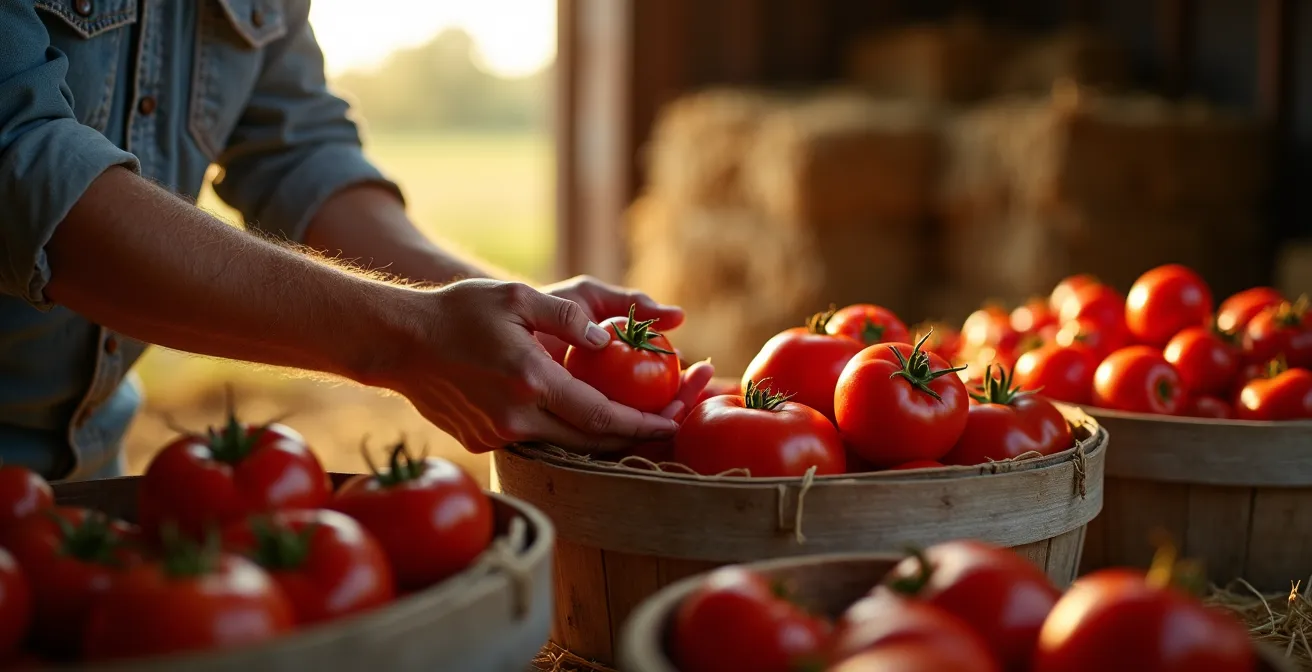
Don’t be afraid to talk to the farmers. Let them know you’re looking to buy in bulk for sauce. They might cut you a deal on the spot or tell you to come back at the end of the day to buy what’s left. This is the heart of market shopping: building relationships and understanding the rhythm of the harvest.
Case Study: The Ottawa Farmers’ Market Glut Strategy
The Ottawa Farmers’ Market, with its network of over 150 vendors from within 100km of the city, perfectly illustrates this principle. An analysis of their seasonal patterns shows that the last two weeks of August and the first week of September are when local farms experience the highest volume of tomatoes. During this “glut” period, vendors at the Lansdowne and Parkdale locations frequently offer bushels of “seconds” at prices up to 50% lower than their premium-grade counterparts, specifically targeting canners and sauce-makers.
The “Local” Corn Mistake You Make in Early July
It’s a sunny day in early July, and a roadside stand has a sign proclaiming “Local Sweet Corn.” It’s tempting, but this is one of the most common traps for eager seasonal eaters. True Ottawa Valley field-grown sweet corn is almost never ready this early. The corn you’re likely buying is either imported and being passed off as local, or it’s a specialty variety grown under plastic, which rarely has the deep, sugary flavor we crave.
Understanding the growing cycle is key. Ontario farmers have a massive operation, and agricultural reality dictates the timeline. When you consider that Ontario farmers plant over 2.3 million acres of grain corn each year, you understand that the process is tied to broad weather patterns, not wishful thinking. Sweet corn needs a specific number of “corn heat units”—a measure of warm days and nights—to mature properly and develop its sugars. In our region, that critical mass is typically not reached until the last week of July at the absolute earliest.
To avoid this mistake, practice your harvest intelligence. Here’s how to verify you’re getting the real deal:
- Know the calendar: True local corn season starts in late July.
- Ask direct questions: “Was this grown on your farm?” or “Where is your farm located?” A legitimate local farmer will be proud to tell you.
- Visit producer-only markets: Places like the Carp Farmers’ Market have strict rules that vendors can only sell what they grow themselves. This is your best guarantee.
- Embrace other seasons: In early July, instead of seeking out-of-season corn, celebrate what’s truly at its peak: strawberries, raspberries, peas, and new potatoes.
Why the Temperature Fluctuation in March Is Critical for Syrup?
Maple syrup is the first true taste of the Ottawa Valley harvest, a sweet reward for surviving another winter. But its production is a delicate dance with Mother Nature, entirely dependent on a specific weather pattern: the freeze-thaw cycle. This isn’t just a quaint piece of folklore; it’s the engine that drives the entire process.
Here’s the science behind it: during the cold nights of late winter, when temperatures drop below freezing (ideally around -5°C), the maple tree’s internal pressure drops, creating a suction effect that draws water and sugars up from the roots into the trunk. Then, as the sun warms the day to above freezing (around +5°C), pressure builds inside the tree, pushing the sugary sap outwards. It’s this exact fluctuation that makes the sap “run” out of the taps.
Without this daily swing in temperature, nothing happens. A week of solid freezing or a week of mild weather will halt production completely. That’s why the peak season, usually mid-March to early April in our region, is so variable and precious. The flavor of the syrup itself is also tied to this temperature dance. The cold temperatures early in the season produce a light, delicate, golden syrup. As the season progresses and days get warmer, the syrup becomes darker and develops a more robust, caramelized flavor. Understanding this process gives you a much deeper appreciation for that liquid gold you pour on your pancakes.
Key Takeaways
- Peak flavor is found in narrow windows, not just broad seasons. Freshness (time from harvest to table) is the most critical factor for produce like corn.
- Strategic shopping—knowing market hours, going early, and asking farmers direct questions—is more important than just showing up.
- Matching the right local variety to the right culinary purpose (e.g., Cortland apples for pie) unlocks better results in the kitchen.
Which Ottawa Farmers Market Has the Best Local Produce Deals?
The question of the “best” market really depends on your goal. Are you looking for the best deal, the most authentic local experience, or the widest variety? Each of Ottawa’s fantastic markets has its own personality and strengths. Finding the best deals requires knowing where to go and when.
For sheer authenticity, it’s hard to beat a producer-only market like the Carp Farmers’ Market. Here, you are buying directly from the person who grew the food. There are no resellers. This often leads to better prices on bulk items, as you’re cutting out the middleman. For convenience and consistent supply, a market like the Parkdale Market, open daily, is a reliable hub with established vendors. While not strictly producer-only, its long-standing vendors have deep roots in the community and offer competitive pricing.
The best “deals,” however, are often found by those with a keen eye at the end of the market day. As vendors pack up, they are often willing to discount produce rather than transport it back to the farm. This is especially true for highly perishable items. If you’re looking to buy a large quantity of bruised apples for sauce or a flat of overripe peaches for jam, arriving in the last 30-45 minutes of the market can yield incredible bargains. The following table provides a quick comparison to help you plan your trips.
| Market Name | Location | Schedule | Best For |
|---|---|---|---|
| ByWard Market | Downtown Ottawa | Daily May-Oct | Historic atmosphere, variety |
| Lansdowne (OFM) | The Glebe | Sundays 10am-3pm | Year-round, 100+ vendors |
| Parkdale Market | Hintonburg | Daily 9am-5pm | Established vendors, parking |
| Carp Market | Carp Fairgrounds | Saturdays 8am-1pm | Producer-only, authentic local |
This overview, based on helpful guides like the one from Ottawa Start’s list of local markets, shows that a true market pro has a strategy for each location.
By using the harvest calendar not as a static list but as a dynamic guide, you transform from a simple shopper into a strategic cook. You learn to anticipate the seasons, connect with the people who grow your food, and capture flavors at their absolute, fleeting peak. Start by picking one item—corn, strawberries, tomatoes—and make it your mission this season to find the very best the Valley has to offer.
Frequently Asked Questions About the Ottawa Harvest
Why does maple syrup production require freezing nights and warm days?
The freeze-thaw cycle creates pressure changes in the tree that pump sap. Freezing nights create suction, while warm days above 0°C create pressure that pushes sap out.
When is peak maple syrup season in the Ottawa Valley?
Typically mid-March through early April, when temperature swings between -5°C at night and +5°C during the day are most consistent.
How does temperature affect syrup grade and flavor?
Early season’s cold temperatures produce light, delicate syrup. As temperatures warm later in the season, the syrup becomes darker with more robust flavors.