In summary:
- Success at Parliament Hill yoga is less about flexibility and more about mastering the logistics of this massive event.
- Key challenges for beginners include public transit with a mat, finding a good spot to hear the instructor, and proper hydration.
- Plan your hydration starting the night before, aim for strategic mat placement near speakers, and use simple icebreakers to connect with others.
- Beyond the Hill, Ottawa’s Greenbelt and nearby retreat centres offer ways to deepen your practice year-round.
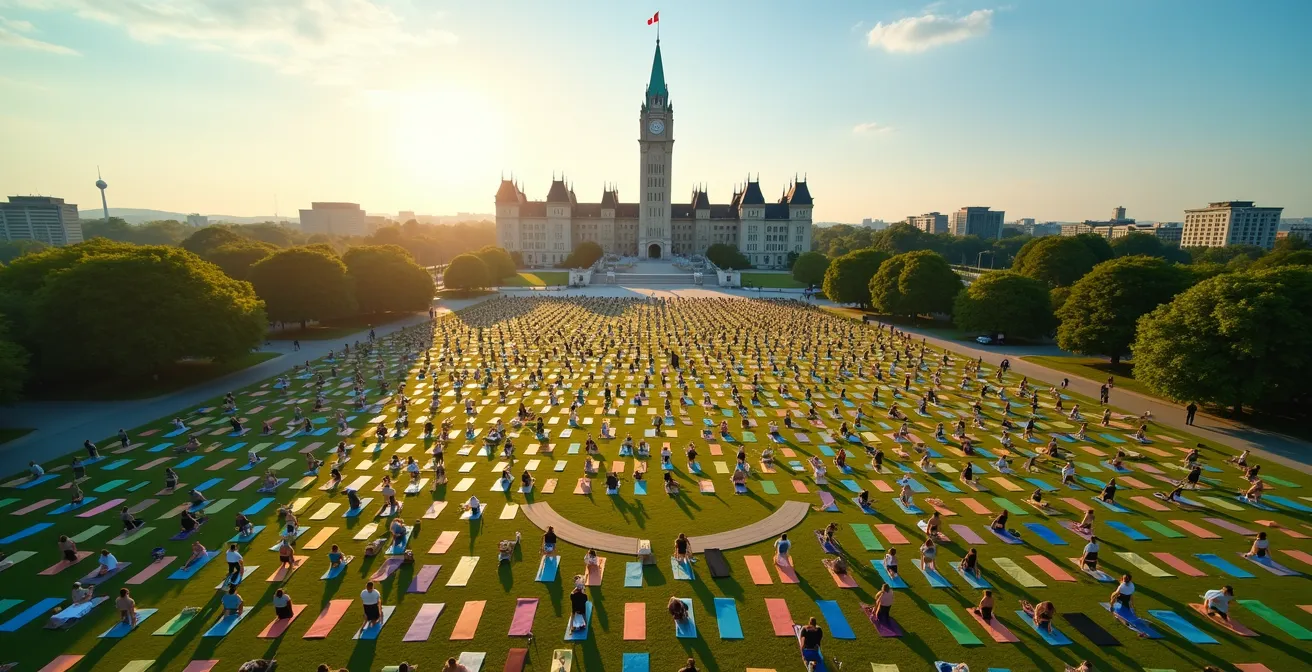
The image is iconic in Ottawa: a vast green lawn in front of the Peace Tower, blanketed with thousands of colourful yoga mats moving in unison. The weekly Parliament Hill yoga session is a beloved summer tradition, drawing locals and tourists alike into a massive, free, open-air class. For a first-timer, the idea can be as intimidating as it is inspiring. Most guides will tell you the basics: it’s on Wednesdays at noon, it’s free, and you should bring a mat and water. But they miss the most important part.
The real secret to enjoying your first time isn’t just showing up; it’s navigating the unwritten rules and logistical hurdles with a bit of local know-how. It’s about what to do when you’re packed onto the O-Train with your mat during the lunch rush, how to stay hydrated when the July sun is beating down, and where to place your mat so you can actually hear the instructions. This is a practice in what we can call logistical grace—moving through the experience smoothly and confidently.
This guide is built to take you beyond the basics. We’ll ditch the generic advice and focus on the practical, insider strategies that will make you feel less like an awkward newcomer and more like a seasoned participant. We will cover everything from your commute to finding your zen in Ottawa’s other green spaces, transforming anxiety into anticipation.
To help you navigate this unique Ottawa experience from start to finish, we’ve structured this guide to answer the key questions a first-timer faces. You’ll find practical advice for every step of the journey, from your front door to the Parliament lawn and beyond.
Summary: Your Guide to Mastering Parliament Hill Yoga
- Why Do Thousands of People Do Yoga on the Hill Every Week?
- How to Transport Your Yoga Mat on the O-Train During Rush Hour?
- Hot Yoga vs Hatha: Which Is Better for Surviving Ottawa Winters?
- The Hydration Mistake During Noon Yoga in July
- Where to Place Your Mat on the Hill to Hear the Instructor?
- How to Join a Board Game Group Without Knowing Anyone?
- Why 20 Minutes in the Greenbelt Lowers Your Cortisol Levels?
- Where to Find Silent Retreats Within an Hour of Ottawa?
Why Do Thousands of People Do Yoga on the Hill Every Week?
The sheer scale of Parliament Hill Yoga is the first thing that strikes you. This isn’t a quaint park class; it’s a massive community gathering where historical records show that up to nearly 2,400 people have participated in a single session. The appeal lies in its unique blend of accessibility, variety, and a powerful sense of shared experience. The event is completely free and open to all skill levels, from curious beginners to seasoned yogis. You don’t need to register; you just show up. This removes the financial and commitment barriers that can exist with studio classes.
A huge part of the draw is the variety. As the Lord Elgin Hotel blog on Parliament Hill Yoga highlights, “Every Wednesday is led by a different yoga studio/teacher or team of teachers, which is fabulous, as you get to experience a variety of different styles and approaches.” This means one week you might experience a dynamic Vinyasa flow, and the next, a more meditative Hatha class. It’s a fantastic way to sample Ottawa’s diverse yoga scene without any commitment.
But beyond the logistics, the core appeal is the feeling of community. It’s a uniquely Ottawa experience to practice alongside thousands of others, with the iconic Parliament buildings as your backdrop. A regular attendee once shared their experience for the Lord Elgin Hotel blog, capturing the magic of the event perfectly:
Last year, Justin Trudeau jumped in to join one day. The lawn is almost totally covered in colorful mats each Wednesday, creating an instant community. Even coming alone, you feel part of something special – it’s impossible not to make connections when you’re all moving and breathing together under the open sky.
– A regular attendee, Lord Elgin Hotel blog on Parliament Hill Yoga
Of course, being an outdoor event, it is weather-dependent. If rain is in the forecast, it’s always wise to check the social media channels of the studio scheduled to teach that week, as they will announce any cancellations. This simple check can save you a trip downtown.
How to Transport Your Yoga Mat on the O-Train During Rush Hour?
For many Ottawans, the first yoga pose of the day is the “O-Train Squeeze.” Navigating public transit with a bulky yoga mat during the noon-hour rush requires a specific strategy—an urban yogi commute. The key is to be as compact and considerate as possible. Forget about casually slinging your mat horizontally over your shoulder; you’ll become a turnstile’s worst nightmare and a menace to fellow passengers. The pro move is to keep your mat rolled tightly and held vertically, close to your body.

Investing in a good yoga mat strap or a slim-profile bag is essential. A simple strap allows you to carry the mat vertically, almost like a quiver of arrows, minimizing your footprint. When standing on a crowded train, hold it directly in front of you or place it between your feet. If you’re lucky enough to get a seat, tuck it beside your leg, ensuring it doesn’t block the aisle. Your fellow commuters will appreciate your spatial awareness.
We can draw inspiration from the logistical planning of institutions like Algonquin College, which has organized transport for students attending the event. Their system, which included options for mat rentals, shows an understanding of the equipment challenge. While you can’t rent a mat on the lawn, this mindset is key: think about your equipment’s journey. Could you use a thinner travel mat on yoga days? Or perhaps store a dedicated “Hill mat” at a downtown office if you work nearby? Thinking ahead is the essence of a smooth commute.
Hot Yoga vs Hatha: Which Is Better for Surviving Ottawa Winters?
Once the last Parliament Hill session wraps up in the fall, the collective sigh of Ottawa’s yoga community is almost audible. The question then becomes: how do we maintain that sense of wellness and warmth through the long, cold winter? This is where the choice between different yoga styles becomes crucial, particularly for combating the effects of Seasonal Affective Disorder (SAD). The two most common contenders are Hot Yoga and traditional Hatha Yoga.
Hot yoga is practiced in a room heated to around 35-40°C. For many, simply stepping into that tropical environment is an instant mood-lifter. The heat helps to deepen stretches, increase cardiovascular effort, and induce a significant endorphin release, directly counteracting the lethargy and low mood associated with SAD. It offers an intense, sweaty workout that can leave you feeling energized and thoroughly detoxified. Hatha yoga, by contrast, is a gentler, slower-paced practice at room temperature. It focuses on foundational poses and controlled breathing (pranayama), which works to calm the nervous system, reduce stress, and build a more mindful connection between body and mind. While it lacks the external heat, it cultivates an internal warmth and stability.
Choosing between them depends entirely on your needs during the winter months. Do you crave the physical warmth and high-energy release of a challenging workout, or do you need a calming, grounding practice to manage stress and anxiety? The following table breaks down the key differences to help you decide.
| Factor | Hot Yoga | Hatha Yoga |
|---|---|---|
| Temperature | 95-105°F (35-40°C) | Room temperature |
| SAD Symptom Relief | Enhanced mood through heat-induced endorphins | Gentle stress reduction through slow movements |
| Energy Boost | Immediate energy increase from cardiovascular workout | Sustained energy through breath work |
| Sleep Improvement | Deep exhaustion promotes better sleep patterns | Calming practice aids relaxation |
| Winter Appeal | Provides warmth during cold months | Can be practiced at home easily |
| Accessibility | Requires specialized studio | Available at most yoga studios |
Ultimately, both practices offer significant benefits for surviving an Ottawa winter. Your experience with the variety of Hatha-based styles on the Hill in the summer might lead you to a familiar studio, or you might decide to embrace the heat as the perfect antidote to a dark January day.
The Hydration Mistake During Noon Yoga in July
Practicing yoga under the full noon sun in the middle of an Ottawa July is no joke. The most common mistake beginners make is thinking that bringing a water bottle is enough. By the time you feel thirsty on the lawn, you’re already dehydrated, and chugging water mid-pose can lead to cramps and discomfort. The key is to adopt a professional-level hydration protocol that starts long before you even unroll your mat.
Insights from research on athletic performance in heated environments, such as those conducted by Hot Yoga Inc., are directly applicable here. Their studies show that proper hydration for activity in the heat must begin up to 24 hours in advance. They also caution against drinking ice-cold beverages, as this can shock the system and cause cramping during intense physical exertion. The goal is to pre-load your body with water and essential minerals so that you arrive on the Hill fully prepared for the heat and exercise.
This means your hydration strategy shouldn’t start on Wednesday morning, but on Tuesday evening. You need to systematically increase your fluid and electrolyte intake to prepare your body for the stress of an hour of sun-drenched yoga. Here is a simple, effective protocol to follow:
- The Night Before: Start hydrating by drinking 2-3 extra glasses of water throughout the evening.
- Morning Of: Drink 500ml of room-temperature water about 2 hours before the session. This gives your body time to absorb it.
- Add Electrolytes: Add a small pinch of sea salt or a sugar-free electrolyte powder to your morning water to help with mineral retention.
- Your Yoga Bottle: Bring a large, insulated bottle filled with room-temperature or cool (not ice-cold) water.
- Sip, Don’t Gulp: During the practice, take small, frequent sips every 10-15 minutes rather than large gulps when you feel thirsty.
- Post-Yoga Replenishment: Continue hydrating after the session. It’s a great excuse to visit a nearby café like Bridgehead or Happy Goat for a post-yoga drink and snack.
By treating your hydration with this level of seriousness, you’ll avoid the dizziness, fatigue, and cramping that can ruin the experience for the unprepared. You’ll be able to focus on your practice, not your thirst.
Where to Place Your Mat on the Hill to Hear the Instructor?
With a crowd of thousands, one of the biggest logistical challenges is finding a spot where you can both see and hear the instructor. If you end up in an “acoustic dead zone,” you’ll spend the hour craning your neck to copy the people in front of you, feeling disconnected from the class. Finding the acoustic sweet spot is an art, but there’s a science to it.
Experienced local studios like Elevate Yoga, who have led sessions on the Hill, have a strategy for this. They position their main setup directly in front of Centre Block and use professional sound equipment with multiple speakers placed throughout the lawn. The first rule is simple: look for the speakers. Arrive 15-20 minutes early and scan the field for the large speakers on stands. Placing your mat within a reasonable line of sight of one of these is your best bet for clear audio.

If you arrive a bit later and the prime spots are taken, use the crowd as your guide. Look for the densest concentration of mats; this is usually where the sound is best and where the studio’s “demo team”—additional instructors who practice within the crowd—are located. These demonstrators are there to help people in further-flung sections follow along. Positioning yourself behind one of them is an excellent strategy. Generally, the lawn organically forms three zones: a “pro zone” near the front and speakers, a “social zone” in the middle with a bit more space, and a “chill zone” towards the back and sides, offering more room but less guidance.
As for your belongings, minimalism is key. There are no lockers. Bring only what you need and keep your small bag and shoes tucked at the top of your mat. While the event has a very safe and positive atmosphere, it’s wise to keep your valuables (phone, wallet) right beside you. By choosing your spot strategically, you set yourself up for a much more immersive and less stressful experience.
How to Join a Board Game Group Without Knowing Anyone?
While this section’s title might seem off, the underlying question is universal: how do you break the ice and connect with people in a new group setting? Attending a massive yoga event alone can feel daunting, but it’s also a golden opportunity to meet like-minded people. The shared experience creates an instant bond, but sometimes you need a little nudge to turn that shared space into a shared connection. The key is to have a few low-pressure social entry points in your back pocket.
You’re not trying to make a lifelong friend in the five minutes before class starts, but simply to exchange a friendly word that acknowledges your shared context. The easiest way to start is by commenting on something you have in common: the event itself. A simple “Is this your first time here?” to the person on the mat next to you can open up a conversation. Or, you could comment on a piece of gear, like “That’s a beautiful mat design!” People love to talk about things they’ve chosen with care.
The period just after the class, as everyone is slowly packing up, is another prime time for connection. You’re all relaxed and basking in that post-yoga glow. This is the perfect moment to suggest a group activity, like grabbing a coffee or a cold drink. It transforms a solo experience into a shared one. To make this less awkward, here is a practical checklist of things you can say or do.
Action plan: Connecting at Parliament Hill Yoga
- Ask nearby mat neighbors: ‘Is this your first time at Parliament Hill Yoga?’ or ‘Have you been coming for long?’
- Comment on someone’s unique mat design or yoga accessories as a genuine icebreaker.
- Suggest forming a small group for post-yoga coffee at a nearby spot like Happy Goat on Laurel Street.
- Exchange Instagram handles with new acquaintances to stay connected for future Wednesday sessions.
- Ask for recommendations: ‘Do you know any great local studios for winter practice?’
Using these simple, context-aware starters can bridge the gap from anonymous yogi to friendly acquaintance, making the large crowd feel more like a welcoming community.
Why 20 Minutes in the Greenbelt Lowers Your Cortisol Levels?
The energy of Parliament Hill is electric, but sometimes you crave the deeper tranquility that only a true natural setting can provide. The science is clear: spending time in nature, or “forest bathing,” measurably reduces cortisol, the body’s primary stress hormone. For yogis in Ottawa, this means the practice doesn’t have to be confined to the Hill. The city’s sprawling Greenbelt and surrounding natural areas offer countless opportunities for a different kind of outdoor yoga.
Taking your practice into the woods or by the water amplifies the stress-reducing benefits of yoga. The rustling leaves, the scent of pine, and the soft ground under your mat create a multi-sensory experience that’s impossible to replicate indoors or on a bustling lawn. Organizations like Ottawa Meditation & Wellness, which hosts retreats just north of Wakefield, demonstrate the profound impact of practicing in nature. Participants in these settings often report a deeper sense of presence and connection, away from the distractions of urban life.
You don’t need to join a formal retreat to reap these benefits. A “pop-up” solo session at a spot like Dow’s Lake, the clearing by Rideau Falls, or a quiet trail in the Greenbelt can be just as restorative. Planning your own nature-based practice does require a little more preparation than heading to the Hill. You need to consider uneven ground, insects, and privacy. Here’s a quick checklist for a successful pop-up yoga session in one of Ottawa’s green spaces:
- Scout Your Spot: Visit your chosen location (e.g., a clearing at Hog’s Back Park) during off-peak hours to find a flat, quiet area.
- Protect Your Mat: Bring a thicker travel mat or an old mat towel to place underneath your good one to protect it from dirt and twigs.
- Pack Bug Spray: Use a natural bug spray, applying it 15 minutes before you begin your practice to let it settle.
- Time It Right: Choose early morning (6-8am) or early evening (6-8pm) to avoid the busiest times and the harshest sun.
- Orient for Peace: Position your mat facing away from main footpaths or high-traffic areas to minimize distractions.
- Go Offline: In case of poor cell reception in more remote Greenbelt areas, download an offline yoga app or a pre-recorded class to your phone.
Embracing Ottawa’s natural landscapes for your yoga practice is a beautiful way to deepen your connection to both your body and the local environment, offering a peaceful alternative to the vibrant energy of the Hill.
Key takeaways
- Mastering the logistics of transport and mat placement is more critical to your enjoyment than your yoga skill level.
- A proactive hydration strategy, starting the night before, is essential for handling the midday summer heat on the exposed lawn.
- Use the event as a social opportunity by employing simple, low-pressure conversation starters to connect with the community around you.
Where to Find Silent Retreats Within an Hour of Ottawa?
After a summer of communal yoga on the Hill and quiet sessions in the Greenbelt, you may feel a pull to go deeper into your practice. The journey inward often leads to the world of silent retreats—a profound way to disconnect from external noise and reconnect with yourself. Ottawa is fortunately located within a short drive of several excellent centres offering this transformative experience. These retreats provide a structured environment for meditation and mindfulness, free from the distractions of daily life, including conversation.
The styles and durations of retreats vary widely. Some are based in specific spiritual traditions, while others offer a more secular approach to mindfulness. For those seeking an authentic and rigorous experience, the Quebec Vipassana Centre near Montebello is a premier choice. Located just 45 minutes from Ottawa, it offers traditional 10-day silent meditation courses based on the teachings of S.N. Goenka. These courses are intensive, disciplined, and offered on a donation basis, making them accessible to all serious students.
For the serious student of meditation and inner-peace a step outside the regular routine is an essential journey to take
– Gurprasad, Testimonial from Berdhanya Teachings retreat participant
For those looking for shorter or different styles of retreats, the region offers a variety of options. The table below provides a comparison of some of the most well-regarded centres within about 90 minutes of the city, helping you find the right fit for your journey.
| Center Name | Location | Duration Options | Style | Price Range |
|---|---|---|---|---|
| Vipassana Quebec | Montebello, QC (45 min) | 10 days only | Traditional Vipassana | Donation-based |
| Art of Living Centre | Saint-Mathieu-du-Parc, QC | Weekend to week-long | Meditation & Yoga | $400-1200 |
| Galilee Centre | Arnprior, ON (45 min) | Day retreats to weekends | Christian contemplative | $150-500 |
| Sharbot Lake Retreats | Sharbot Lake, ON (90 min) | 3-4 day programs | Secular mindfulness | $650-950 |
Taking the step to attend a silent retreat can feel like a significant commitment, but it is often a pivotal moment in one’s personal and spiritual development. It’s an opportunity to apply the focus and mindfulness cultivated on your yoga mat in a much more profound and sustained way.
Now that you have the insider’s guide to the logistics, community, and deeper practices surrounding Parliament Hill yoga, the next step is simple: grab your mat, check the weather, and show up. Embrace the energy, the community, and the unique experience of practicing in the heart of the nation’s capital.