In summary:
- Ottawa lacks a formal underground system like Toronto’s PATH, but an “unofficial” network of tunnels and skywalks exists for those in the know.
- Navigating this network means understanding the rhythm of the federal government workforce, especially during elevator rush hours.
- The downtown core is changing, with vacant office towers converting to residential spaces, altering the landscape for business.
- Success depends less on maps and more on insider knowledge of building-specific quirks, from parking rates to lunch spots.
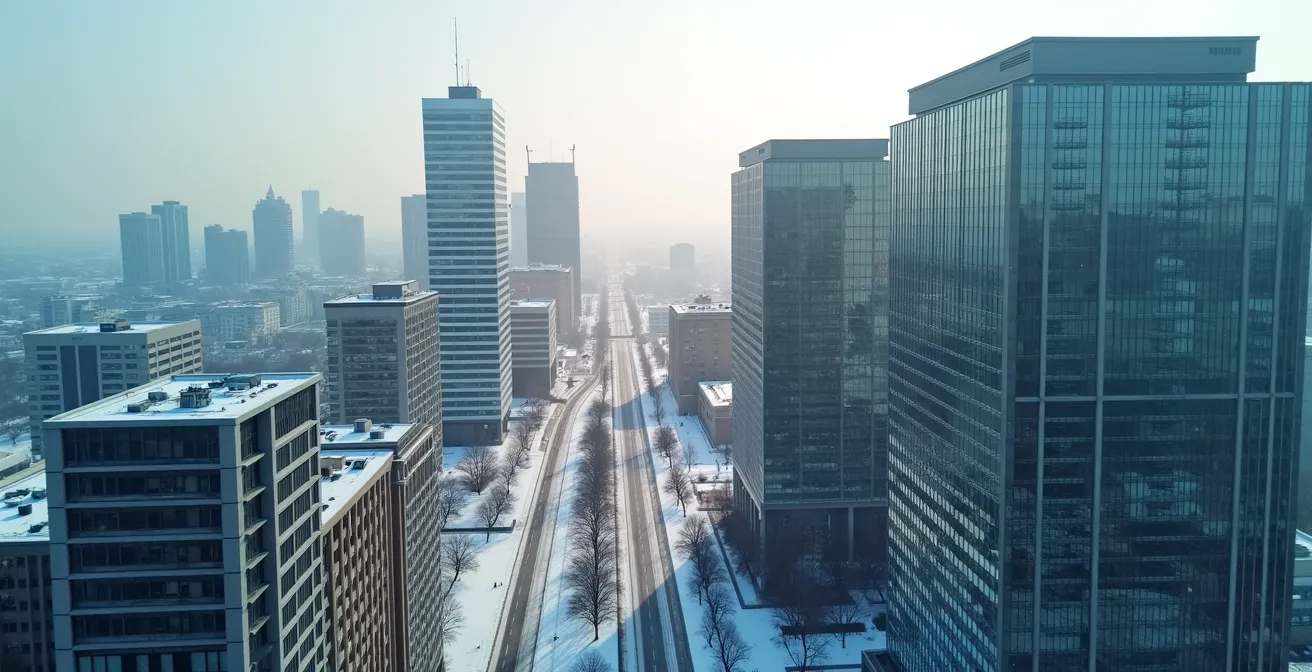
Welcome to Ottawa in winter. You’re here for a meeting, the wind is whipping down Sparks Street, and the thought of walking even two blocks to the next glass tower feels like a polar expedition. You see people disappear into buildings and wonder if there’s a secret. The truth is, there is. Unlike Toronto’s well-marked PATH system, Ottawa’s downtown core is connected by a patchwork of unofficial tunnels, +15 skywalks, and multi-purpose building lobbies. It’s a system navigated not by public maps, but by insider knowledge.
Most guides will tell you to take the O-Train or to dress in layers. That’s basic survival. This is about thriving. The real key to conquering a business trip in downtown Ottawa isn’t just about staying warm; it’s about understanding the city’s unique professional ecosystem. It’s knowing that the entire rhythm of the city—from when to grab a coffee to how to get to a meeting on the 20th floor—is dictated by the federal government’s 9-to-5 schedule. The standard advice misses the point. The secret isn’t in a brochure; it’s in the unwritten rules that every local office worker knows by heart.
This guide is your key to that insider knowledge. We’ll explore the changing face of the business district, pinpoint the best spots for a quiet hour of work, and decode the subtle etiquette of downtown travel. Forget the cold; you’re about to learn how to move through the city’s core like you’ve worked here for years. We will cover everything from the macro trends shaping the city to the micro-hacks that will save you time and keep you warm.
To help you master the downtown core, this article breaks down the essential insider knowledge you’ll need. The following sections will guide you through everything from the real estate shifts affecting the city to the best spots for a crucial business dinner.
Summary: An Insider’s Guide to Navigating Downtown Ottawa
- Why Many Downtown Towers Are Converting to Residential Space?
- How to Find a Quiet Coworking Spot in the Business District?
- Food Court vs Sit-Down: Where to Eat a Quick Business Lunch Downtown?
- The Elevator Rush Hour Mistake That Makes You Late for Meetings
- Which Underground Garage Offers the Best Rate for a 4-Hour Meeting?
- How to Network with Tech CEOs Without Skipping Class?
- Riviera or Beckta: Which Is Better for a Business Dinner?
- How to Qualify for Bilingual Jobs in Ottawa as an Anglophone?
Why Many Downtown Towers Are Converting to Residential Space?
If you walk through Ottawa’s business district, you might notice something feels different. There are more moving trucks and fewer suits than before. This isn’t your imagination; it’s the result of a major economic shift. The rise of remote and hybrid work models, especially within the federal public service, has left a significant amount of office space empty. In fact, local analysis confirms that the downtown Ottawa’s office vacancy rate hit 14.6%, creating a challenge for landlords and an opportunity for the city.
Rather than letting these prime locations sit empty, developers are undertaking ambitious projects to convert vacant office towers into modern residential communities. This trend is a direct response to Ottawa’s housing shortage and a strategic move to re-energize a downtown core that has grown too quiet outside of business hours. For a visiting professional, this means the landscape is actively changing. The building that was an office tower on your last visit might now be a condo with different access rules and a completely different ground-floor dynamic.
Case Study: The Slayte’s Transformation
A prime example of this trend is The Slayte at 473 Albert Street. As detailed in a report on the project’s success, developer CLV Group transformed a vacant office building into a sought-after residential complex. This successful conversion has become a blueprint for downtown revitalization, with a second project now underway at the former Narono building on Laurier Avenue. These projects are pivotal in remaking downtown into a 24/7 neighbourhood rather than just a 9-to-5 work zone.
Understanding this context is the first step to navigating the new downtown. It explains the mix of commercial and residential traffic and why some buildings feel bustling while others seem deserted. This is the new reality of Ottawa’s core.
How to Find a Quiet Coworking Spot in the Business District?
You’re between meetings with a few hours to kill. Your hotel room is too far, and a noisy coffee shop won’t cut it for a conference call. As an insider, you know that downtown Ottawa is filled with quiet corners to work if you know where to look. While the city has formal coworking spaces, the real trick is leveraging the dual-purpose lobbies and public spaces that dot the business district.

For a guaranteed spot, booking a day pass is your best bet. However, many business travelers find success by using hotel lobbies during off-peak hours (typically 1 PM to 4 PM). Lobbies at major hotels like The Westin or the Fairmont Château Laurier are often quiet, comfortable, and offer reliable Wi-Fi. Just buy a coffee and you’re set. This strategy allows you to stay central without the commitment of a full day pass.
Here are some of the best options for a few hours of focused work:
- TCC Canada’s Collaboration Centre (150 Elgin Street): Located in the former Shopify headquarters, it offers premium amenities like soundproof rooms and even an outdoor terrace. A day pass here is an investment in productivity.
- Ottawa Public Library (Main Branch): Don’t overlook this free option. You can book private study rooms equipped with access to business databases, making it a surprisingly powerful and quiet workspace.
- Hotel Lobbies: As mentioned, places like The Westin or the Lord Elgin are excellent for quiet work in the afternoon. The key is to look professional and be a paying customer at their café.
- Collabüro (Preston Street): While slightly outside the core on Preston Street, its 24/7 automated booking for around $30/day makes it a flexible and reliable option if your meetings take you toward Little Italy.
Food Court vs Sit-Down: Where to Eat a Quick Business Lunch Downtown?
It’s 12:15 PM, and you have exactly one hour before your next meeting. The choice of where to eat is strategic. Do you grab something fast in an underground food court, or do you risk a sit-down restaurant? Answering this depends on your goal: pure speed, an informal team chat, or a serious client meeting. The downtown core is optimized for all three, but choosing wrong can make you late.
The underground food courts—primarily at the World Exchange Plaza and Place de Ville—are your best friends for a quick, solo lunch, especially in winter. You can get from your desk to your food and back without ever putting on a coat. They offer variety and efficiency. For something a step up, the “fast-casual” spots along Sparks Street provide a better-quality meal without the time commitment of full table service. These are ideal for an informal lunch with a colleague.
Finally, for a proper business lunch where discussion is as important as the food, you need a restaurant with the right atmosphere and efficient service. Places like Metropolitain Brasserie or Rabbit Hole are built for this, understanding the need for both quality and timeliness. The key is to book ahead and let them know you’re on a schedule.
This table breaks down your options to help you make the right call in seconds:
| Option Type | Location | Time Required | Best For |
|---|---|---|---|
| Underground Food Court | World Exchange Plaza, Place de Ville | 20-30 minutes | Quick solo lunch, winter comfort |
| Fast Casual | Sparks Street (Sconewitch, Le Moulin) | 30-45 minutes | Informal team lunch |
| Business Restaurant | Metropolitain Brasserie, Rabbit Hole | 45-60 minutes | Client meetings, deal closing |
The Elevator Rush Hour Mistake That Makes You Late for Meetings
In downtown Ottawa, the biggest obstacle to being on time isn’t traffic—it’s the elevator. The entire business district operates on the rhythm of the federal public service. This creates two specific “elevator rush hours” that can trap an unsuspecting visitor: one just before 9 AM and another right after 12 PM. Getting caught in a lobby with 50 other people waiting for a lift is the classic mistake that makes you late for a 9 AM meeting on the 22nd floor.
But avoiding the crowd is a science. True insiders know it’s not just about timing; it’s about understanding the specific systems in each tower. Many of Ottawa’s major office buildings, like Place de Ville Tower C, have dedicated high-rise and low-rise elevator banks. Hopping into the first available car without checking the directory is a rookie error that could send you on a long ride with a dozen stops before your floor.
Furthermore, some of the most prominent government buildings, like the C.D. Howe Building, feature double-decker elevators, where you must know whether to board the upper or lower car based on your destination floor (odd or even). Mastering these building-specific quirks is what separates the locals from the visitors. It’s the ultimate display of navigating with insider knowledge.
Your Action Plan: Beat the Downtown Elevator Rush
- Timing is Everything: As confirmed by real estate insiders who track building traffic, you should avoid the 8:55 AM and 12:05 PM waves. Plan to arrive 10 minutes earlier or later than the standard government work schedule.
- Divide and Conquer: In towers with multiple elevator banks (e.g., Place de Ville), always check the floor directory first to use the correct high-rise or low-rise bank.
- Bypass the Queue: If you’re a visitor at a major tower like the Sun Life Financial Centre, pre-register with building security. They can often provide a visitor pass that lets you bypass front-desk lines and head straight for the elevators.
- Master the Double-Decker: For buildings with double-decker systems (e.g., C.D. Howe Building), check the signage in the lobby to determine if your floor is served by the odd (upper) or even (lower) elevator car before you board.
- Think Like a Local: If you see a crowd forming at one bank, look for service elevators or alternative banks that others might overlook.
Which Underground Garage Offers the Best Rate for a 4-Hour Meeting?
If you’re driving downtown for a half-day of meetings, parking can be your biggest and most unpredictable expense. The rates between garages just a block apart can vary significantly. Finding the best deal for a 4-hour stay requires a bit of local knowledge, as the most obvious options aren’t always the cheapest. The key is to look beyond the first “Public Parking” sign you see and compare your options.
For example, the National Arts Centre (NAC) garage is a popular choice due to its central location. As per their official site, the National Arts Centre garage charges $3 per half hour, which for four hours would be $24. However, they also have an evening and weekend flat rate, which can be a better deal if your meeting runs late. Comparing this to other major garages is essential for any budget-conscious traveler.
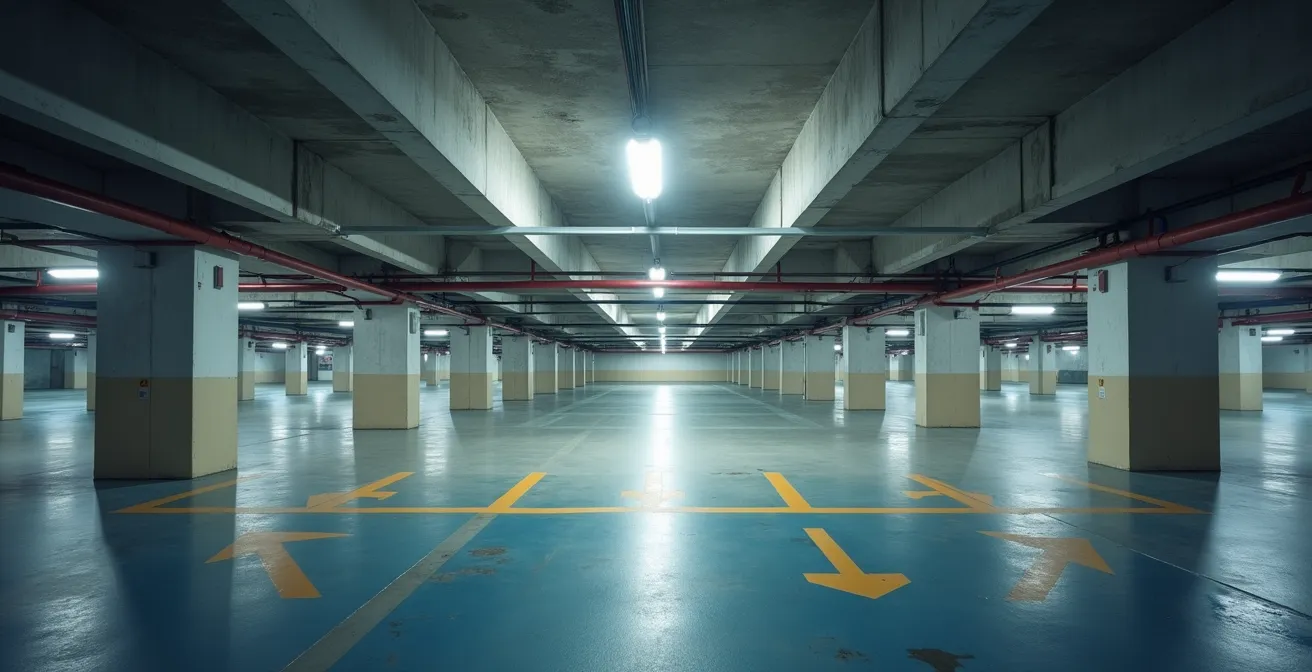
Other locations like the World Exchange Plaza or City Hall offer competitive rates but have different peak hours and evening specials. Hotel parking, while often perceived as expensive, can sometimes be less crowded and worth the slight premium if you’re running late. Always check for early-bird specials if you’re arriving before 9 AM, as these can offer the best value for all-day parking.
To simplify your decision, here’s a comparison of typical 4-hour rates at key downtown locations, based on a recent analysis of downtown parking options.
| Garage Location | 4-Hour Rate | Evening Flat Rate | Special Features |
|---|---|---|---|
| NAC Parking | $24 (Daytime max often reached) | $12 maximum | EV charging stations |
| World Exchange Plaza | $18-28 | Free weekends | 5 underground levels |
| City Hall | $16 | $2 after 6pm | PayByPhone app |
| Hotel parking (Westin) | Varies | Check directly | Often less crowded |
How to Network with Tech CEOs Without Skipping Class?
While downtown is the heart of government, Ottawa’s booming tech scene is centered further west, particularly in Kanata North, Canada’s largest technology park. For a student or a professional looking to connect with this ecosystem, it can feel disconnected from the downtown core. The key is to strategically bridge that gap by targeting the right events and programs that bring tech leaders into accessible settings.
Simply hanging around Kanata won’t guarantee you’ll meet the CEO of the next Shopify. A much more effective strategy is to get involved with the organizations that orchestrate the tech community. Attending major events hosted by Invest Ottawa, the city’s lead economic development agency, is the number one way to get in the room with key players. Their regular meetups and annual conferences like SaaS North are designed for networking.
University-led programs are another powerful, and often overlooked, avenue. Both the University of Ottawa’s Entrepreneurship Hub and Carleton University’s Lead to Win program provide structured pathways for students to connect with mentors, investors, and tech executives. Volunteering at major tech conferences is another classic insider move; it gives you behind-the-scenes access to speakers and organizers that regular attendees don’t get.
Here’s your game plan for connecting with Ottawa’s tech elite:
- Target Key Hubs: Focus your efforts on events at Bayview Yards (Invest Ottawa’s HQ) and Hub350 in Kanata North. Check their calendars for public meetups and the annual SaaS North conference.
- Leverage University Resources: If you’re a student, join uOttawa’s Entrepreneurship Hub or Carleton’s Lead to Win program. These are structured to create connections with tech leaders.
- Volunteer for Access: Offer to volunteer at major Ottawa tech events. This gives you a reason to interact with speakers and high-profile attendees behind the scenes.
- Be Present Organically: Identify the key coffee shops and lunch spots in Kanata North where the tech community gathers. This allows for more organic networking opportunities outside of formal events.
Riviera or Beckta: Which Is Better for a Business Dinner?
The business day is done, and now it’s time for the most important meeting of all: the client dinner. In Ottawa, two names consistently come up for a high-stakes business meal: Riviera and Beckta. Both are icons of the city’s fine dining scene, but they serve very different strategic purposes. Choosing the right one can set the tone for your entire negotiation. It’s not just about the food; it’s about the atmosphere and what it communicates.
Riviera, located in a stunning former bank on Sparks Street, is all about energy and impression. The room is grand, always buzzing, and visually spectacular. This is the place for a celebratory dinner—closing a big deal, hosting a team victory, or impressing a client with a vibrant, high-energy atmosphere. Its classic French/Italian bistro menu is accessible and consistently excellent.
Beckta, on the other hand, offers a completely different experience. Located in a historic home on Elgin Street, its focus is on intimacy and discretion. With multiple private rooms and a quieter, more subdued ambiance, Beckta is the perfect choice for a serious, confidential discussion. The contemporary Canadian tasting menus are more adventurous, signaling a sophisticated and thoughtful approach. This is where you go to build relationships and have conversations that require focus.
Here is how the two powerhouses of Ottawa dining stack up for a business dinner:
| Aspect | Riviera | Beckta |
|---|---|---|
| Atmosphere | High-energy, impressive room, celebratory | Intimate, discreet, private rooms available |
| Location | Sparks Street financial/legal district | Near City Hall, Elgin Street political bubble |
| Menu Style | Classic French/Italian bistro fare | Contemporary Canadian tasting menus |
| Best For | Big celebrations, team victories | Quiet serious deals, confidential discussions |
Key Takeaways
- Downtown Ottawa’s changing landscape is driven by a high office vacancy rate, leading to strategic office-to-residential conversions.
- Efficiently navigating the core relies on insider knowledge of elevator schedules, parking rate variations, and the best spots for quick lunches or focused work.
- Professional success in Ottawa, whether networking in tech or applying for federal jobs, is deeply tied to understanding local ecosystems and requirements like bilingualism.
How to Qualify for Bilingual Jobs in Ottawa as an Anglophone?
Perhaps your business trip has been so successful you’re now considering a career move to Ottawa. If you’re targeting a role in the federal government—the city’s largest employer—you’ll quickly encounter the most important professional requirement: bilingualism. For an Anglophone, navigating the path to a bilingual job can seem daunting, but it’s a well-defined process if you understand the system.
The first step is to understand the language profiles. Federal jobs are classified with a three-letter code, most commonly CBC/BBB. Each letter represents a skill (Reading, Writing, Oral) and a level (A: Basic, B: Intermediate, C: Advanced). A “CBC” profile, for instance, means you need advanced reading comprehension but only intermediate writing and oral skills. Knowing the specific profile of the job you want is critical, as it defines your learning target.
Fortunately, you don’t always have to be perfectly bilingual before you apply. The government often uses “non-imperative staffing,” which allows a successful candidate to be hired on the condition that they achieve the required language profile within a set timeframe, often with paid language training. This is a key pathway for many professionals moving to the city. While the private sector, especially in tech and tourism, also values bilingualism, the federal government has the most structured requirements and support systems.
For those serious about making the leap, here is the essential checklist:
- Decode the Profiles: Familiarize yourself with the CBC/BBB language profiles. Understand that “C” level means advanced proficiency, “B” is intermediate, and “A” is basic, across the three skills of oral, written, and reading comprehension.
- Get Formal Training: Enroll in an intensive language program. Institutions like La Cité collégiale or the Alliance Française in Ottawa offer programs specifically designed to help students meet federal government language standards.
- Look for Non-Imperative Roles: Actively search for “non-imperative” job postings on the Government of Canada’s job site. These positions offer a window of opportunity to achieve bilingualism after you’ve been hired.
- Show Your Progress: Even for private sector roles, highlight any language training or progress on your resume. It demonstrates commitment and is a highly valued asset in the Ottawa market.
With this playbook, you’re no longer just a visitor; you have the knowledge to navigate Ottawa’s professional and physical landscape with the confidence of a local. You understand the city’s changing rhythms, its unwritten rules, and its unique opportunities. Begin applying these strategies today to transform your experience in the nation’s capital.