Innovation and Technology
Ottawa has quietly transformed into one of Canada’s most digitally sophisticated cities, where innovation seamlessly blends with everyday travel experiences. From smart transit systems that adapt in real-time to augmented reality installations illuminating historic streets, the nation’s capital offers visitors a unique opportunity to experience how technology can genuinely enhance urban exploration rather than complicate it.
Whether you’re arriving for business, academia, or leisure, understanding Ottawa’s digital ecosystem isn’t just about staying connected—it’s about unlocking layers of the city that remain invisible to traditional travelers. This technological infrastructure doesn’t demand expertise; it invites curiosity. The systems designed for residents work equally well for visitors willing to invest a few minutes in understanding how these tools can transform a standard trip into an intelligently navigated experience.
This article demystifies the innovation landscape that makes Ottawa particularly welcoming for tech-conscious travelers, breaking down complex systems into practical applications you can implement from the moment you arrive.
Smart Infrastructure: Your Digital Companion in Ottawa
Ottawa’s commitment to becoming a smart city manifests most visibly in its transportation and connectivity infrastructure. Unlike cities where technology feels like an afterthought, Ottawa’s digital systems were designed with integration in mind, creating an ecosystem where various platforms communicate effectively with each other.
Connected Transit Networks
The city’s OC Transpo system offers more than simple bus tracking. Real-time data feeds power multiple applications that calculate optimal routes based on current traffic conditions, weather delays, and even special events. The recently expanded light rail system integrates with these apps, providing seamless transfer information that accounts for actual train positions rather than scheduled timetables.
For visitors, this means downloading a transit application before arrival isn’t merely convenient—it fundamentally changes how you navigate. Apps like Transit and Citymapper pull from Ottawa’s open data infrastructure, offering predictions accurate within two-minute windows during peak periods. This precision transforms waiting from frustrating uncertainty into calculated planning.
Digital Wayfinding and Navigation
Beyond transit, Ottawa provides extensive digital wayfinding infrastructure throughout tourist districts. QR codes positioned at historical sites connect to detailed multimedia content available in multiple languages. The Confederation Boulevard network, which links major attractions, features augmented signage that works with standard map applications to provide contextual information about what you’re viewing.
Navigation tools prove particularly valuable in Ottawa’s climate extremes. During winter months, knowing which pedestrian tunnels connect downtown buildings or which routes offer continuous shelter becomes essential knowledge that dedicated apps provide. Comparing different navigation platforms reveals distinct advantages: Google Maps excels at car routing and business hours, while specialized apps like OttawaWalks highlight pedestrian-friendly paths with weather-protected segments.
Connectivity and Security Considerations
Ottawa offers widespread public WiFi across downtown cores, transit stations, and major parks. However, leveraging this connectivity safely requires basic precautions. The city’s network, while convenient, operates as an open system where data travels unencrypted unless you’re accessing HTTPS websites.
Smart travelers implement simple protective measures:
- Use VPN services when accessing sensitive information on public networks
- Disable automatic WiFi connection to prevent your device from joining rogue networks
- Carry portable battery packs rated for at least 10,000mAh—Ottawa’s cold winters drain phone batteries significantly faster than expected
- Download offline maps before exploring areas with spotty coverage, particularly Gatineau Park and rural attractions
Navigating Downtown Ottawa’s Professional Landscape
Ottawa’s downtown core has undergone substantial transformation in recent years, shifting from a traditional government-office district to a hybrid workspace ecosystem that blends civil service, private tech companies, and flexible working environments. Understanding this evolution helps business travelers and digital nomads navigate the area effectively.
The Changing Urban Core
The downtown area now functions differently than conventional business districts. With increased remote work policies across federal departments, weekday foot traffic patterns have shifted dramatically. Areas like Sparks Street and the ByWard Market now experience steadier activity throughout the day rather than the traditional morning rush and lunch surge.
This redistribution creates opportunities for travelers. Coworking spaces like投资Ottawa and District Ventures have expanded capacity, offering day passes that include high-speed internet, meeting rooms, and access to professional communities. Many spaces deliberately position themselves near light rail stations, acknowledging that temporary workers prioritize transit accessibility over proximity to specific office buildings.
Strategic Workspace Selection
Finding productive workspace efficiently requires understanding Ottawa’s neighborhood characteristics. The Centretown area offers quieter environments with established coffee shops featuring reliable WiFi and ample seating. The ByWard Market provides energetic atmosphere but with variable connectivity during peak tourist hours. The Golden Triangle neighborhood balances accessibility with professional amenities, hosting several business-class cafes specifically designed for laptop work.
For meal planning during work days, professionals benefit from comparing options beyond just price and proximity:
- Food trucks clustered near City Hall offer quick, diverse options with outdoor seating in warmer months
- Rideau Centre food court provides weather-protected variety with extended hours
- Bank Street corridor features numerous independent restaurants with business lunch specials and quieter atmospheres conducive to working meals
Managing Congestion and Parking
Peak congestion in Ottawa follows predictable patterns that differ from larger metropolitan areas. Morning rush concentrates between 7:30-9:00 AM, while evening departure extends from 3:30-6:00 PM due to flexible government schedules. Parliament Hill events create unpredictable disruptions—monitoring the National Capital Commission’s alert system provides advance notice of security perimeters and road closures.
Parking strategy depends entirely on duration and purpose. The city operates a comprehensive ParkOttawa app that not only processes payments but displays real-time availability across municipal lots. For stays exceeding four hours, park-and-ride facilities at suburban transit stations offer significantly better value than downtown metered parking, which can reach $4 per hour in premium zones.
Student Life Within Ottawa’s Tech Ecosystem
Ottawa’s position as Canada’s fourth-largest tech hub creates unique dynamics for students navigating academic programs while engaging with the broader innovation community. The city hosts over 1,700 technology companies, yet maintains a collaborative rather than competitive atmosphere that proves particularly welcoming for emerging professionals.
The Local Tech Hub Landscape
Unlike Silicon Valley’s intense startup culture, Ottawa’s tech ecosystem emphasizes sustainable growth and work-life balance—values reflected in both established companies like Shopify and numerous small-to-medium enterprises across the Kanata North Technology Park. This environment creates accessible entry points for students seeking internships, co-op positions, or networking opportunities.
Organizations like Invest Ottawa run programs specifically connecting students with mentorship and workspace access. The city’s universities—Carleton University and the University of Ottawa—maintain strong partnerships with local tech companies, creating pathways that blur the line between academic learning and practical application.
Balancing Academic Demands and Professional Networking
Students often underestimate the energy required to maintain both academic performance and meaningful professional engagement. Ottawa’s tech community recognizes this challenge, structuring most networking events in early evening slots (6:00-8:00 PM) that accommodate class schedules. Monthly gatherings like Ottawa Ruby or JavaScript Ottawa welcome beginners explicitly, removing the intimidation factor common in more established tech centers.
Effective balance requires intentional choices:
- Limit networking events to one per week during heavy academic periods
- Prioritize quality connections over quantity—Ottawa’s smaller scene makes repeated interactions more valuable than broad but shallow networking
- Leverage university tech clubs as a bridge between academic and professional worlds
- Use summer terms for intensive internship experiences rather than attempting simultaneous full-time study and work
Navigating Academic Paths and Preventing Burnout
Ottawa’s universities offer multiple trajectories into technology careers, from traditional computer science degrees to interdisciplinary programs combining business, design, or public policy with technical skills. Comparing these paths reveals no single “correct” route—the city’s diverse tech employers value varied backgrounds.
However, the proximity to opportunity creates a distinct burnout risk. Students feel pressure to constantly upskill, network, and position themselves competitively. The antidote lies in Ottawa’s accessible outdoor spaces: the Rideau Canal for winter skating, extensive cycling paths along the Ottawa River, and Gatineau Park’s hiking trails all provide essential mental breaks within 30 minutes of campus locations.
For students commuting to Kanata North, understanding transit optimization becomes crucial. The area sits approximately 30 kilometers from downtown campuses, but dedicated express routes during peak hours reduce travel time to 40-45 minutes. Coordinating class schedules to align with these express services can save nearly an hour daily compared to local bus routes.
Where Technology Meets Public Art
Ottawa’s approach to integrating technology with public art creates experiences that transform the city into an interactive canvas, particularly striking during winter months when extended darkness provides ideal conditions for light-based installations. This intersection offers travelers a dimension of urban exploration that purely historical or natural attractions cannot match.
Projection Mapping and Light Festivals
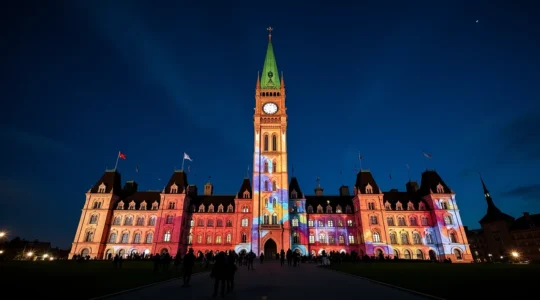
The annual Winterlude celebration and Northern Lights sound-and-light show demonstrate projection mapping technology at monumental scale. These productions transform the Parliament Buildings’ Gothic Revival architecture into a dynamic screen, telling Canadian stories through precisely calibrated light beams that account for every architectural detail, from window recesses to stone texture.
Understanding the technology enhances appreciation: projection mapping requires extensive 3D modeling of target surfaces, then “wraps” animated content to create the illusion that static buildings move, breathe, or transform. Ottawa’s productions collaborate with local tech companies specializing in real-time rendering, creating shows that can adapt to weather conditions or special occasions without pre-recording every variation.
Comparing Ottawa’s major light festivals reveals different technological approaches. Winterlude emphasizes large-scale architectural projection, while seasonal installations in Jacques-Cartier Park explore interactive elements where visitor movement influences light patterns and colors. The Ottawa Art Gallery’s periodic digital exhibitions showcase smaller-scale but more experimental works pushing technological boundaries.
Augmented Reality Experiences
Several Ottawa heritage sites now offer augmented reality layers that reconstruct historical contexts. The Bytown Museum provides an AR application revealing how the Rideau Canal construction site appeared during the 1820s, overlaying historical imagery onto your phone’s camera view as you explore the locks.
These experiences require specific conditions to function optimally. Bright sunlight washes out phone screens, making many AR features difficult to use. Early morning or late afternoon visits provide better visibility. Additionally, ensure your phone’s GPS and gyroscope sensors are functioning—older devices sometimes struggle with the precise positioning these applications require.
Practical Considerations and Night Photography
Experiencing tech-enhanced art installations involves navigating practical challenges. Popular shows attract substantial crowds, and technical glitches occasionally interrupt scheduled performances. Arriving 20-30 minutes before official start times secures better viewing positions and provides buffer time if technical issues delay the show.
For photography enthusiasts, Ottawa’s tech-art installations present both opportunities and challenges. Modern smartphones handle static light displays reasonably well, but capturing projection mapping’s dynamic movement requires understanding basic manual settings:
- Use tripods or stable surfaces—even minor movement during longer exposures creates blur
- Set ISO between 400-800 for night scenes to balance light sensitivity with noise
- Experiment with shutter speeds between 1/15 and 1/60 second to capture movement without excessive blur
- Disable flash entirely, as it cannot illuminate distant architectural projections and only washes out foreground elements
Technical glitches, while frustrating, occur with sufficient frequency that patient travelers should build flexibility into viewing plans. Weather conditions, particularly extreme cold, affect projection equipment performance. Show operators typically communicate delays through their dedicated apps or social media channels—following these before arrival prevents wasted trips.
Ottawa’s innovation landscape extends beyond silicon and circuits into everyday travel experiences, transforming how visitors navigate, work, learn, and engage with art. The technologies discussed here share a common characteristic: they enhance rather than replace traditional exploration methods. Your smartphone becomes a knowledgeable companion, transit systems provide transparency that reduces stress, and public art invites participation through technological layers unavailable just a few years ago. Embracing these tools doesn’t require technical expertise—just curiosity and willingness to experiment with systems designed specifically to make your Ottawa experience more intuitive, connected, and memorable.
A Tech-Lover’s Guide to Ottawa’s Interactive Digital Art Scene
In summary: Ottawa’s digital art is more than just a visual spectacle; it’s a fusion of high-end technology and public space. To truly experience it, you need to understand the tech, from projection mapping on Parliament to AR overlays on…
Read more
How to Land a Tech Co-op in Kanata North: An Ottawa Recruiter’s Guide
Landing a top co-op in Kanata North isn’t a numbers game; it’s about strategic positioning within Ottawa’s unique tech ecosystem. Focus on quality over quantity by aligning your projects with Kanata’s key industries like telecom and SaaS. Leverage targeted, in-person…
Read more
How to Navigate Ottawa’s Downtown Core Without Going Outside: An Insider’s Guide
In summary: Ottawa lacks a formal underground system like Toronto’s PATH, but an “unofficial” network of tunnels and skywalks exists for those in the know. Navigating this network means understanding the rhythm of the federal government workforce, especially during elevator…
Read more
How to Master Ottawa’s Smart City Features to Save Time and Data
Visiting Ottawa for business? Success hinges on using the city’s local smart tools, not the global defaults. The official Transit app consistently beats Google Maps for real-time bus accuracy and offers features designed for visitors. Free, high-quality workspaces with reliable…
Read more