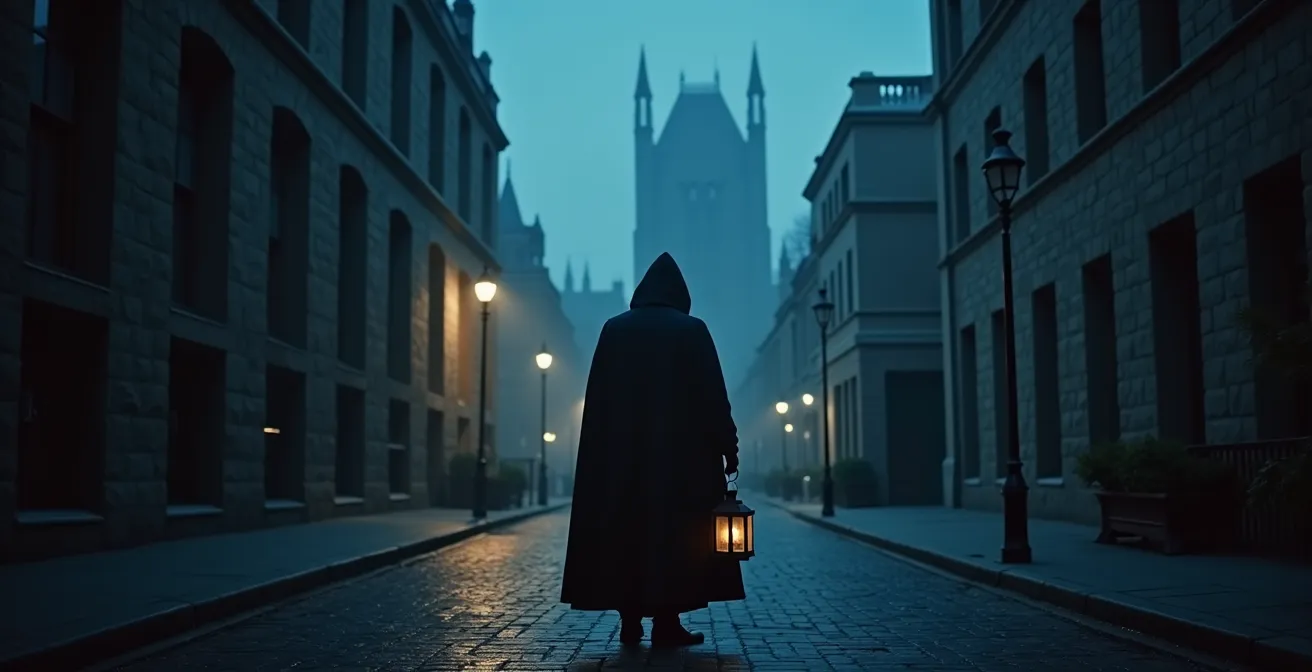
For Ottawa locals, the Haunted Walk’s value lies not in sightseeing, but in its power to add a rich narrative layer to familiar streets, transforming the city into a re-seeing experience.
- It prioritizes atmospheric immersion and curated storytelling over simply covering geographic ground.
- It offers a flexible, year-round alternative to seasonal vehicle tours that often sell out.
Recommendation: Instead of asking if it’s ‘worth it,’ ask if you’re ready to see the history haunting the corners you walk past every day. For about the price of two craft beers, you buy a new perspective on your own city.
As a resident of Ottawa, you’ve seen it all. The tour buses lumbering past Parliament Hill, the amphibious vehicle splashing into the river, and the clusters of tourists following a guide. The question inevitably arises: are these paid tours, especially something as seemingly kitschy as a ghost tour, really for us? We already know the landmarks, the shortcuts through the ByWard Market, and the best spot to view the Rideau Canal. It’s easy to dismiss these as tourist traps, believing the best way to experience Ottawa is to simply live in it.
This common perspective frames the debate as a choice between a paid, guided experience and free, self-guided exploration. We weigh the cost of a ticket against what we could see for free. But this misses the point entirely. The true value for a local isn’t in seeing something new, but in seeing something familiar in a completely new light. The key isn’t a tour’s route, but its narrative. It’s about discovering the emotional context of a place you only know geographically.
This guide abandons the simple “is it worth it” question. Instead, we’ll explore a different proposition: that the Haunted Walk of Ottawa is not a sightseeing tour, but a “re-seeing” experience. It’s an investment in a new layer of stories that permanently alters how you perceive the city’s oldest and most familiar corners. We will dissect how its focus on storytelling provides a depth that vehicle tours can’t match, why its specific format is an advantage, and how it can even help you rediscover places you thought you knew, like the ByWard Market and Parliament Hill.
To navigate this evaluation, we’ll delve into the specific elements that define these tours, comparing their unique value propositions not just for visitors, but for those of us who call Ottawa home. This table of contents outlines our journey into the city’s narrative underbelly.
Summary: Is the Haunted Walk of Ottawa Worth the Ticket Price for Locals?
- Why the Ghost Stories of the Bytown Museum Are So Persistent?
- How to Board the Lady Dive Amphibus Without Getting Wet?
- Hop-On Hop-Off vs Guided Trolley: Which Covers More Ground?
- The Last-Minute Mistake That Leaves You Without a Boat Tour Ticket
- When to Take the Haunted Walk to Experience Maximum Atmosphere?
- Why the Peace Tower’s Design Symbolizes More Than Just Governance?
- Why Is the ByWard Market Building Actually a Heritage Landmark?
- How to Eat Your Way Through ByWard Market Without Falling into Tourist Traps?
Why the Ghost Stories of the Bytown Museum Are So Persistent?
The power of a ghost story isn’t just in the jump scare; it’s in its ability to attach emotion and memory to a physical place. The tales surrounding the Bytown Museum, Ottawa’s oldest stone building, persist precisely because they provide a powerful narrative anchor to the city’s foundational history. These aren’t just random spooky tales; they are echoes of the turbulent era of the Rideau Canal’s construction, personifying the struggles, tragedies, and unresolved conflicts of Bytown’s early days. They give a voice to the anonymous labourers and figures who shaped the city, transforming a static museum exhibit into a living, breathing drama.
This form of storytelling is a potent economic and cultural driver. Ottawa’s tourism sector is a significant force, and narrative-rich experiences are a key component. According to an economic impact study, the city welcomes over 9.8 million visitors annually, generating $2.6 billion in economic impact. Ghost tours tap into this by offering a unique product that goes beyond simple sightseeing. The Haunted Walk leverages this by making the museum a centrepiece of its experience. As their own material states:
The majority of the tour unfolds inside the dimly lit Bytown Museum, one of Ottawa’s oldest and most haunted buildings.
– The Haunted Walk Ottawa, Official Haunted Walk website
This exclusivity is crucial. While anyone can walk past the museum, the tour provides curated access and context, creating an atmosphere that amplifies the stories. Visitors feel this difference, noting the experience is more than just a history lesson. One remarked, “We learned about the most haunted and interesting places in Canada, and went to Bytown Museum, which was so spooky!!” This emotional reaction is the reason the stories persist: they make history personal, memorable, and just a little bit terrifying.
How to Board the Lady Dive Amphibus Without Getting Wet?
The question isn’t literal. Boarding the iconic Amphibus is a dry affair. The real question for a discerning local is how to engage with these large-scale vehicle tours without “getting wet”—that is, without getting soaked by a superficial experience that offers novelty but little substance. The splashy entrance of an amphibious bus into the Ottawa River is a fantastic spectacle, a memorable photo-op that neatly summarizes the vehicle tour’s primary appeal: a unique perspective and broad coverage in a short amount of time.

This is where the core difference between “sightseeing” and “re-seeing” becomes clear. The Amphibus provides an excellent geographic context, showing you *where* the Parliament Buildings are in relation to the river. It’s efficient and fun. However, it lacks the atmospheric immersion a walking tour provides. From a bus, you see a landmark from a distance; on foot, you stand on the very spot where a historical event unfolded, feeling the cobblestones under your feet and noticing the architectural details that are invisible from a moving vehicle.
For a local, who already possesses the geographic context, the value proposition of a vehicle tour diminishes. You know where these places are. What you may not know are the specific, human-scale stories that haunt their corners. The choice isn’t about which tour is “better,” but what kind of value you seek. Are you looking for a fun, quick overview from a unique vehicle, or are you looking to deepen your connection with the city’s hidden history? The former is a great afternoon out; the latter is an experience that stays with you long after the tour ends.
Hop-On Hop-Off vs Guided Trolley: Which Covers More Ground?
On the surface, the answer seems obvious: a bus or trolley, with its engine and wheels, will always cover more physical distance than a pair of walking feet. A Hop-On Hop-Off tour can whisk you from the National Gallery to Dow’s Lake in a fraction of the time it would take to walk. But for a local, this raises a more important question: are you trying to cover *ground* or are you trying to uncover *stories*? The greatest value for someone already familiar with Ottawa’s layout lies in narrative depth, not geographic breadth.
A walking tour like the Haunted Walk operates on a micro-level. It transforms a single city block into an entire chapter of history, focusing on details that are completely lost from a vehicle. You can’t see a mason’s mark on a stone, a historical plaque on a wall, or the eerie darkness of a narrow alley from a double-decker bus. The experience is fundamentally different. This is supported by tourism trends; even with the rise of vehicle tours, narrative-rich experiences are thriving. An end-of-summer report from Ottawa Tourism noted that from June to August, the city saw a 5% increase in hotel demand and a 7% increase in visitor spending, with walking tours showing strong performance alongside traditional bus tours. This demonstrates a clear appetite for deeper, story-driven content.
Let’s compare these experiences using a more relevant metric: the cost per unique insight. A bus tour offers fragmented commentary between stops, while a walking tour provides continuous storytelling. The value is concentrated and immersive.
Your Action Plan: Choosing Depth Over Distance
- Evaluate narrative depth: Compare the 75-90 minutes of continuous, focused storytelling on a walking tour to the fragmented commentary of a bus route.
- Consider architectural detail access: Recognize that ground-level tours reveal historical markers, hidden doorways, and textures completely invisible from a vehicle.
- Calculate cost per unique insight: Weigh the ~$30 cost of a walking tour, packed with local legends, against the ~$50 cost of a bus tour that primarily points out landmarks you already know.
- Assess weather and seasonal flexibility: Note that walking tours often run year-round, offering a reliable option when seasonal bus and boat tours are unavailable (typically May-October).
- Compare repeatability value: Consider that a story-based tour can feel new with a different guide, whereas a fixed bus route offers the same commentary on every trip.
Ultimately, a vehicle tour shows you the city’s face, while a walking tour introduces you to its soul. For a local, getting to know the city’s soul is a far more rewarding journey.
The Last-Minute Mistake That Leaves You Without a Boat Tour Ticket
There’s a classic Ottawa summer dilemma: a beautiful evening arrives, and you spontaneously decide it’s the perfect night for a Rideau Canal or Ottawa River cruise. You head online, only to be met with the dreaded “Sold Out” banner. During peak season, from June to August, the city’s most popular attractions reach capacity quickly. This isn’t just an impression; for many tours, it’s a statistical reality. For example, some booking platforms show that popular Ottawa tours are likely to sell out based on recent booking data.
This is the last-minute mistake: assuming availability. It leaves many locals and visitors disappointed, their spontaneous evening plan dashed. However, this is where the structure and nature of a walking tour like the Haunted Walk becomes a significant strategic advantage. Unlike boat and bus tours, which are seasonal and have limited vessel capacity, walking tours offer far greater flexibility. They run nightly and year-round, rain or shine. While pre-booking is always recommended, the sheer frequency of departures means there is often last-minute availability, even on a busy Saturday night.
This makes the Haunted Walk an excellent, reliable “Plan B” that often proves to be a more compelling “Plan A.” If the Rideau Canal cruise is full, the walking tour can still guide you along its banks, sharing tales of the workers who died during its construction—a layer of history the cruise commentary might gloss over. It provides the historical and emotional context of the very landmark you had hoped to see, just from a different, and arguably deeper, perspective. It’s a testament to the resilience of a good story: it doesn’t depend on a specific vehicle or even perfect weather, only a willingness to walk and to listen.
When to Take the Haunted Walk to Experience Maximum Atmosphere?
Any tour guide will tell you that atmosphere is everything. For a ghost tour, the setting is as important as the stories themselves. While the Haunted Walk runs year-round, a savvy local can choose their timing to trade the bustling energy of a summer tourist crowd for a far more immersive and eerie experience. The key is to think like a set designer: when does Ottawa itself provide the most dramatic backdrop?
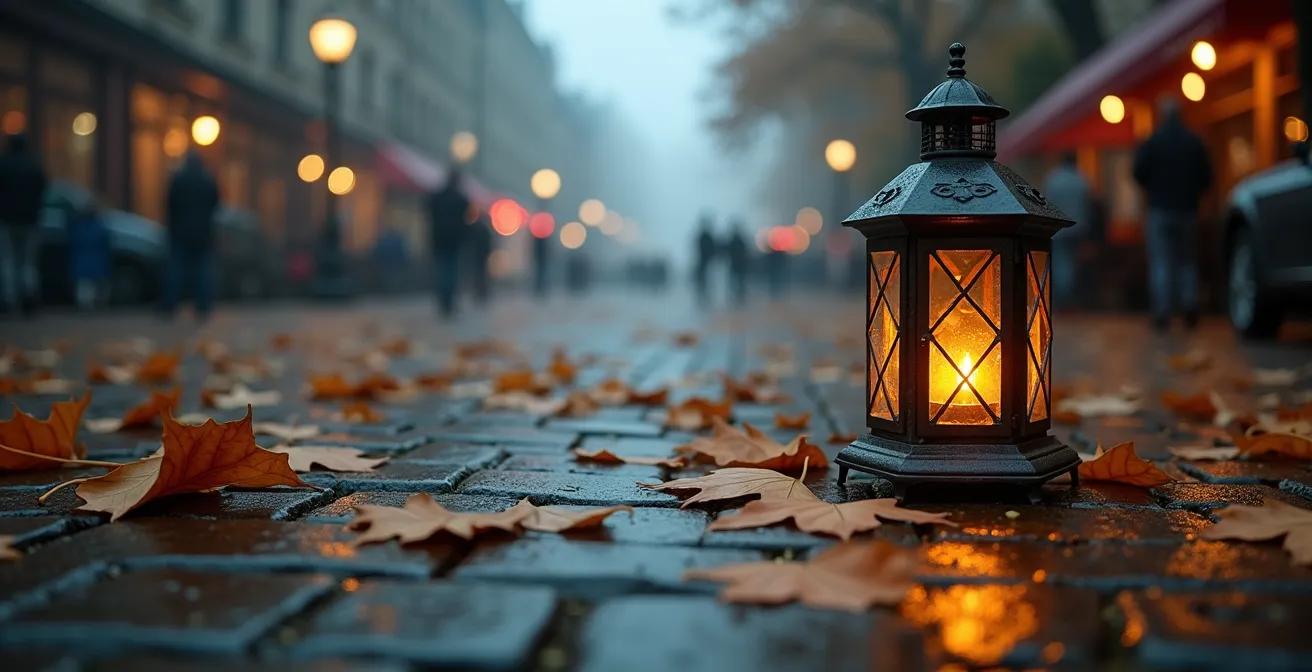
The undisputed champion of atmospheric timing is autumn. As the days shorten and a chill enters the air, the city transforms. An evening tour in October, with fallen maple leaves skittering across wet cobblestones and fog rolling in off the river, offers an ambiance that can’t be manufactured. The natural setting does half the work, turning familiar streets in the ByWard Market or the corridors of the university into something genuinely unsettling. A tour that begins at dusk and ends in complete darkness, as one reviewer noted, is “super spooky and the time of day was perfect.”
Beyond the season, there’s also a strategic financial consideration. While weekends are popular, choosing a weekday can offer a smaller, more intimate group setting and a better price. The Haunted Walk often incentivizes this, offering a chance to save $5 on tours from Monday to Wednesday. This combination of a smaller group and lower cost can significantly enhance the experience, allowing for more interaction with the guide and a less crowded journey through the city’s haunted history.
Even the dead of winter offers a unique opportunity. A tour on a cold December night, with the sound of your footsteps crunching in the snow and the city decorated for the holidays, provides a stark, beautiful, and slightly melancholic backdrop for tales of “Ghosts of Christmas Past,” a special tour offered on select dates in December. The best time to take the tour is when the city itself is in character.
Why the Peace Tower’s Design Symbolizes More Than Just Governance?
The Peace Tower is Ottawa’s most recognizable icon, a symbol of Canadian governance and resilience. But for those with a keen eye for narrative, its very design tells a ghost story. The tower you see today is not the original. It was reborn from the ashes of the Great Fire of 1916, a traumatic event that destroyed the original Centre Block of Parliament. This act of destruction and rebirth is Ottawa’s foundational trauma, a historical “haunting” that imbues the site with a profound sense of memory and loss. The Peace Tower stands not just as a seat of government, but as a memorial.
Its architectural style, Gothic Revival, is a storyteller’s dream. With its soaring buttresses, gargoyles, and dramatic silhouette against the night sky, the style is inherently theatrical and has long been associated with mystery and the supernatural. This connection is not accidental; it is a core part of how the site’s history is interpreted. The Haunted Walk, in its educational programs, highlights how the Peace Tower’s Gothic Revival architecture lends itself to supernatural storytelling. This style creates the perfect visual language for tales of hauntings and history.
Furthermore, the tower contains the Memorial Chamber, a solemn space dedicated to the Canadians who died in military service. This makes the Peace Tower a literal and spiritual place of communion with the dead. It’s a space where the past is not just remembered but actively honoured. This multi-layered symbolism—as a political centre, a fire memorial, and a war cenotaph—makes it an incredibly potent backdrop for a ghost tour. The stories told on its grounds are not just spooky anecdotes; they are woven into the very stone and purpose of the building. It symbolizes that governance and history are inextricably linked with memory, loss, and the stories we tell about those who came before.
Why Is the ByWard Market Building Actually a Heritage Landmark?
For many locals, the ByWard Market is a place of routine: grabbing groceries, meeting for a drink on a patio, or navigating the weekend crowds. It’s easy to overlook the fact that the main market building is a designated national heritage site. Its status as a landmark isn’t just about its age or architecture; it’s about its role as the continuous, beating heart of Ottawa’s commercial and social life since Lieutenant-Colonel John By first laid it out in 1826. It is a landmark because it is a place of living history.
A building becomes a heritage landmark when it embodies a crucial part of a community’s identity. The ByWard Market building is the physical anchor for generations of commerce, community gatherings, and cultural exchange. Its preservation ensures that this continuous story is not broken. The economic vitality it represents is immense. During the summer, for instance, Ottawa’s tourism performance is heavily tied to the vibrancy of areas like the Market, which contributes to high hotel occupancy and visitor spending. The market isn’t a museum piece; it’s an active economic engine.
This vibrancy is what makes it feel authentic, even amidst the tourist throngs. As one local business owner commented on the atmosphere: “The Market was full of live music, open patios, and happy visitors. That atmosphere really helped people feel comfortable being here. People came down, shopped, ate, and discovered Ottawa — and many left impressed.” This testimony captures the essence of its landmark status. It’s not just a building; it’s an experience. It’s a place where the city’s past and present collide, where farmers’ stalls operate in the shadow of modern restaurants, and where the stories of old merchants echo in the calls of today’s vendors.
Key Takeaways
- The true value of a tour for a local is “narrative value”—acquiring new stories that change how you see familiar places.
- Walking tours offer an atmospheric immersion and focus on detail that vehicle-based sightseeing cannot replicate.
- The most rewarding experiences often lie in understanding the hidden history behind major landmarks you already know, like the Peace Tower and ByWard Market.
How to Eat Your Way Through ByWard Market Without Falling into Tourist Traps?
The ByWard Market is a culinary paradise, but for a local, it can also feel like a minefield of tourist traps—overpriced restaurants serving generic fare. The secret to navigating it like an expert is to use a narrative filter. Instead of just looking for a good meal, look for a good meal with a good story. By combining a food crawl with the legends and history from a ghost tour, you can create a uniquely satisfying itinerary that engages your palate and your imagination.
This approach turns a simple dinner into a “re-seeing” experience. The fish and chips taste different when you know the pub is one of Ottawa’s most haunted. The classic BeaverTail pastry becomes more than a treat when you eat it on a corner that was the site of historic confrontations. You’re not just consuming food; you’re consuming a piece of the city’s story. It’s the ultimate way to bypass the tourist traps, because you’re operating on a layer of information that most visitors don’t have.
A self-guided “Haunted Food Tour” is easy to create. Start with a classic local snack, move to one of the city’s oldest bars for a drink and a ghost story, and then join the official tour to fill in the gaps. This method ensures every dollar you spend is an investment in both a culinary and a cultural experience. Here’s a sample itinerary that weaves together the Market’s flavours and phantoms:
- Start at BeaverTails (6 PM): Grab the classic Canadian pastry at its original location in the ByWard Market, a site of historic public gatherings and confrontations.
- Move to The Laff (7 PM): Head to Château Lafayette, Ottawa’s oldest tavern. Order a local craft beer and soak in the atmosphere of a place with well-documented ghost stories.
- Join the Haunted Walk (8 PM): Meet the official tour at its starting point on 46½ Sparks Street to get the full, curated narrative from an expert storyteller.
- Late-night bite post-tour (9:30 PM): Return to the Market and use your newfound knowledge to choose a late-night snack spot, perhaps revisiting a location from the tour to see it in a new, eerie light.
This journey proves that the Haunted Walk isn’t just a standalone activity. For a local, it can be a key—a narrative lens that unlocks a richer, more authentic way to experience the familiar pleasures of the city, turning a simple night out in the Market into a memorable adventure.
Frequently Asked Questions About Ottawa Tours
When do Haunted Walk tours run compared to boat tours?
The Haunted Walk operates year-round with nightly departures, providing a flexible option regardless of the season. In contrast, most boat tours are seasonal and typically run only from May to October.
What if the Rideau Canal cruise is sold out?
If a canal cruise is unavailable, the Original Haunted Walk offers a great alternative. Its route covers stories adjacent to the canal, including tales of the workers who perished during its construction, offering a deep historical context that complements the landmark.