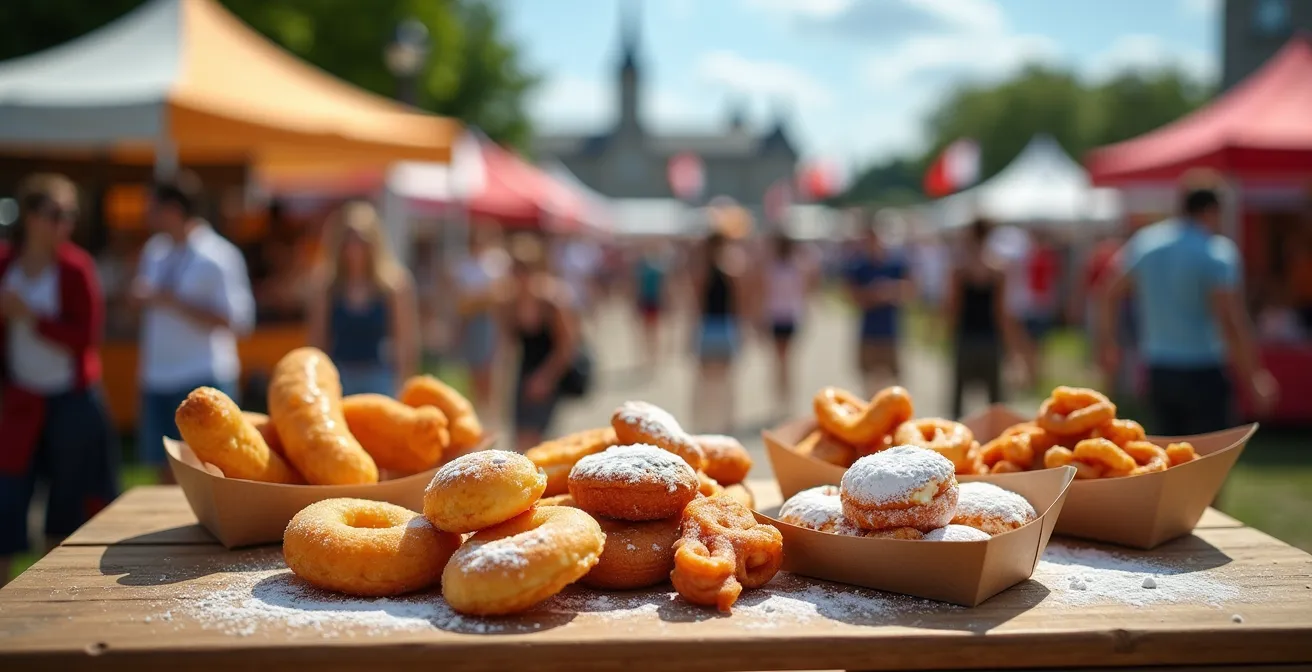
In summary:
- Ottawa’s festival scene offers a world of fried dough beyond the iconic BeaverTail, including Greek loukoumades, Spanish churros, and North American funnel cakes.
- Success lies in strategy: knowing which festivals specialize in which treats, understanding the “Crunch Factor” to match your craving, and timing your indulgence with the “Festival Food Clock.”
- From the legendary honey-soaked balls at Greek Fest to navigating gluten-free options, a true foodie adventure requires a plan.
- Even sharing a treat can be an art form, with methods like the “Rideau Canal” technique ensuring fairness and fun.
For any Ottawan, the classic winter experience is gliding down the Rideau Canal, the satisfying crunch of a warm BeaverTail in hand. That cinnamon-sugar-dusted pastry is a beloved symbol of the city, a delicious rite of passage. But for the adventurous foodie, a question eventually bubbles to the surface: what lies beyond the BeaverTail? When the summer festivals roll in, bringing a kaleidoscope of sounds, sights, and smells, a whole new world of fried dough emerges. This isn’t just about finding a snack; it’s a delicious form of “dough-plomacy,” an expedition to discover international treasures hiding in plain sight.
Many guides will give you a simple list of festival foods, but they miss the point. The real joy is in the quest itself—understanding the subtle differences between a perfectly ridged churro and the delicate web of a funnel cake. It’s about knowing where to find the most authentic, legendary treats that tell a cultural story. Forget simply wandering and hoping for the best. A true fried dough connoisseur needs a strategy to conquer the festival circuit, from the sprawling fields of Bluesfest to the community spirit of the Glebe Garage Sale.
This guide is your strategic map. We’ll move beyond the default and dive deep into the golden trio of international fried dough: loukoumades, churros, and funnel cakes. We’ll arm you with the knowledge to not only find these delights but to enjoy them to the fullest, avoiding common pitfalls and maximizing every delicious, crunchy bite. Prepare to explore Ottawa’s festival scene with a new mission: to become a master of international street sweets.
This article will guide you through the essential strategies for your culinary quest. Below is a summary of the key stops on our flavour-filled journey.
Summary: A Foodie’s Strategic Guide to Ottawa’s Fried Dough
- Why Ottawa’s Greek Fest Loukoumades Are Legendary?
- How to Find Gluten-Free Fried Treats at the Ex?
- Funnel Cake vs Churro: Which Offers Better Crunch?
- The Greasy Mistake That Ruins Your Appetite for Dinner
- How to Split a Funnel Cake Among 4 People Fairly?
- Full Festival Pass or Day Ticket: Which Is Worth It for Bluesfest?
- Chocolate Hazelnut or Cinnamon Sugar: Which Is the True Classic?
- How to Build a Wellness Routine That Survives the Ottawa Winter?
Why Ottawa’s Greek Fest Loukoumades Are Legendary?
While many festivals offer generic donuts, Ottawa’s Greek Fest presents something truly special: loukoumades. These are not just “honey balls”; they are a taste of history and a masterclass in texture. The legend of these treats is built on a simple but perfect formula: bite-sized dough fried to a delicate golden crisp on the outside while remaining impossibly light and airy on the inside. They are then drenched in warm honey and given a generous dusting of cinnamon. The result is a flavour explosion that is both intensely sweet and warmly spiced.
What elevates the Greek Fest experience from a simple transaction to a cherished memory is the authenticity. The loukoumades are made fresh before your eyes, often by generations of the same families who have perfected the recipe. As one festival-goer lovingly described the experience, “For dessert always get the loukoumades or honey balls as they are more lovingly referred to as. They are basically deep fried dough in honey and cinnamon sugar. Pretty much they are absolutely delicious and I highly recommend them.” It’s this combination of fresh preparation and community passion that makes them legendary.
To get the most out of your experience, timing and pairing are key. Here are some pro tips for conquering the dessert station:
- Visit during the festival’s typical run over two weekends in August.
- Head straight to the dessert station at 1315 Prince of Wales Drive.
- For the full authentic experience, pair your fresh loukoumades with a traditional Greek frappé.
- To avoid the longest lines, plan your visit for a weekday evening, ideally after 7 PM.
This isn’t just a dessert; it’s a cultural cornerstone of Ottawa’s festival season, and a must-try on any foodie’s checklist.
How to Find Gluten-Free Fried Treats at the Ex?
Navigating a festival or exhibition (the “Ex”) with a gluten intolerance can feel like a daunting mission, especially when surrounded by deep-fried goodness. The fear of cross-contamination is real, and the disappointment of missing out is palpable. However, with the right strategy, you can still indulge. The key is to become an informed interrogator and know what questions to ask before you commit to a purchase. Your health is the priority, and a reputable vendor will be happy to provide clear answers.
Before you even think about ordering, approach the vendor with a specific set of questions. This isn’t about being difficult; it’s about ensuring your safety. Many food trucks on the Ottawa festival circuit are becoming more aware of dietary needs, but the level of diligence varies. Some may offer a “gluten-friendly” item that’s cooked in the same fryer as everything else, which is a non-starter for anyone with celiac disease or a high sensitivity. Don’t be shy; your well-being depends on it.
Here are the essential questions to ask any vendor about their gluten-free offerings:
- Do you use a dedicated fryer for gluten-free items?
- Are your gluten-free batters and ingredients prepared in a separate, sanitized area?
- What specific measures do you take to prevent cross-contamination during preparation and serving?
- Could you show me the ingredient list for your gluten-free options?
- Are your toppings, sauces, and garnishes also certified gluten-free?
Remember to also look for naturally gluten-free options. Many Ottawa food festivals feature treats like loaded fries from food trucks that specialize in potatoes, or corn-based items like elotes, which are inherently free from gluten. It’s all about expanding your definition of a “treat” and being a savvy food detective.
A little preparation and direct communication can be the difference between a day of delicious discovery and a day of discomfort.
Funnel Cake vs Churro: Which Offers Better Crunch?
The great debate for many festival foodies isn’t about what to get, but which form of fried dough will deliver the ultimate textural satisfaction. In one corner, you have the funnel cake: a tangled, beautiful web of crispy batter, dusted with powdered sugar. In the other, the churro: a ridged, star-shaped stick of dough, fried to perfection and rolled in cinnamon sugar. While both are delicious, they offer fundamentally different experiences, particularly when it comes to the all-important “Crunch Factor.”
The funnel cake’s crunch is delicate and sprawling. The joy is in its inconsistency—some strands are perfectly crisp, others are softer, and the soft, doughy center provides a satisfying contrast. It’s a sit-down, shareable experience, best enjoyed with a fork at a picnic table at a venue like Lansdowne Park. The churro, however, offers a more consistent and robust crunch. Its signature ridges are designed to maximize surface area, creating a decisively crunchy exterior that gives way to a dense, cake-like interior. Its portable nature makes it the ideal snack for navigating the dense crowds at Bluesfest.
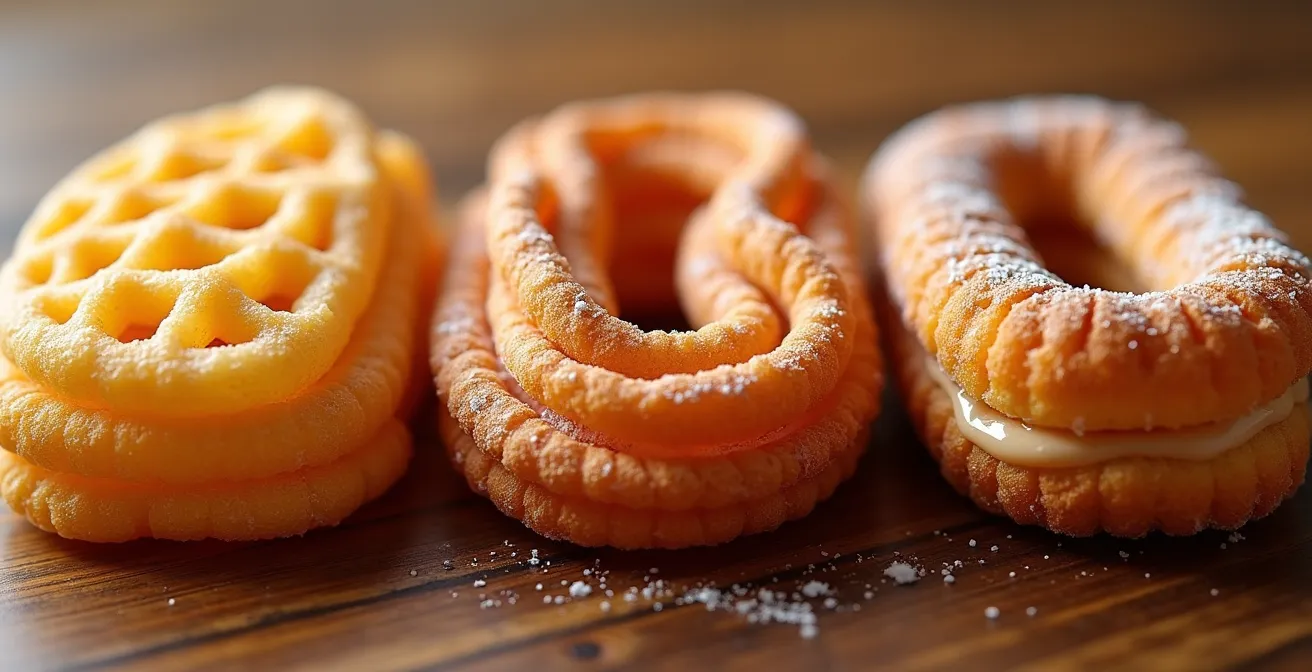
To truly understand the difference, a direct comparison is needed. While the local BeaverTail offers a unique crispy-chewy texture all its own, the battle for pure crunch often comes down to these two international contenders.
| Treat | Texture Profile | Best Festival Context | Crunch Factor |
|---|---|---|---|
| Funnel Cake | Crispy web exterior, soft interior | Sit-down sharing at Lansdowne Park | 7/10 |
| Churro | Crunchy ridged exterior, dense interior | Mobile snacking at Bluesfest crowds | 9/10 |
| BeaverTail | Crispy-chewy throughout | Winter skating on Rideau Canal | 8/10 |
The verdict? For pure, unadulterated crunch, the churro’s ridged design gives it a slight edge. But for a more complex textural journey, the funnel cake remains a formidable champion.
The Greasy Mistake That Ruins Your Appetite for Dinner
Every seasoned festival-goer knows the feeling: you spot a tempting fried treat, you indulge, and an hour later, you’re filled with regret. The rich, greasy goodness that seemed like a great idea at the time has completely obliterated your appetite for the actual dinner you had planned. This is the single most common greasy mistake, and it’s entirely avoidable with a little strategic thinking. The solution is the “Festival Food Clock,” a simple mental model for timing your indulgences.
The core principle is to match the heaviness of the treat to the time of day and your subsequent meal plans. A massive, topping-loaded funnel cake is a mid-afternoon commitment, not a light pre-dinner snack. Consuming a heavy fried dough item too close to a meal sends a signal to your body that it’s full, leading to that sluggish, overstuffed feeling. By planning your treats, you can enjoy them guilt-free without sabotaging the rest of your day’s culinary plans.
Your strategic Festival Food Clock should look something like this:
- Mid-afternoon (2-4 PM): This is the prime window for heavy hitters like funnel cakes or deep-fried Oreos. It gives your body ample time to digest before dinner. It’s the perfect time to indulge at a daytime event like the Canadian Tulip Festival.
- Early evening (5-6 PM): If you have dinner plans after 8 PM, a lighter option like a few churros can work as an appetizer. Anything heavier is a risk.
- Late night (after 9 PM): After the main event at a festival like Bluesfest, this is the perfect time for a final, indulgent treat. It becomes the capstone of the night, not an obstacle to another meal.
- The Share Strategy: A brilliant tactic at any time is to split one heavy item among several people. A quarter of a funnel cake is a delicious appetizer; a whole one is a meal.
- The Walk-it-Off Strategy: Prioritize walkable festivals like the Glebe Garage Sale, where you can stroll and digest after your treat.
Treating your fried dough consumption with the same planning as a multi-course meal ensures maximum enjoyment from start to finish.
How to Split a Funnel Cake Among 4 People Fairly?
The funnel cake is the ultimate shareable festival treat, but its chaotic, web-like structure presents a social dilemma: how do you divide it fairly? Simply tearing off a piece often leads to one person getting all the crispy edges while another is left with a soggy middle. This calls for a methodical approach, a bit of “dough dexterity.” Enter the “Rideau Canal Method,” a uniquely Ottawan strategy for equitable funnel cake division.
Inspired by the famous lock system of the city’s UNESCO World Heritage site, this method ensures everyone gets a perfect mix of textures. It transforms a potentially messy free-for-all into a civilized and enjoyable group activity. All you need is a clean utensil and a bit of spatial awareness. This approach respects the integrity of the funnel cake while also respecting the delicate balance of friendship.
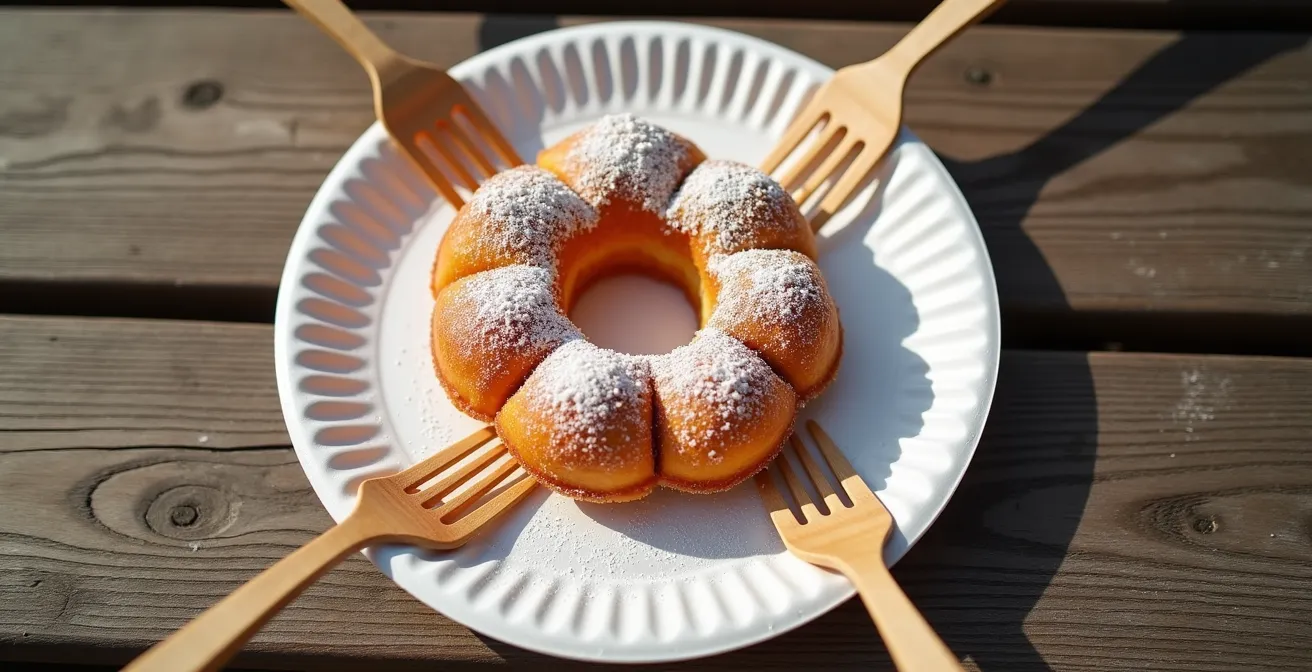
Mastering this technique will make you a hero among your festival crew, ensuring that every member of your party gets their fair share of the golden, crispy goodness.
Your Action Plan: The Rideau Canal Method for Fair Division
- Identify the ‘Quarters’: First, observe the funnel cake’s natural spiral pattern from the center outwards. You’ll often see four distinct quadrants or sections.
- Use the ‘Locks’ Approach: Using a knife or fork, make two perpendicular cuts through the center, dividing the cake into four equal sections, much like the locks divide the canal.
- Ensure Texture Equality: The goal of the cuts is to ensure each of the four pieces contains both the desirable crispy outer edges and the softer, doughy center.
- Implement the ‘Topping Draft’: Allow each person to choose their preferred quarter based on the distribution of powdered sugar, chocolate sauce, or other toppings.
- Use Precision Tools: For the cleanest cuts, a new report from culinary explorers on a quest for perfect fall experiences suggests using a food-safe knife or even scissors for ultimate precision.
With this method, the only thing you’ll be debating is who gets the last crumb.
Full Festival Pass or Day Ticket: Which Is Worth It for Bluesfest?
For a massive, multi-day event like Ottawa’s RBC Bluesfest, the ticket you buy can fundamentally shape your culinary adventure. The choice between a day pass and a full festival pass isn’t just about the music; it’s a strategic decision for any serious foodie. With food vendor lineups often rotating and some of the best eats only available on specific days, your ticket determines your access to the full spectrum of flavours. The cost difference is significant, but for a true culinary explorer, the value might be in the variety.
A Day Pass is perfect for the targeted foodie. If you’ve done your research and know that a specific, must-try food truck is only there on Thursday, a day pass is the most cost-effective choice. It allows you to execute a precise culinary strike without committing to the full ten-day marathon. On the other hand, the Full Festival Pass is for the completist, the foodie who wants to sample everything the festival has to offer without feeling rushed. It allows for repeat visits to favourite vendors and the freedom to explore the entire culinary landscape as it evolves over the festival’s run.
To make the right call, you need to weigh cost against access. As a detailed breakdown of official Bluesfest ticket types shows, there are options for every level of commitment, including a flexible “Pick-3” pass for those who want to strategize.
| Pass Type | Best For | Food Vendor Access | Cost Efficiency |
|---|---|---|---|
| Day Pass | Sampling 1-2 specific vendor days | Limited to selected day vendors | Best if attending 1-2 days only |
| Pick-3 Pass | Strategic festival food sampling | Access to 3 different vendor rotations | Save up to 40% vs individual days |
| Full Festival Pass | Complete culinary exploration | All vendors across entire festival | Best value for 4+ days attendance |
Ultimately, your decision should align with your appetite for both music and food, ensuring you get the best value out of your entire Bluesfest experience.
Chocolate Hazelnut or Cinnamon Sugar: Which Is the True Classic?
Even as we explore the world of international fried dough, we must return to the local legend: the BeaverTail. And within the lore of this iconic Ottawa treat lies a great debate that divides families and friends: which topping is the true classic? In one corner, you have the simple, elegant, and original Cinnamon Sugar. In the other, the rich, decadent, and wildly popular Chocolate Hazelnut spread.
The argument for Cinnamon Sugar is rooted in history and purity. It was one of the original toppings, designed to complement the crispy-chewy pastry without overwhelming it. It’s the purist’s choice, a taste of nostalgia that connects back to the BeaverTail’s origins in the Ottawa Valley. It lets the flavour of the fried dough itself shine through, enhanced only by a warm, sweet spice. The experience is timeless and perfectly balanced.
The case for Chocolate Hazelnut, however, is one of evolution and indulgence. While not an original, it has become so ubiquitous that many consider it the modern classic. It transforms the pastry from a simple treat into a full-blown dessert. Its creamy richness provides a stark contrast to the crispy dough. This sentiment is echoed by many culinary observers, as noted in one guide to Ottawa’s food scene.
You can get your sugar fix at BeaverTails where fried dough, topped with brown sugar, cinnamon or chocolate, is shaped to resemble the sweet namesake.
– Food and Travel Magazine, Ottawa Food Guide
While BeaverTails now feature a vast array of flavours, including whipped cream, banana slices, and crumbled cookies, the fundamental debate always comes back to these two titans. One represents tradition, the other represents decadence.
So, which is it? The only way to truly know is to try both. The “true” classic, after all, is the one that brings you the most joy.
Key Takeaways
- Look Beyond the Obvious: Ottawa’s festival scene is rich with international fried dough like loukoumades and churros that offer a delicious alternative to the classic BeaverTail.
- Eat Strategically: Use the “Festival Food Clock” to time your indulgent treats, preventing you from ruining your appetite for other meals and maximizing your culinary experience.
- Know Your Textures: The “Crunch Factor” is key. Whether you prefer the consistent crunch of a churro or the delicate web of a funnel cake, understanding the textural profile of each treat leads to greater satisfaction.
How to Build a Wellness Routine That Survives the Ottawa Winter?
After a summer spent conquering the festival circuit, the arrival of the Ottawa winter can feel like an abrupt end to the adventure. The food trucks go into hibernation, and the vibrant festival grounds are covered in snow. However, a smart foodie knows that this is not an off-season; it’s the training season. Building a wellness routine that survives—and even embraces—the Ottawa winter is the secret to preparing your body and mind for the next summer’s culinary quests.
This isn’t about punishing yourself for summer indulgences. It’s about creating a sustainable, enjoyable routine that builds stamina and keeps your spirit of adventure alive. Winter in Ottawa offers unique opportunities to stay active, from skating the world’s largest skating rink to exploring snowy trails. By reframing these activities as “training,” you connect your winter wellness directly to your summer passion for food festivals. The calories you burn skating the canal become a down payment on a future BeaverTail reward.
A successful winter training plan for the dedicated festival foodie is about motivation and preparation. It’s a holistic approach that keeps you physically ready for all-day standing and walking, and mentally excited for the treats to come.
- Embrace Winter Sports: Start a weekly tradition of skating the Rideau Canal. It’s a classic Ottawa activity that builds endurance and earns you that post-skate treat.
- Build Your Stamina: Join winter walking groups or explore the city’s winter trails to build the stamina required for a full day of festival-going.
- Stay Motivated with Goals: Create a “Festival Food Vision Board” with pictures of the treats you plan to try next summer. This visual reminder keeps your goals top of mind.
- Plan for Recovery: Schedule post-festival recovery activities at local Ottawa wellness centers to look forward to after your big culinary days out.
- Do Your Homework: Use the quieter winter months to research upcoming festival menus, make your must-try list, and strategize your plan of attack.
This proactive approach ensures that when the first festival of the season opens its gates, you’ll be ready—in body, mind, and appetite—to take on your next delicious adventure.