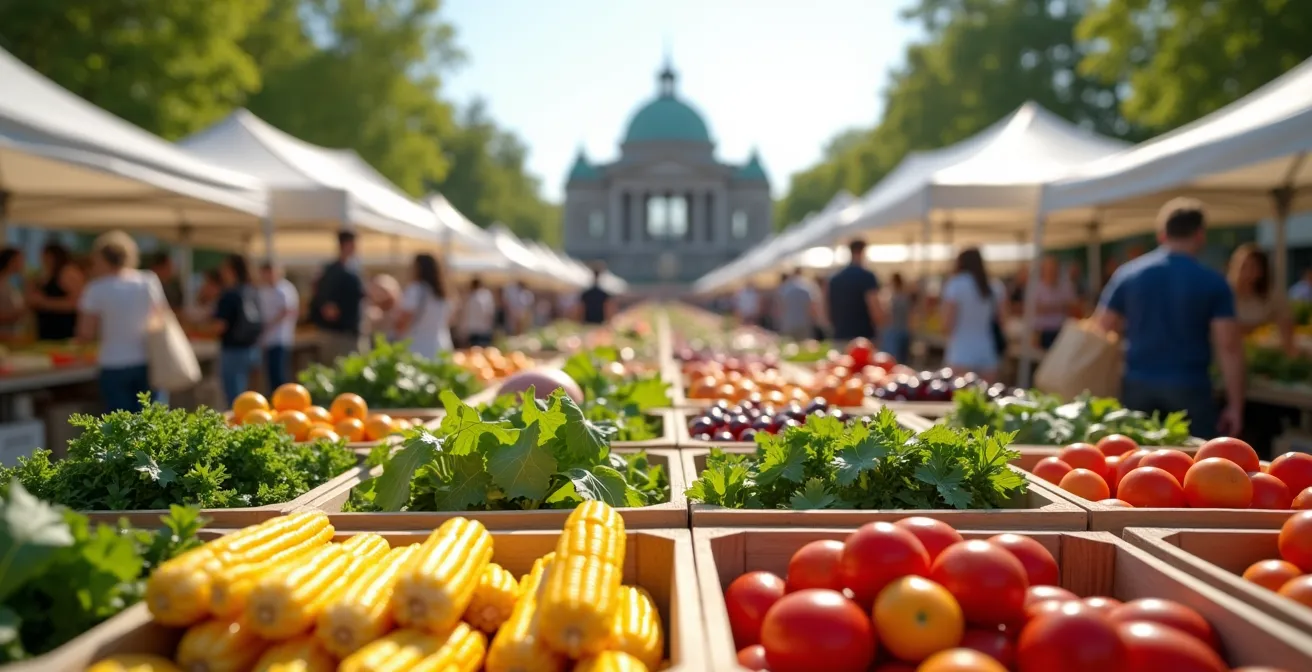
The best “deal” at an Ottawa farmers’ market isn’t about the lowest price; it’s about finding peak-season, nutrient-dense produce by understanding the local harvest rhythm.
- Focus on “producer-only” markets to guarantee your food comes directly from local farms within 100km of the city.
- Mastering the timing—from knowing when real local corn arrives to when to show up for the best bread—unlocks true value.
Recommendation: Shift your mindset from bargain hunting to ingredient discovery. The highest quality produce, bought at its seasonal peak, offers superior flavour and value every time.
For any food lover in Ottawa, the lure of a farmers’ market is irresistible. The promise of fresh, vibrant produce and the chance to connect with the people who grow our food is a powerful draw. Yet, a common frustration bubbles just beneath the surface: what does “local” really mean? And how do you find the genuine deals, not just the produce that looks good but lacks flavour? Many guides will point you to the biggest stalls or offer generic advice like “go early.” But this often misses the point.
The secret to unlocking the true value of Ottawa’s markets doesn’t lie in haggling over a dollar. It lies in understanding the region’s unique agricultural pulse—its harvest rhythm. It’s about knowing that the first corn you see in July likely isn’t from the Ottawa Valley, or that the best sourdough at Lansdowne is gone by a specific time. It’s about recognizing the difference between a reseller and a producer who picked your vegetables just hours before you arrived. This isn’t just shopping; it’s building a relationship with your food source.
This guide moves beyond the surface-level tour. We’ll dismantle the common myths and give you a chef’s perspective on market strategy. You’ll learn why “producer-only” is the most important term you need to know, how to time your visits for maximum gain, and how to read the subtle cues of the season to ensure everything you bring home is at its absolute peak of flavour and nutrition. Get ready to shop Ottawa’s markets with intention and confidence.
To help you navigate this rich culinary landscape, this article breaks down the essential strategies for becoming a savvy market shopper. From understanding market philosophies to practical tips on parking and timing, you’ll find everything you need to transform your weekly shop into a rewarding experience.
Summary: A Chef’s Guide to Ottawa’s Farmers’ Markets
- Why “Producer-Only” Markets Matter for Your Wallet and Health?
- How to Park at Lansdowne Market Without Paying Premium Rates?
- Parkdale Market vs Main Farmers Market: Which Is Better for Daily Shopping?
- The “Local” Corn Mistake You Make in Early July
- What Time Should You Arrive to Get the Best Sourdough Before It Sells Out?
- Why “Taber Corn” Has Nothing on Ottawa Valley Sweet Corn in August?
- Why Is the ByWard Market Building Actually a Heritage Landmark?
- How to Find the Best Restaurants in Wellington West?
Why “Producer-Only” Markets Matter for Your Wallet and Health?
The single most important factor for guaranteeing quality and true locality at an Ottawa market is seeking out those designated as “producer-only.” This isn’t a marketing gimmick; it’s a strict philosophy that changes everything about the food you buy. A producer-only market mandates that vendors can only sell what they themselves grow, raise, or make. This simple rule eliminates resellers who might buy produce from a wholesale terminal and pass it off as local.
The Ottawa Farmers’ Market association, which runs the markets at Lansdowne, Westboro, and Orléans, is a prime example. Their vendors all come from within a 100-kilometre radius of the city. This means your money goes directly to the farmer, fostering a sustainable local food system. When you buy from a producer, you’re not just getting vegetables; you’re getting transparency. You can ask the person who picked that tomato about their growing methods, when it was harvested, and the best way to prepare it. This direct connection is impossible with anonymous, long-haul produce.
This model is vital for the region’s economy and your health. Supporting these growers helps sustain the more than 1,000 farms in the Ottawa region, a number that surpasses many other major Canadian cities combined. For your health, it means you’re getting produce that is hours, not weeks, old. This peak freshness translates to higher nutrient content and vastly superior flavour. Your “wallet” wins not by paying less, but by getting more value—more flavour, more nutrients, and a longer shelf life—for every dollar spent.
How to Park at Lansdowne Market Without Paying Premium Rates?
Lansdowne Park is a fantastic destination, but the convenience comes with a well-known challenge: parking. Paying for the on-site underground lot can quickly eat into your produce budget. However, with a bit of local knowledge, you can easily access the market without the premium parking fee. The key is to think like a Glebe resident, not a first-time visitor.
Your best strategy is to leverage the surrounding neighbourhood. The Glebe is filled with residential streets that offer free parking, especially on a Sunday morning. A short, pleasant 5-10 minute walk through this beautiful, historic area is a small price to pay for avoiding the congested and costly underground lot. Alternatively, consider timing your visit strategically or using Ottawa’s public transit system, which is an excellent and stress-free option.

As this view shows, the leafy streets of the Glebe offer ample opportunities for parking if you know where to look. The following checklist will help you create a smarter parking plan for your next market trip.
Your Action Plan: Smart Parking at Lansdowne Market
- Identify Contact Points: Check the market hours (10 AM – 3 PM year-round) and OC Transpo schedules for routes stopping at Lansdowne (like routes 6 and 7).
- Inventory Your Options: List your choices: paid underground parking, free street parking in the Glebe, or public transit. Note the walking distance for street parking.
- Assess for Coherence: Compare options with your goals. If saving money is the priority, street parking or OC Transpo are best. If time is critical, paid parking might be the answer.
- Evaluate Timing: For the best free spots, arrive either right at opening or during the last 90 minutes of the market when early shoppers are leaving.
- Formulate Your Plan: Decide on your primary strategy (e.g., “Park on a side street like Monkland or Fifth Ave”) and have a backup (e.g., “If no spots, take the bus next time”).
Parkdale Market vs Main Farmers Market: Which Is Better for Daily Shopping?
Ottawa is fortunate to have several fantastic markets, but for shoppers in the west end, the choice often comes down to two major players: the historic Parkdale Market and the bustling Main Farmers’ Market at Lansdowne. While both offer excellent local goods, they serve fundamentally different purposes. Understanding their unique characters is key to deciding which is right for your needs.
The Main Market at Lansdowne is a weekly event, a destination for a leisurely Sunday shop. With over 100 rotating vendors, it’s a place for discovery, where you can stock up for the week, chat with a wide variety of producers, and soak in the vibrant atmosphere. In contrast, the Parkdale Market in Wellington West operates seven days a week during its main season. As Ottawa Tourism notes, it is a neighbourhood hub. The historic market, as highlighted by sources like the Parkdale Public Market’s official site, has a legacy dating back to its founding in 1924.
The historic Parkdale Market, founded in 1924, is in vibrant Wellington West. The Parkdale Public Market is open 7 days a week!
– Ottawa Tourism & Parkdale Public Market, Official market websites
This daily availability makes Parkdale the undisputed champion for everyday shopping. Need fresh herbs for dinner tonight? A few perfect tomatoes for a salad? Parkdale’s linear, open-air layout is designed for quick, convenient stops. The following table breaks down the core differences to help you choose.
| Feature | Parkdale Market | Main Market (Lansdowne) |
|---|---|---|
| Schedule | Daily (May-Oct), 10am-6pm | Sundays only, 10am-3pm year-round |
| Location | Wellington West/Hintonburg | Glebe neighborhood |
| Setting | Historic market (1924), open-air linear layout | Aberdeen Pavilion (indoor winter) |
| Vendors | Mix of permanent stalls | 100+ rotating vendors |
| Best For | Quick daily shopping | Weekly leisurely shopping |
The “Local” Corn Mistake You Make in Early July
There’s no summer ritual in Ottawa quite like biting into a fresh cob of sweet corn. But not all “local” corn is created equal, and timing is everything. One of the most common mistakes market-goers make is buying corn too early in the season. When you see corn for sale in early July, it’s tempting to grab it. However, it’s almost certainly not from the Ottawa Valley.
True Ottawa Valley sweet corn needs the hot, sunny days of mid-summer to develop its signature sweetness and plump kernels. The actual harvest season begins in the last week of July and hits its absolute peak in August. According to local market reports, the Ottawa Valley corn season peaks from late July through August. The corn available before that is often trucked in from southern Ontario or even the U.S. While technically from the same province, it lacks the fresh-picked flavour and connection to our local terroir.

The difference is palpable. Corn that was picked in the morning and sold at the market in the afternoon has a sweetness that starts converting to starch within hours. This is the flavour you wait for. Local communities even celebrate this peak, with events like the corn boil at the Carleton Place Farmers’ Market in August, which marks the true arrival of the harvest. The lesson is simple: patience is a cook’s best ingredient. Waiting for August ensures you get the real deal—the authentic taste of an Ottawa summer.
What Time Should You Arrive to Get the Best Sourdough Before It Sells Out?
While fresh produce is the star of the show, Ottawa’s farmers’ markets are also a haven for artisanal bakers. A crusty, tangy loaf of naturally leavened sourdough is a prize worth planning for. But unlike carrots or potatoes, the best bread is a finite resource. Arrive too late, and you’ll be met with empty baskets and the lingering, delicious smell of what you missed.
The general advice to “arrive early” is a good start, but for sought-after items like sourdough, you need to be more specific. For the popular Lansdowne Sunday market, the sweet spot is within the first hour of opening. Many of the best bakers will sell out of their signature loaves, like classic country sourdough or specialty rye, by 11 AM. This is especially true on sunny summer days when crowds are at their largest. Being there before 10:30 AM is your best bet for getting your first choice.
However, an early start isn’t the only strategy. Savvy shoppers are increasingly using technology to their advantage. Here’s how you can secure your loaf without the rush:
- Check for Pre-Orders: Many bakeries now offer online pre-orders. Check the vendor list on the Ottawa Farmers’ Market website and follow your favourite bakers on social media. You can often order and pay during the week and simply pick up your reserved items at the market.
- Arrive First for Pastries: If you’re also after delicate items like croissants or morning buns, the “first hour” rule is even more critical. These are often made in smaller batches and disappear quickly.
- Ask the Vendor: If you miss out, ask the baker what time they recommend arriving next week. They know their production and sell-out patterns better than anyone.
Why “Taber Corn” Has Nothing on Ottawa Valley Sweet Corn in August?
In Canada, certain regional foods achieve legendary status. For many in the west, “Taber corn” from Alberta is the gold standard for sweet corn. But here in the Ottawa Valley, we have our own champion that, in the peak of its season, is arguably superior. The reason comes down to one essential, un-buyable ingredient: freshness. It’s the ultimate expression of local terroir.
The magic of Ottawa Valley corn in August isn’t just about the specific variety grown or the quality of the soil; it’s about the radical reduction in time and distance between the farm and your table. The sugars in corn begin converting to starch the moment it’s picked. A cob of corn from a farm in Richmond or Metcalfe, picked at dawn and sold at Lansdowne market by mid-morning, is at its absolute peak of sweetness. It’s a taste experience that corn trucked across provinces, no matter how famous its origin, simply cannot replicate.
This is the core philosophy of eating locally. It’s not about regional pride; it’s about a tangible difference in flavour and quality. When you buy directly from an Ottawa Valley farmer, you’re getting a product that has been allowed to ripen fully on the stalk and has spent mere hours in transit. This is the advantage that no long-distance food can ever overcome. It’s the satisfying feeling of knowing your food’s story and appreciating the land it came from.
Why Is the ByWard Market Building Actually a Heritage Landmark?
The ByWard Market is often the first and sometimes only market experience for tourists in Ottawa. Its bustling, carnival-like atmosphere and proximity to Parliament Hill make it an iconic destination. However, many visitors—and even some locals—see it merely as a collection of food stalls and souvenir shops, missing its profound historical significance. The ByWard Market is not just a market; it’s a foundational piece of Ottawa’s history.
One of the oldest farmers’ markets in Canada, the ByWard Market is within walking distance of Parliament Hill and many downtown hotels.
– Ottawa Tourism, Ottawa Tourism Guide
This is a place steeped in history. The market itself was established by Lt-Col. John By in 1826, the same visionary engineer who built the Rideau Canal. It was designed from the very beginning to be the commercial and social heart of his new community, Bytown. The main market building you see today stands on the same spot where vendors have been selling their wares for nearly two centuries. It has survived fires and reconstructions, always re-emerging as the city’s central public space.
Understanding this heritage changes how you experience the market. The outdoor vendors selling produce are part of a continuous tradition. The building isn’t just a backdrop; it’s a designated heritage landmark that represents the city’s growth from a rough-and-tumble lumber town to a national capital. While you can find excellent cheese, maple syrup, and other goods inside, its greatest value lies in its role as a living museum of Ottawa’s public life. It’s a place to be appreciated not just for what it sells, but for what it represents.
Key Takeaways
- Prioritize “producer-only” markets to ensure you are buying directly from local growers within the Ottawa region.
- Master the “harvest rhythm”: learn the true peak seasons for produce like corn and tomatoes to get the best flavour and value.
- Use markets as a tool for discovery, asking vendors for recommendations on both their produce and local restaurants.
How to Find the Best Restaurants in Wellington West?
A true foodie’s journey doesn’t end when they leave the market. The next step is to see how the best local ingredients are being used by the city’s most creative chefs. Wellington West, the vibrant neighbourhood surrounding the Parkdale Market, is one of Ottawa’s premier culinary destinations. The market itself is the key that unlocks this scene.
Instead of relying on online reviews, use the market as your guide. The vendors are your best source of insider information. They know exactly which local chefs are buying their produce. Start a conversation while you’re picking out your vegetables. Ask a simple question: “Which restaurants around here are buying your asparagus this week?” This will lead you to chefs who are genuinely committed to a farm-to-table ethos.
This strategy turns your shopping trip into a culinary treasure hunt. The butchers, bakers, and cheese mongers in the shops surrounding Parkdale are also deeply embedded in the local food community. They are a wealth of knowledge. By building these relationships, you’re not just finding a place for dinner; you’re tapping into the very heart of the neighbourhood’s food culture. Look for menus that proudly name their farm suppliers—it’s the ultimate sign of a chef who cares about ingredients as much as you do. Create an itinerary: shop the market in the morning, then have lunch at a café recommended by a vendor. This is how you taste the true flavour of Wellington West.
Now that you have the strategy, it’s time to put it into practice. Approach your next market visit not just as a chore, but as an exploration. Talk to the growers, taste the seasons, and build a deeper connection with the food that nourishes you and the community that produces it.