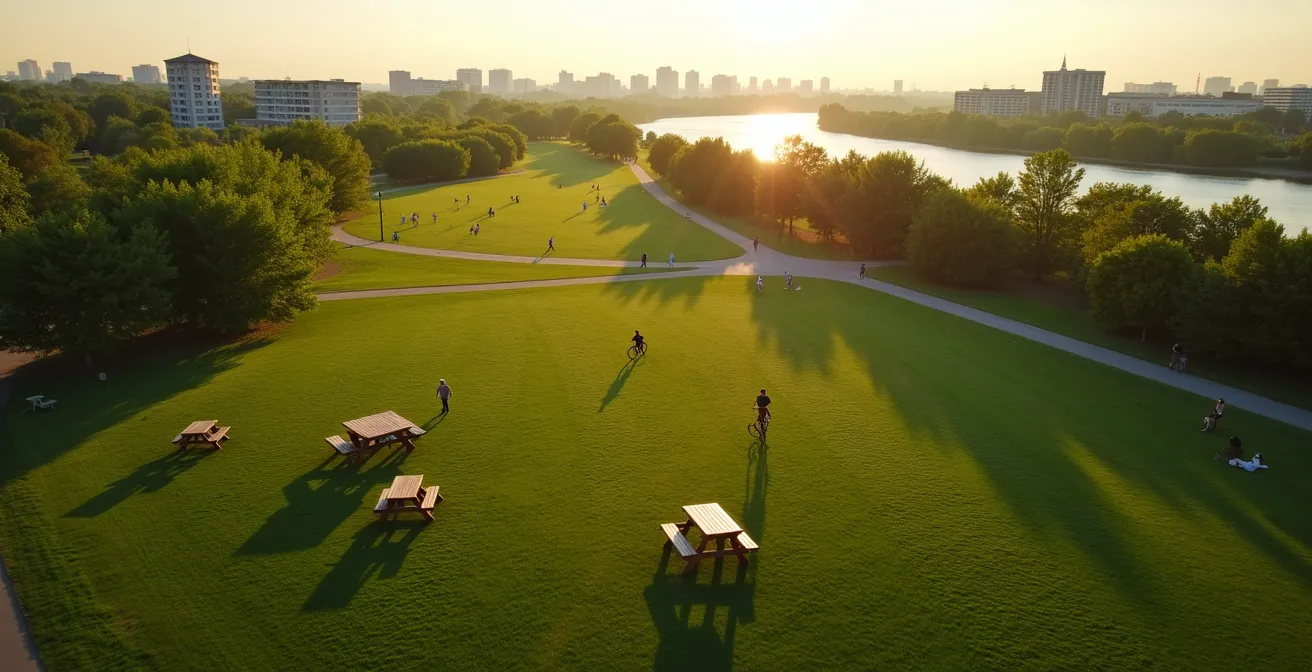
The best park for your group outing in Ottawa depends less on location and more on understanding the city’s operational logic for its amenities.
- Amenity availability (like BBQs and washrooms) is governed by specific safety regulations, seasonal schedules, and municipal infrastructure strategies.
- Comparing parks requires looking at their capacity for large groups, parking logistics, and even the historical planning that dictates their layout.
Recommendation: Use this guide to move beyond simple park lists and start planning your day based on the underlying facility management, ensuring your chosen park meets all your logistical needs.
Planning the perfect day out for family or friends in one of Ottawa’s many green spaces can feel surprisingly complex. You’re not just choosing a pretty spot; you’re coordinating logistics. Will there be clean washrooms? Can we bring a barbecue? Where can we park without getting a ticket? The typical approach is to scan a list of popular parks, hoping for the best. This often leads to last-minute frustrations when a crucial facility is closed or a rule is unexpectedly enforced.
Most guides will tell you that Mooney’s Bay is great for swimming or that Rockcliffe Park has nice views. While true, this advice barely scratches the surface. The real challenge lies in navigating the systems that operate behind the scenery. These are systems of seasonal closures, safety permits, and infrastructure that vary significantly from one park to the next, often depending on whether the land is managed by the City of Ottawa or the National Capital Commission (NCC).
But what if the key wasn’t just knowing *what* each park offers, but *why*? This guide adopts the perspective of a municipal planner. We will move beyond simple lists to explain the operational logic behind park amenities. By understanding the rules, the historical context, and the facility strategies, you can anticipate challenges and choose the ideal location with confidence. We will deconstruct everything from barbecue regulations and washroom availability to the very reason Ottawa’s Greenbelt is shaped the way it is. This is your insider’s manual for mastering Ottawa’s park system.
To help you navigate these details, this article breaks down the key factors for planning a successful day. The following summary outlines how we’ll explore each aspect of Ottawa’s park infrastructure to empower your decision-making.
Summary: A Planner’s Guide to Ottawa’s Park Facilities
- Why Are BBQs Banned in Some Parks But Encouraged in Others?
- How to Locate the Cleanest Public Washrooms Near Confederation Park?
- Vincent Massey Park vs Mooney’s Bay: Which Is Better for Large Groups?
- The Parking Mistake That Ruins a Day at Rockcliffe Park
- When to Visit the Arboretum to See the Magnolias Bloom?
- Why Ottawa’s Greenbelt Shape Is Unlike Any Other North American City?
- Why Can You Drink Alcohol in Some Parks Now and Not Others?
- How to Build a Wellness Routine That Survives the Ottawa Winter?
Why Are BBQs Banned in Some Parks But Encouraged in Others?
The ability to barbecue in an Ottawa park isn’t arbitrary; it’s a matter of public safety and infrastructure management. The primary concern is fire risk. As a result, the City has clear regulations for its park system. While many parks permit barbecuing, they do so under strict conditions. The foundational rule, according to City of Ottawa park regulations, is that any barbecue must be kept a minimum of 5 metres away from all park structures, including benches, play structures, and trees. This rule is designed to prevent accidental fires and property damage.
The distinction between parks where BBQs are “encouraged” versus “banned” often comes down to designated infrastructure. Parks like Vincent Massey are equipped with permanent, fixed charcoal pits. These designated zones are built to contain embers and are situated in open areas, inherently meeting safety standards. In parks without this infrastructure, the onus falls on the visitor to use a portable propane barbecue that meets city safety standards and to secure a park permit for non-designated areas. Propane is often preferred over charcoal in portable units as it offers better control over the flame and eliminates the risk of improperly disposed-of hot coals. Understanding this logic helps you see that the rules aren’t meant to be restrictive, but rather to ensure a safe experience for everyone across the city’s vast park network.

As you can see, these designated areas are designed for safety and convenience. For those planning an event in a park without these fixed pits, following the correct permit procedure is non-negotiable. It ensures the City is aware of the activity and that you have acknowledged the safety requirements. This simple foresight prevents a planned cookout from being shut down by a by-law officer.
Action Plan: Verifying Your BBQ Spot
- Park Selection: First, check if your chosen park has designated, pre-built BBQ pits, as these are the simplest to use.
- Permit Inquiry: If using a portable propane BBQ in a park without designated pits, call 613-580-2595 to determine if a permit is required for your group size and location.
- Equipment Check: Ensure your personal barbecue is a city-approved propane model, as charcoal briquette units often have stricter rules.
- Site Assessment: Upon arrival, measure and confirm a 5-metre clearance from all structures, trees, and overhanging branches before setting up.
- Contingency Plan: Have a backup, no-cook picnic menu in case weather conditions (like high winds) make barbecuing unsafe, even if permitted.
How to Locate the Cleanest Public Washrooms Near Confederation Park?
Finding a clean, accessible public washroom is a top priority for any full-day outing, yet it’s a frequent source of frustration for park visitors. Near Confederation Park, the challenge is amplified by its downtown location and the seasonal nature of park facilities. Most park washrooms in Ottawa are not operational year-round; they typically close from late fall to spring to prevent pipes from freezing and to reduce maintenance costs during the low season. This means that from roughly October to May, the washrooms within the park itself are often locked, leaving visitors searching for alternatives.
The solution lies in understanding a key piece of municipal logic: leveraging adjacent public infrastructure. While the park’s own facilities may be closed, nearby government and cultural institutions offer a reliable, high-quality alternative. This strategy is essential for ensuring downtown green spaces remain viable for visitors throughout the year.
Case Study: The National Arts Centre Adjacent Facilities Strategy
The National Arts Centre (NAC) and Ottawa City Hall, both directly adjacent to Confederation Park, offer publicly accessible washroom facilities with extended operating hours. These buildings provide clean, heated, and well-maintained year-round alternatives when the seasonal park washrooms are closed. This demonstrates a successful urban planning strategy where parks leverage nearby institutional infrastructure to enhance the visitor experience without requiring the city to build and maintain costly, fully winterized facilities in every single park.
Therefore, the savviest park-goers in the downtown core don’t limit their search to the park’s boundaries. They identify the nearest public buildings—like the NAC, City Hall, or even the Rideau Centre—as part of their logistical plan. During the summer, the park’s own facilities may be open, but knowing these high-traffic, professionally maintained alternatives exist provides a consistently cleaner and more reliable option, especially for families with young children.
Vincent Massey Park vs Mooney’s Bay: Which Is Better for Large Groups?
When planning for a large group, the choice between two of Ottawa’s most popular parks, Vincent Massey and Mooney’s Bay, comes down to the specific needs of your gathering. While both are excellent, they are designed with different primary uses in mind. The best choice depends on whether your group prioritizes expansive picnic space and infrastructure or a wide variety of recreational activities, particularly for children.
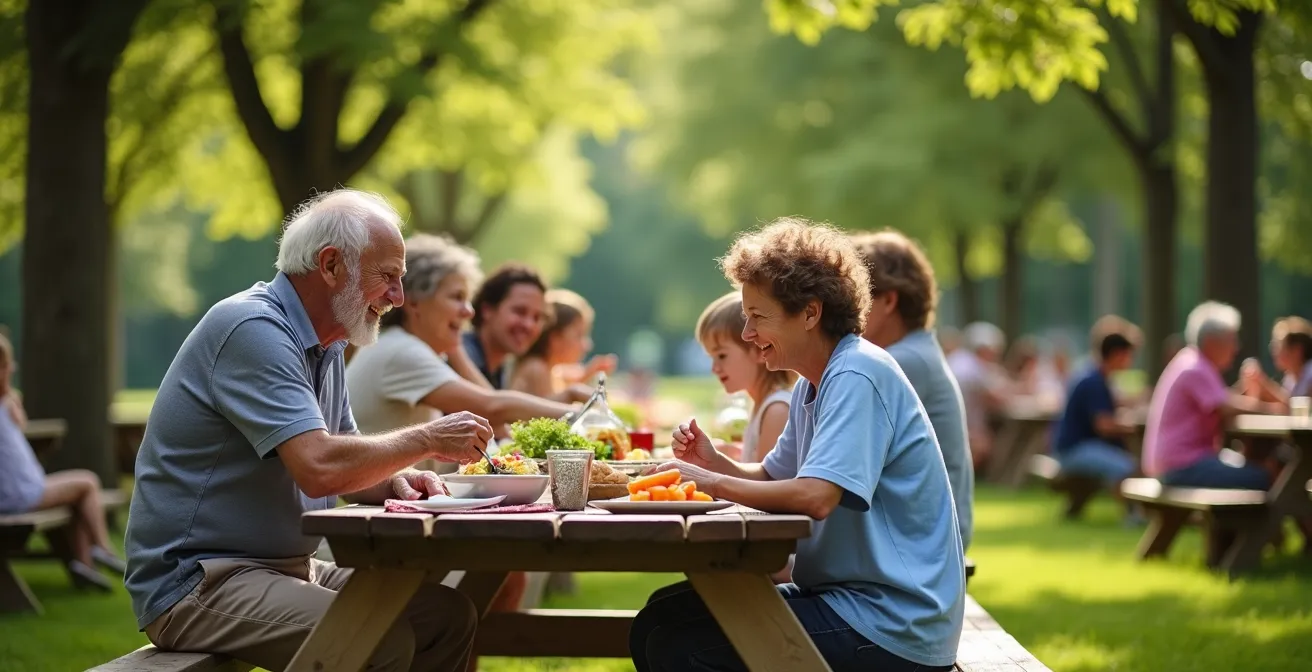
Vincent Massey Park is the undisputed champion for large-scale picnics and gatherings. Its layout is intentionally designed for this purpose, featuring numerous reservable picnic areas, ample shade from mature trees, and a high concentration of barbecue pits. The park’s flatter, open fields are ideal for setting up multiple tables, blankets, and low-intensity games like frisbee or badminton. Its proximity to the Rideau River offers a scenic backdrop, but the park itself is geared more towards static, communal gatherings rather than active water sports.
In contrast, Mooney’s Bay Park is the superior choice for active groups and families with children. While it also has picnic areas, its main draw is the large public beach, swimming area, and extensive recreational facilities. The park’s crown jewel is its playground; Mooney’s Bay features what’s claimed to be Canada’s biggest playground with 20 distinct play structures representing Canada’s provinces and regions. This makes it an unparalleled destination for keeping a large number of children entertained for hours. The trade-off is that picnic spots can be more competitive and spread out, and the overall atmosphere is more bustling and activity-focused than the relaxed vibe of Vincent Massey.
The Parking Mistake That Ruins a Day at Rockcliffe Park
Rockcliffe Park, with its stunning lookouts over the Ottawa River and historic pavilion, is one of the NCC’s gems. However, its unique geography and limited access can make parking the single biggest point of failure for an otherwise perfect day out. The most common mistake visitors make is assuming they can easily find a spot near the Rockcliffe Pavilion or the main lookouts, especially on a sunny weekend afternoon. This is rarely the case.
The park is situated within a residential area and along a scenic parkway, not a commercial zone. As such, it has very few designated parking lots. The small lots that do exist—primarily near the pavilion and the McKay Lake entrance—fill up exceptionally fast. Unlike larger parks like Mooney’s Bay, there isn’t a massive, central lot to absorb visitor volume. The mistake is not just arriving late, but failing to have a multi-tiered parking strategy. Many visitors circle the main lots endlessly, wasting time and growing frustrated, before giving up entirely. A successful trip requires planning for alternatives from the outset.
A smart strategy involves several key tactics. First, arrive before 10 AM on weekends to have any chance at the primary lots. Second, be prepared to park further away and walk. There is limited street parking on adjacent residential streets, but you must be extremely careful to read and obey all signage, as this is a frequent ticketing area. Third, consider a “drop-off” strategy: have one person drop off the group and the picnic supplies near the desired spot, then go park the car further away. Finally, the best alternative is to bypass the parking problem altogether. The park is well-connected to the NCC’s extensive network of cycling paths, making a bike ride a fantastic and stress-free way to arrive. This forethought transforms parking from a potential disaster into a minor logistical step.
When to Visit the Arboretum to See the Magnolias Bloom?
The Dominion Arboretum is a living museum of trees, but for a few precious days each spring, it becomes the epicentre of Ottawa’s floral spectacle: the magnolia bloom. Timing your visit to catch this peak is a cherished local tradition, but the window is notoriously brief. Visiting too early results in seeing only buds, while visiting too late means the ground is littered with fallen petals. The key to success is understanding the bloom cycle and knowing how to track it.
Case Study: Central Experimental Farm Bloom Tracking
The magnolia collection at the Dominion Arboretum, part of the Central Experimental Farm, typically reaches its peak bloom in mid-May. However, this can shift depending on the spring weather. The optimal viewing window is often a very narrow 3 to 5 days, where the flowers are fully open but have not yet begun to fade. Savvy visitors have learned that the most reliable method for timing their visit is to actively follow the social media updates from the ‘Friends of the Central Experimental Farm’. They provide real-time reports and photos, effectively announcing the start of the peak bloom and allowing people to plan accordingly.
Beyond simply knowing *when* the magnolias are blooming, the quality of your visit can be dramatically improved by choosing the right time of day. Weekend afternoons during peak bloom can be incredibly crowded, making it difficult to take photos or peacefully enjoy the scenery. For a more serene experience, an insider strategy is to visit on a weekday evening.
A local photographer shares: ‘Weekday evenings offer superior lighting for photos and a fraction of the weekend crowds. The golden hour light filtering through the magnolias creates magical conditions, and you’ll often have entire sections of the collection to yourself for unobstructed shots.’
– Photographer’s Golden Hour Strategy
By combining bloom tracking with strategic timing, you can transform your visit from a rushed, crowded affair into a truly memorable experience. The bloom often coincides with the flowering of nearby crabapples and lilacs, creating an even more impressive floral display for those who get their timing just right.
Why Ottawa’s Greenbelt Shape Is Unlike Any Other North American City?
To truly understand Ottawa’s park system, you have to look beyond individual sites and see the larger structure. The National Capital Greenbelt is not just a ring of nature around the city; it’s a defining feature of Ottawa’s identity and its shape is the direct result of a bold, mid-century urban planning vision. Across the approximately 4,300 hectares of parkland managed by the city, the Greenbelt’s influence is the most significant, creating a unique urban-wildland interface.
Unlike most North American greenbelts, which are typically uniform circles designed simply to contain urban sprawl, Ottawa’s Greenbelt has distinctive wedges that drive deep into the urban fabric. This was no accident. It was the masterstroke of the 1950 Gréber Plan, a post-war vision for the capital.
The Enduring Legacy of the Gréber Plan
Jacques Gréber, the French urbanist commissioned to redesign Ottawa, envisioned a “capital’s countryside” rather than a simple boundary. As detailed in materials from the National Capital Commission (NCC), which now manages the Greenbelt, his plan strategically preserved major natural ecosystems. It created large wedges of green space that bring areas like the Shirleys Bay wetland and the Mer Bleue Bog—a subarctic ecosystem unique at this latitude—right to the city’s doorstep. This is why you can be in a dense suburban neighbourhood one moment and, just minutes later, be in a vast, protected natural area with views of the downtown skyline.
This unique shape has profound implications for residents and visitors. It means that access to large-scale, immersive nature is remarkably easy. You don’t need to drive for an hour to escape the city. The Greenbelt’s wedges provide extensive trail networks for hiking, cycling, and cross-country skiing, all within the municipal boundary. It’s a living piece of history that continues to define Ottawa’s character as a city deeply intertwined with its natural environment, offering a park experience that is fundamentally different from any other capital in North America.
Why Can You Drink Alcohol in Some Parks Now and Not Others?
For years, the consumption of alcohol in Ottawa’s public parks was straightforward: it was prohibited. However, a recent policy shift has introduced a more nuanced approach, leaving many residents wondering why they can now have a beer or a glass of wine in some parks but not in others. The answer lies in a carefully managed pilot program designed by the City of Ottawa to balance increased public freedom with safety and community comfort.
The decision to allow alcohol consumption is not a blanket policy. Instead, the city has selected a handful of parks to participate in the program based on specific criteria. These parks generally have good visibility, are not immediately adjacent to sensitive areas, and have a history of responsible use. The program is a trial, allowing the city to gather data and public feedback before considering a wider rollout. It’s a classic example of evidence-based policy in action, where a new rule is tested on a small scale before being implemented broadly.
The parks included in the pilot program operate under specific restrictions, primarily concerning hours and location within the park. The goal is to prevent conflicts with other park users, especially families with children. For example, drinking is universally prohibited near playgrounds and splash pads. The following table, based on a report from CBC News on the 2025 pilot, outlines the participating parks and their key rules.
| Park Name | Location | Key Restrictions |
|---|---|---|
| Brewer Park | Across from Carleton University | 5m from playgrounds |
| Lansdowne Great Lawn | East of TD Place | Away from sports fields |
| Minto Park | Off Elgin Street | 11am-9pm only |
| McNabb Park | Gladstone & Bronson | No beach areas |
| Strathcona Park | Near Adàwe Crossing | Away from splash pads |
This pilot program represents a significant evolution in how the city manages its public spaces. It reflects a shift towards treating citizens with more trust, while still maintaining firm boundaries to ensure safety and shared enjoyment of these valuable community assets. If you plan to enjoy an alcoholic beverage, your first step should always be to confirm if your chosen park is on the current pilot list and to meticulously follow the posted rules.
Key Takeaways
- Amenity success hinges on understanding the operational logic: BBQ rules are about fire safety, and washroom access is about seasonal viability.
- Strategic planning is crucial. For parking, this means arriving early or using alternative transport; for blooms, it means tracking updates and visiting at off-peak times.
- Ottawa’s park system is unique, shaped by the historical Gréber Plan which brought large-scale nature deep into the city via the Greenbelt.
How to Build a Wellness Routine That Survives the Ottawa Winter?
When winter descends on Ottawa, the vibrant green spaces transform, and the temptation to stay indoors can be overwhelming. However, abandoning your park-based wellness routine is a mistake. The city’s parks offer a wealth of opportunities for physical and mental well-being throughout the coldest months, provided you shift your mindset from fair-weather activities to embracing what the winter landscape has to offer. Building a routine that survives the winter is about knowing where to go and what to do.
The key is to focus on parks with dedicated winter infrastructure. While the world-famous Rideau Canal Skateway is a major draw, it’s far from the only option. The NCC and the City of Ottawa maintain an extensive network of trails specifically groomed for winter use. These transform summer hiking paths into accessible routes for activities like cross-country skiing, snowshoeing, or simply “forest bathing” on a crisp winter day. Parks Canada also notes that summer paddling routes become winter wonderlands for skiers and snowshoers. This infrastructure is your greatest asset.
Creating a sustainable winter routine involves exploring these specialized locations and activities. Rather than seeing winter as a limitation, view it as an opportunity to engage with the parks in a new way. The frosted trees, the quiet trails, and the crisp air offer a completely different, and equally valuable, wellness experience.
- Explore groomed trails at Gatineau Park for cross-country skiing, with daily rentals available.
- Visit Conroy Pit, a popular destination for off-leash dog walking on dedicated winter trails.
- Try the Arboretum’s sheltered paths, which offer protection from harsh winds for a pleasant winter walk.
- Book an NCC shelter in Gatineau Park, many of which have fire pits for a cozy post-hike gathering.
- Pack a thermos of hot soup or cocoa for a scenic picnic at a frosted lookout point.
- Embrace the season by participating in Winterlude festival activities, from ice sculptures to cultural events.
By applying this operational mindset to your planning, you are no longer just a visitor to Ottawa’s parks—you are an informed user. The next step is to put this knowledge into practice. Evaluate your next planned outing not by a park’s reputation, but by how its specific facilities and regulations align with the needs of your group, ensuring a seamless and enjoyable day from start to finish.
Frequently Asked Questions About Which Urban Park Offers the Best Amenities for a Full Day Out?
Which downtown Ottawa parks have year-round washroom facilities?
Most parks do not have full washroom facilities year-round. Some have portable toilets or washrooms in field houses that require rental or key access. For downtown parks like Confederation Park, the best strategy is to use the public washrooms in adjacent buildings like the National Arts Centre or City Hall.
When do seasonal park washrooms typically close?
Park washrooms generally close from fall to spring, with specific dates varying by location and weather conditions. Typically, you can expect closures to begin in mid-to-late October and facilities to reopen in mid-to-late May.
Are there washroom facilities at Major’s Hill Park?
Major’s Hill Park, being a prominent downtown park near Parliament Hill, has limited seasonal facilities. Like Confederation Park, its visitors benefit greatly from the proximity to other public buildings with year-round washrooms, such as the ByWard Market and the National Gallery of Canada.